
 Workforce Identity
 Endpoint Management
 Endpoint Detection & Response
 Vulnerability Management
 Compliance Automation
 Trust Center


Count the agents running on a single laptop in your fleet. You may have one for detection, one for management, one for compliance, and another for identity.
CrowdStrike is usually only the first of them.
CrowdStrike Falcon is one of the most recognized names in endpoint security, known for endpoint detection and response (EDR), extended detection and response (XDR), and threat intelligence. Its detection is strong, but it comes with premium licensing and a steep learning curve. It also wasn’t built for device management, identity, and compliance.
If you’re evaluating CrowdStrike alternatives, you’re likely looking for something more comprehensive and easier to run. This guide covers seven of the strongest options, including their standout strengths and where they each fit.
What is CrowdStrike?
CrowdStrike is a cloud-native endpoint security platform that detects and stops threats across your device fleet. Its Falcon platform combines EDR, XDR, threat intelligence, and incident response in a single lightweight agent, backed by a large managed threat-hunting team.
You might weigh alternatives when licensing costs are high or when a lean IT team wants simpler administration and stronger unified endpoint management (UEM) with fewer tools. Some may also want a tighter fit with the ecosystem they already run, whether that’s Microsoft, Apple, or Palo Alto.
Some may also want a tighter fit with the ecosystem they already run, whether that’s Microsoft, Apple, or Palo Alto.
At-a-glance: CrowdStrike Alternatives
| Alternative | Best for | UEM | G2 rating |
|---|---|---|---|
| Iru | Consolidating IT and security | Yes | 4.7/5 |
| SentinelOne Singularity | Autonomous endpoint protection | Limited | 4.7/5 |
| Microsoft Defender XDR | Microsoft environments | Partial | 4.5/5 |
| Palo Alto Cortex XDR | Enterprise SOCs | No | 4.5/5 |
| Sophos MDR | Lean security teams | Limited | 4.7/5 |
| TrendAI Vision One | Hybrid environments | Limited | 4.7/5 |
| Bitdefender GravityZone | Value-conscious organizations | Partial | 4.1/5 |
1. Iru
Best for: Consolidating IT and security
G2 rating: 4.7/5
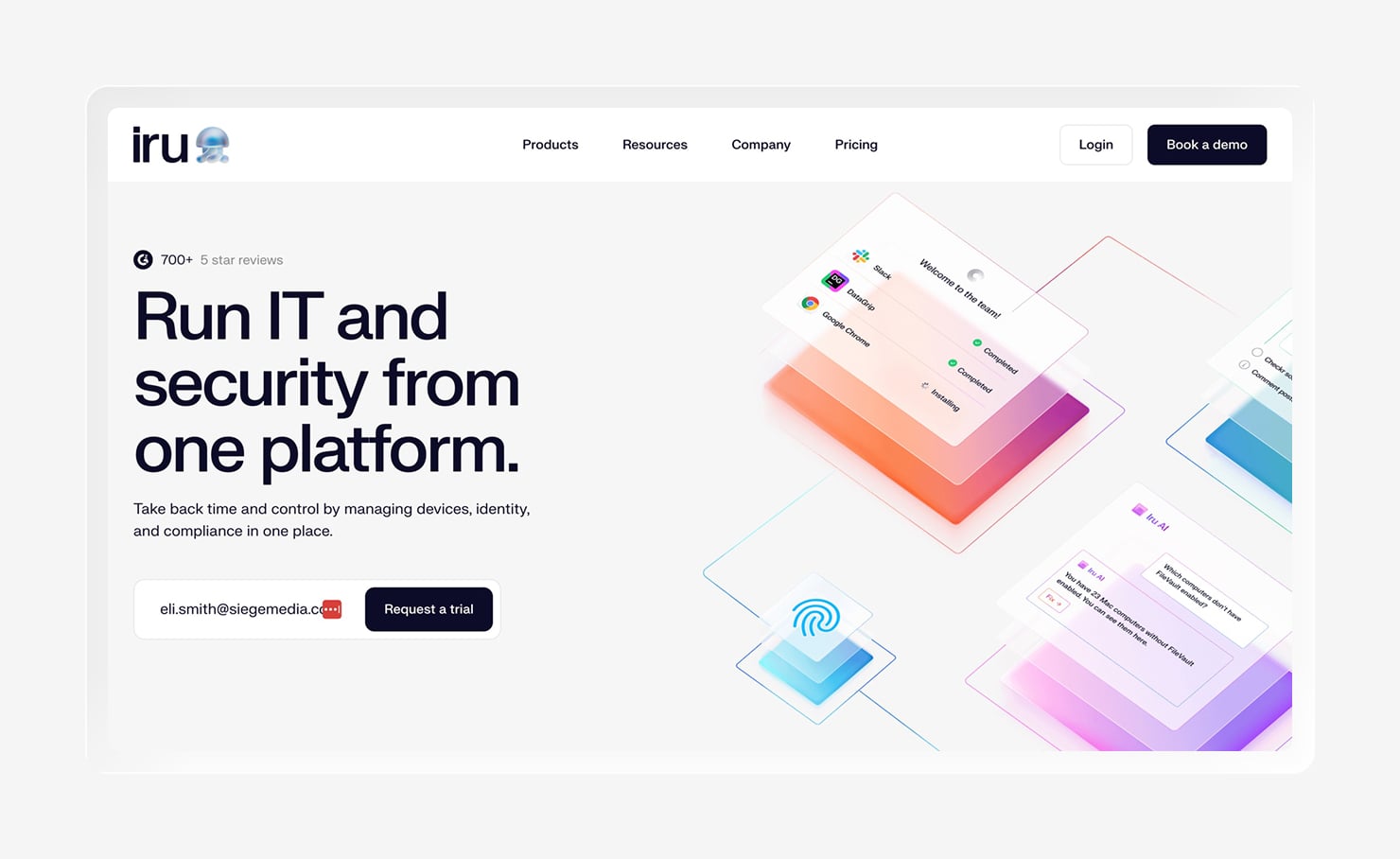
If you run CrowdStrike for detection but still juggle separate tools for device management and compliance, Iru is built to consolidate them into a single platform. Iru is a unified endpoint and security platform that combines endpoint management, EDR, vulnerability management, workforce identity, and compliance in a single lightweight agent.
This makes Iru a strong fit if you run CrowdStrike for detection but still juggle separate tools for device management and compliance. Iru folds these into a single platform, reducing complexity for lean IT and security teams. This helps mid-market organizations that want to consolidate rather than add another tool.
Features:
- Unified endpoint management (UEM): Manage and configure policies across macOS, Windows, iOS, and Android from a single console.
- Integrated endpoint security (EDR): Detect and remediate threats with built-in EDR and vulnerability management running on the same agent that manages the device.
- Workforce identity management: Tie device trust to identity so that only secure, compliant devices can access company resources.
- Compliance Automation: Continuously map controls to common frameworks and collect audit-ready evidence that reflects real device states.
- Zero-touch deployment: Ship a device straight to an employee, who unboxes it and has it set up automatically, with no hands-on IT work.
- Automated remediation workflows: Fix drift automatically when a device falls out of policy, instead of chasing tickets by hand.
- Patch management: Keep operating systems and third-party apps up to date across the fleet with enforced, automated patching.
- Centralized visibility and reporting: See device, security, and compliance status for the whole fleet in one dashboard.
2. SentinelOne Singularity
Best for: Autonomous endpoint protection
G2 rating: 4.7/5
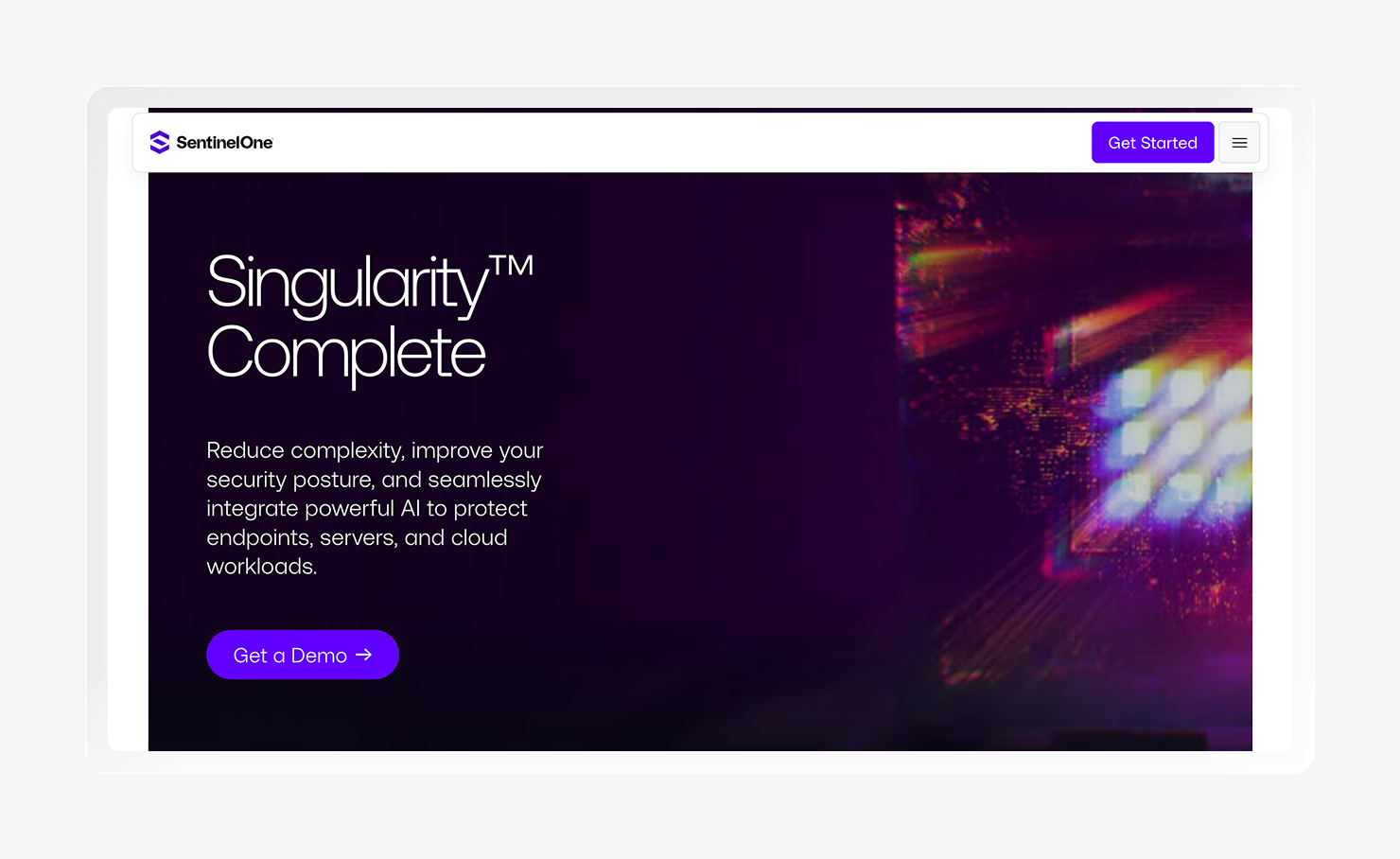
Of all the options here, SentinelOne Singularity is the one most often named as a like-for-like CrowdStrike swap. It runs AI-driven detection directly on the endpoint, so it can identify and shut down threats on its own. Its Storyline engine can also reconstruct each attack into a clear timeline for investigation.
SentinelOne is a fit for teams that want to replace CrowdStrike’s detection and response with strong automation and less hands-on tuning, especially leaner security teams. The platform stays focused on endpoint security, though, so you’ll still have to pair it with separate tools for device management, identity, or compliance.
Features:
- Autonomous AI threat detection: SentinelOne detects and responds in real time with on-agent AI, without waiting for a cloud lookup.
- EDR/XDR capabilities: The platform extends detection across identity, cloud, and network telemetry in one console.
- Automated remediation: It kills processes, quarantines files, and isolates affected devices without analyst intervention.
- Behavioral analysis: Storyline correlates related activity into a single attack narrative to speed up investigation.
- Ransomware rollback: The platform restores encrypted or altered files to their pre-attack state on supported Windows devices.
- Broad OS support: SentinelOne protects macOS, Windows, and Linux, with day-zero support for new macOS versions.
3. Microsoft Defender XDR

Best for: Microsoft environments
G2 rating: 4.5/5
Microsoft Defender XDR unifies threat detection across endpoint, identity, email, and cloud, pulling signals from various Defender products into a single incident view. Because it’s built into Microsoft 365, it connects natively to Entra ID and Microsoft Sentinel with no extra agents to bolt on.
Defender fits your team if it’s already invested in Microsoft 365, as it can replace a standalone endpoint tool with little or no additional licensing cost. Outside the Microsoft ecosystem, that advantage fades and the case for it weakens.
Features:
- Endpoint detection and response: Covers Windows, macOS, Linux, and mobile through Defender for Endpoint.
- Unified XDR: Correlates threats across endpoint, identity, email, and cloud apps in one portal.
- Microsoft Sentinel integration: Syncs incidents and alerts bidirectionally for a single investigation queue.
- Vulnerability management: Surfaces and prioritizes device exposures alongside detection.
- Automated investigation and response: Triages alerts and remediates common threats without manual work.
4. Palo Alto Cortex XDR
Best for: Enterprise SOCs
G2 rating: 4.5/5
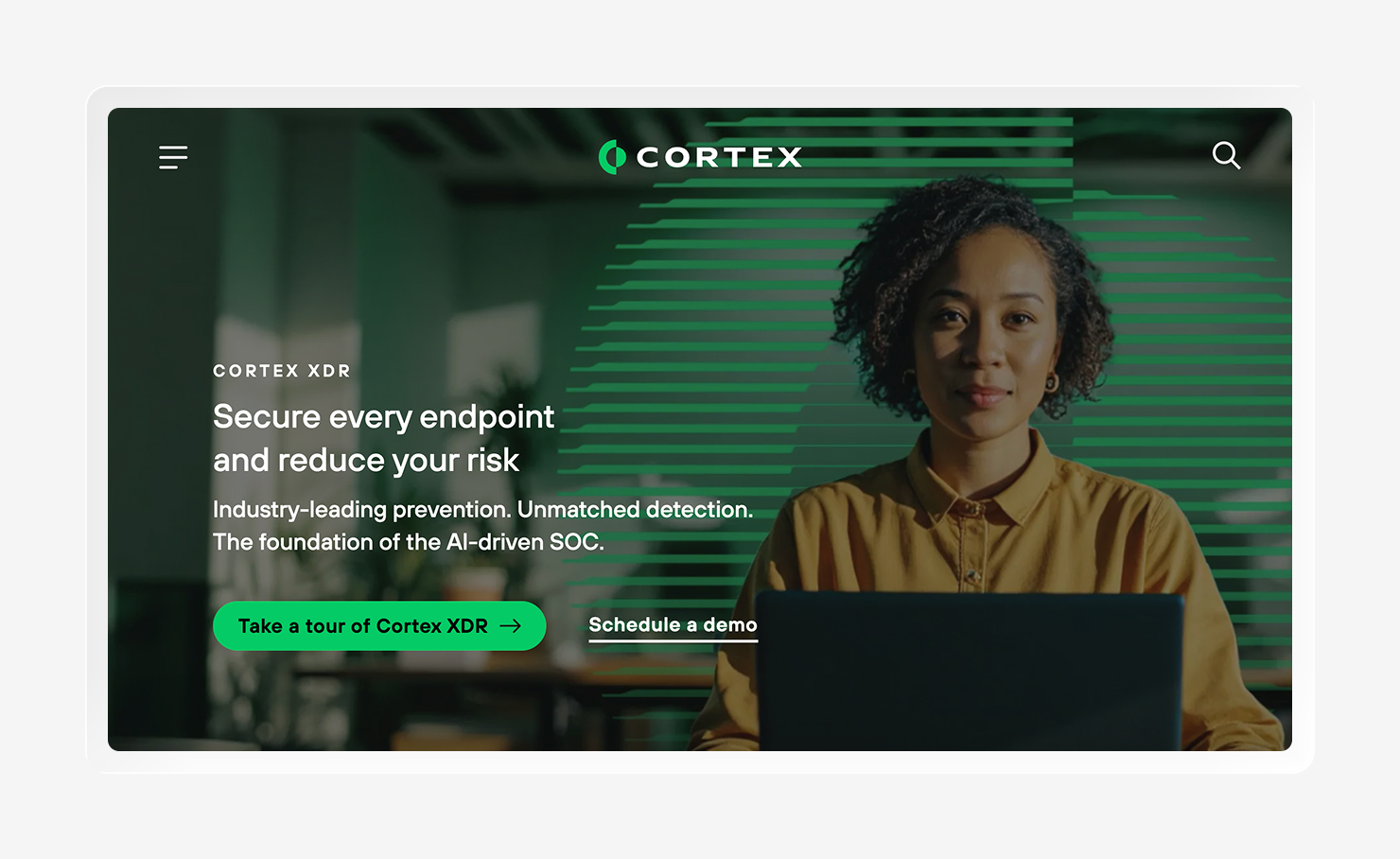
Palo Alto Cortex XDR is an enterprise platform that connects endpoint, network, cloud, and identity data into a single detection engine. It applies AI and behavioral analytics to correlate signals across endpoints, networks, clouds, and identities, then traces each alert back to its root cause, so analysts can see full attack paths.
Cortex XDR fits large enterprises and mature security operations center (SOC) teams, and it’s strongest when you already run other Palo Alto tools. The trade-off is that pricing and advanced tuning involve a steep learning curve that experienced administrators usually need time to work through.
Features:
- Cross-domain threat detection: Correlates endpoint, network, cloud, and identity signals to detect attacks spanning multiple vectors.
- Endpoint prevention: Blocks zero-day exploits, fileless malware, and known threats on the device.
- Network telemetry: Adds network data to endpoint context for a more complete attack visibility.
- Cloud and identity coverage: Extends detection into cloud workloads and identity activity.
- SOC automation: Runs prebuilt playbooks to investigate and contain incidents with less manual work.
5. Sophos MDR
Best for: Lean security teams
G2 rating: 4.7/5
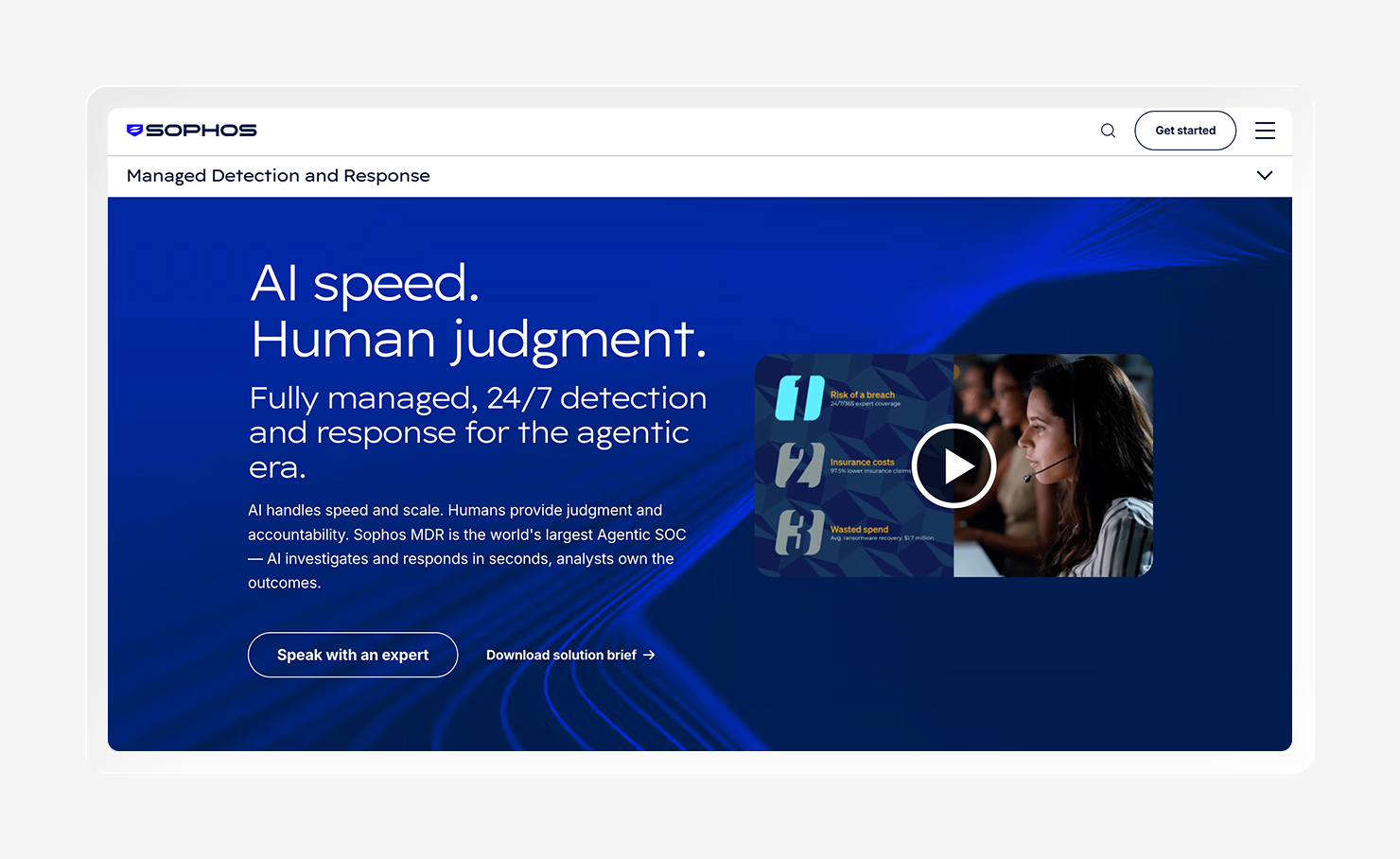
Sophos MDR is a fully managed, around-the-clock service, not a product you deploy and run yourself. A team of Sophos analysts monitors your environment, hunts for threats, and takes response actions on your behalf. Sophos pairs machine learning and behavior analysis with human oversight.
Sophos MDR is the option for lean teams without a built-in SOC that would rather hand off monitoring than staff it. It works across your endpoints, network, and cloud, and it plugs into several well-known tools, so you aren’t locked into a single vendor’s stack to get covered.
Features:
- 24/7 managed monitoring: Sophos analysts watch your environment around the clock so your team doesn’t have to.
- Human-led threat hunting: Experts proactively hunt for attacks that automated tools miss, not just triage alerts.
- Full incident response: The team investigates, contains, and remediates active threats, including root cause analysis.
- Broad tool integration: Sophos works with most existing security stacks across hundreds of third-party sources, not just its own products.
- AI-assisted response: Machine learning handles routine cases at speed with analysts supervising and owning the outcome.
6. TrendAI Vision One
Best for: Hybrid environments
G2 rating: 4.7/5
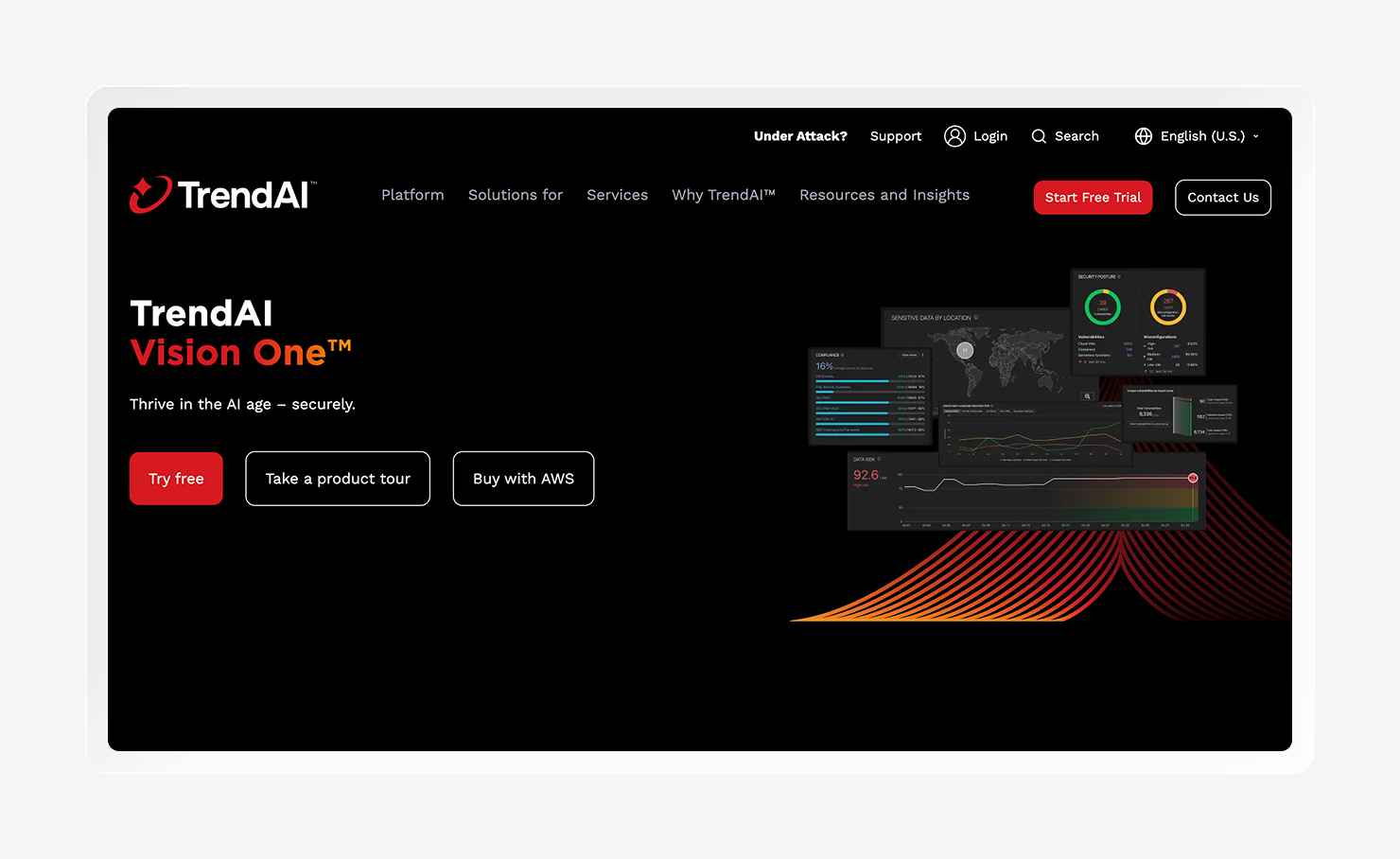
TrendAI Vision One (formerly Trend Micro Vision One) is an XDR platform that correlates telemetry across endpoints, email, servers, cloud, and network, so data isn’t siloed across different tools. It leans on Trend’s long history in email and endpoint protection, adding attack-surface risk management that scores your exposure, so your team knows what to fix first.
Vision One suits enterprises and hybrid environments that want a single view across multiple layers, especially when running a mix of cloud and on-premises systems. But for some, the range of features can feel like a lot, at least at first, meaning the platform has a relatively high learning curve.
Features:
- Cross-layer XDR: Correlates signals from endpoints, email, servers, cloud, and network in a single detection engine.
- Native EDR: Delivers endpoint detection and response through Trend’s own sensors rather than third-party connectors.
- Attack-surface risk management: Scores and prioritizes exposure across your environment so you fix your most exposed assets first.
- Automated response: Uses AI and behavioral modeling to prioritize alerts and coordinate containment across layers.
7. Bitdefender GravityZone
Best for: Value-conscious organizations
G2 rating: 4.1/5
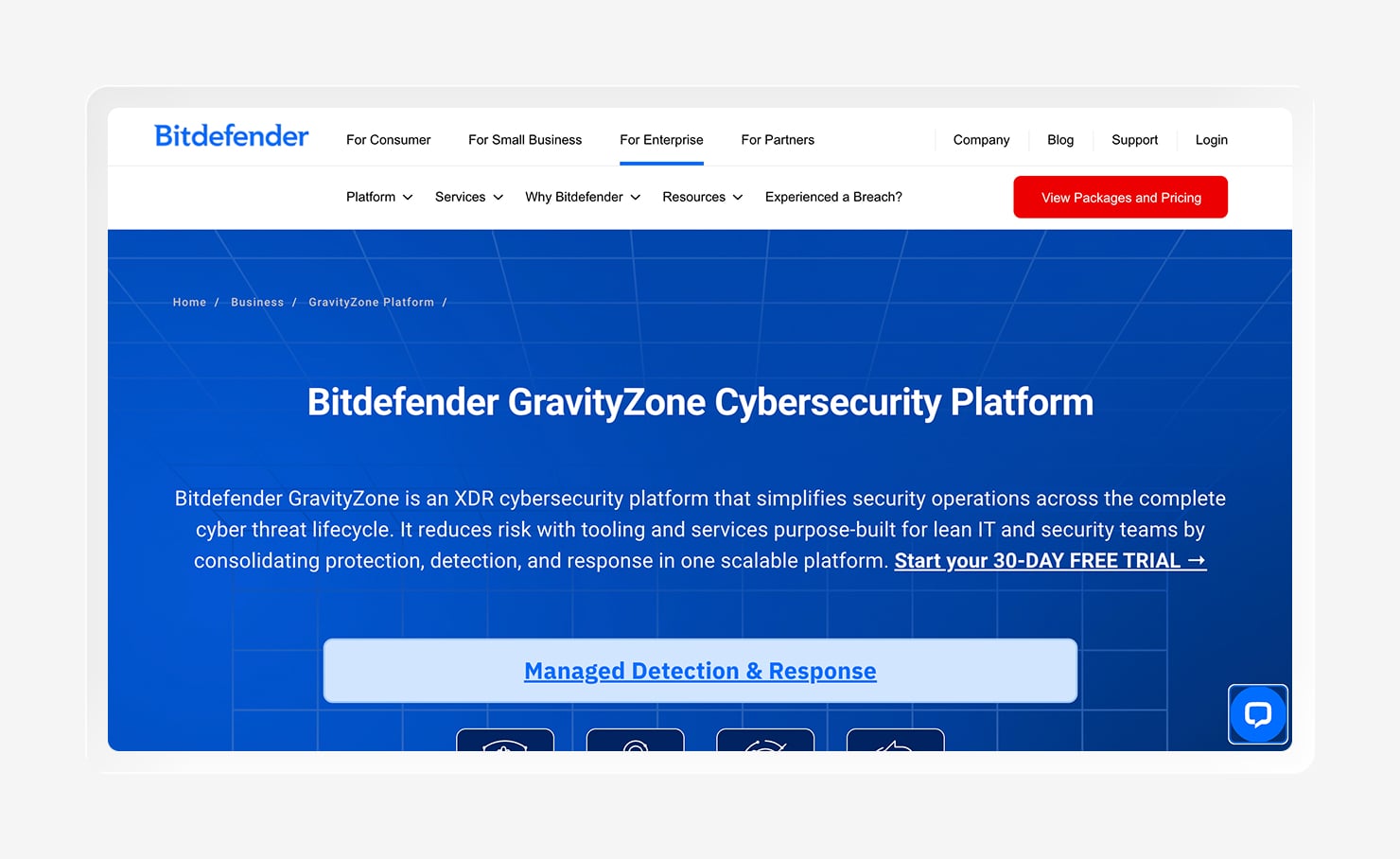
Bitdefender GravityZone is a cloud-managed endpoint protection software platform known for high malware detection scores and relatively low pricing. It pairs strong prevention with EDR, patch management, and risk analytics, all run from a single Control Center console.
GravityZone fits teams that want solid, tiered protection without paying enterprise EDR rates. Higher tiers come with patch management and endpoint detection. However, its detection and response tooling and threat intelligence are less mature than those of CrowdStrike or Palo Alto.
Features:
- Endpoint protection: Consistently high malware detection, with machine learning and anti-exploit modules that catch zero-day threats.
- EDR: Adds endpoint detection and response at the Premium tier for investigation and response beyond prevention.
- Patch management: Keeps operating systems and third-party apps up to date, included in the Premium tier.
- Risk analytics: Surfaces misconfigurations and human risk factors that widen your attack surface.
- Centralized administration: Runs policy, deployment, and reporting for the whole fleet from one cloud-based console.
How to choose the right alternative to CrowdStrike
Most CrowdStrike alternatives are full endpoint security software platforms. Where they differ is everything around it: how much they cover, how hard they are to run, and how well they fit the stack you already have.
Keep these criteria in mind before you commit:
- Detection and response depth: The EDR and XDR features should match how you detect and respond to threats.
- Device management (UEM): If you need to manage devices and enforce policy across your fleet, choose a platform with true unified endpoint management, not just detection.
- Integrations: The platform should connect with the security, identity, productivity, and IT tools you already use.
- Ease of management: The best CrowdStrike alternatives are easier to manage, letting your team deploy and maintain the platform without heavy administrative overhead.
- Automation: The best fits automate routine tasks such as threat response, remediation, provisioning, and compliance.
- Compliance support: Strong options streamline audit prep, security reporting, evidence collection, and outgoing compliance management.
- Fit for your team size: Decide whether you need a self-managed platform, built-in guidance, or a managed service to cover limited internal resources.
Get everything you need for endpoint management and compliance in one platform with Iru
The right CrowdStrike alternative depends on what you’re solving for. SentinelOne is the closest direct swap, while a solution like Cortex XDR is better suited for enterprise SOC teams.
Iru takes a different path, bringing endpoint management, EDR, vulnerability management, workforce identity, and compliance together in a single agent. That closes what CrowdStrike leaves uncovered without adding vendors or complexity. The collapsed stack is the difference between managing one platform and stitching together five.
Book a demo to see how Iru in action.