
 Workforce Identity
 Endpoint Management
 Endpoint Detection & Response
 Vulnerability Management
 Compliance Automation
 Trust Center


If your team is looking at Okta alternatives, there’s a good chance workforce identity and access management (IAM) isn’t the only problem you’re solving for.
Okta does access management well, with features such as single sign-on (SSO), multi-factor authentication (MFA), provisioning and lifecycle management.
But without endpoint management and compliance capabilities, you may find yourself stitching together tools to cover the gaps. Between licensing fees and ongoing maintenance, the cost of running everything separately can compound quickly.
If you need a tool that can do more in one platform, use our guide to learn more about leading Okta alternatives. We’ve included feature sets, core strengths and limitations to help you find the right fit.
What is Okta?
Okta is a widely deployed workforce IAM platform, used by organizations ranging from fast-growing mid-market companies to roughly two-thirds of the Fortune 100.
Its core IAM capabilities include:
- SSO: Lets users access multiple applications with a single set of credentials.
- MFA: Adds another layer of protection by requiring users to verify their identity during login.
- Lifecycle Management: Automates user onboarding, offboarding and access changes throughout the employee lifecycle.
- User Provisioning: Creates and updates user accounts across connected applications.
- Customer Identity: Helps organizations manage authentication and authorization for their own applications through Okta’s Auth0 platform.
- Universal Directory: Centralizes user profiles and identity data across an organization.
Okta is also backed by an integration catalog of 7,000-plus applications and a mature set of identity governance add-ons. Together, these capabilities make Okta a flexible choice for organizations that need to connect identity management with a wide range of business applications.
At-a-glance: Okta alternatives
Even with all it has to offer, some teams move away from Okta because it leaves them managing separate tools for endpoint management, security and compliance. Rising licensing costs can also factor into the decision, particularly when organizations need additional capabilities or add-ons beyond their core Okta deployment.
If either situation sounds familiar, the table below is a good starting point for finding an alternative to Okta.
| Alternative | Best for | Key strength | G2 rating |
|---|---|---|---|
| Iru | Organizations looking to combine endpoint management, security and compliance in one platform | Businesses seeking centralized endpoint protection with flexible deployment options | 4.7/5 |
| Microsoft Entra ID | Microsoft-centric organizations already running Microsoft 365 or Azure | Native integration across the Microsoft identity, security, and productivity ecosystem | 4.5/5 |
| JumpCloud | SMBs and MSPs managing mixed Windows, macOS, and Linux environments | Cloud-first directory combining IAM and device management without enterprise overhead | 4.5/5 |
| Ping Identity | Enterprises with complex authentication flows or hybrid deployment requirements | Flexible enterprise IAM with strong federation, CIAM, and on-premises deployment support | 4.4/5 |
| Cisco Duo | Organizations prioritizing phishing-resistant MFA with a fast rollout | Strong multi-factor authentication with broad device and application coverage | 4.5/5 |
| OneLogin | Mid-market organizations that want cloud IAM running without a long implementation project | Straightforward cloud IAM with adaptive authentication, SSO, and user provisioning | 4.4/5 |
| SailPoint | Regulated enterprises requiring formal identity governance and access certifications | Market-leading identity governance with AI-driven access recommendations and compliance reporting | 4.5/5 |
| Keycloak | Engineering teams that need complete control over self-hosted identity infrastructure | Open-source IAM with broad protocol support and full deployment control | Unrated |
1. Iru
- Best for: Organizations looking to combine endpoint management, security, and compliance in one platform
- G2 rating: 4.7/5
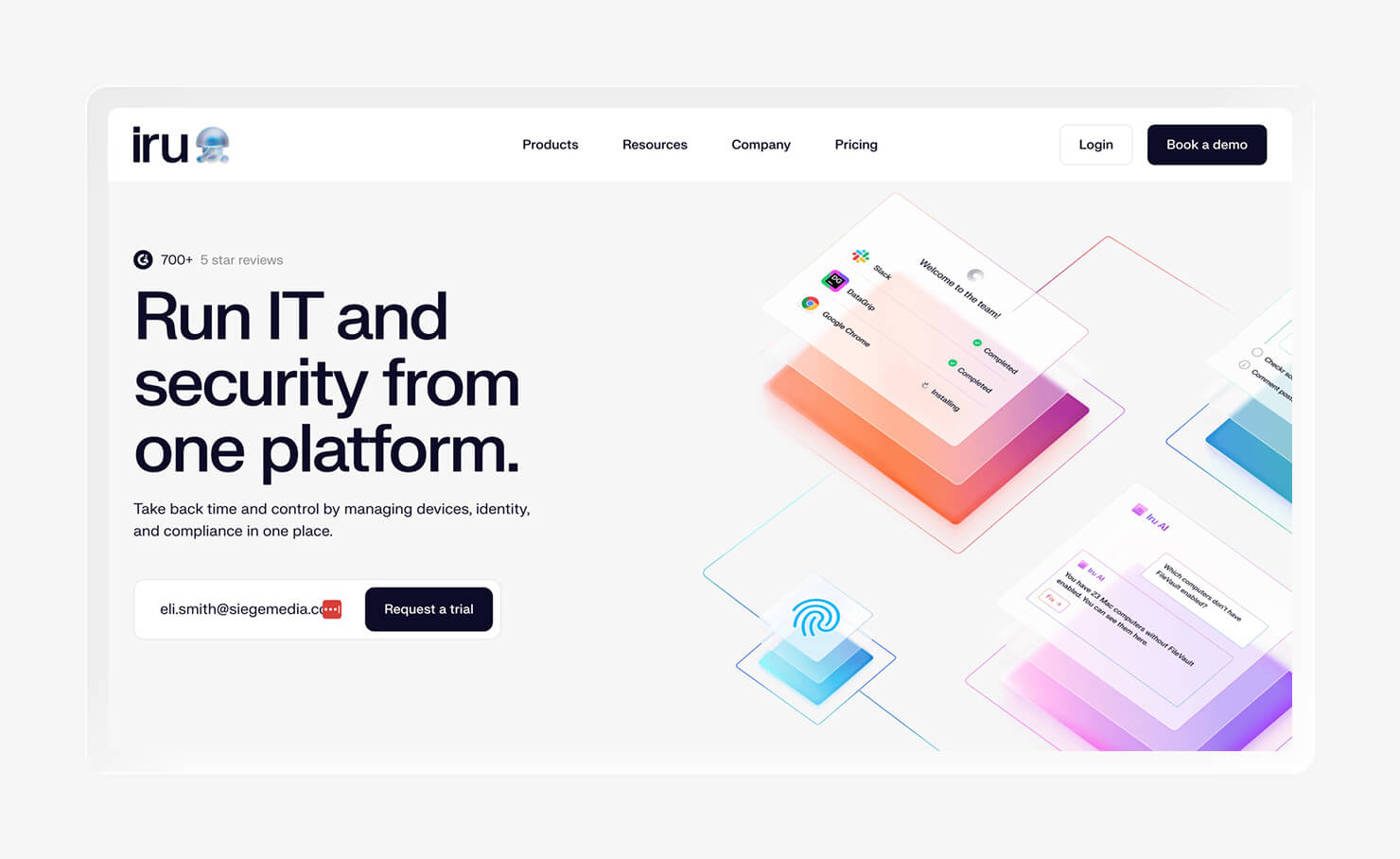
Most teams evaluating identity alternatives are also carrying a separate endpoint product and compliance stack with no shared context between them. Iru is an AI-powered IT and security platform that rolls Workforce Identity, Endpoint Management, EDR, and Compliance Automation into one platform.
It's built for lean IT and security teams, SMBs, and mid-market organizations that want broad coverage and visibility, without all the overhead.
The Iru Agent runs on Mac and Windows, handling device management and behavioral EDR from a single install, while iOS and Android devices are managed via MDM. Teams can then see user identities, device health, security posture, and compliance status from one platform.
Features:
- Workforce identity management: Manage passwordless authentication with device-bound passkeys, SSO, MFA, identity lifecycle management, and directory services with auto-groups by attribute.
- Unified endpoint management (UEM): Manage Mac, Windows, iOS and Android devices alongside user identities, including enrollment, configuration, OS updates and app management.
- Integrated endpoint security (EDR): Protect Mac and Windows devices with built-in EDR, behavioral analytics and automated threat response.
- Compliance Automation: Monitor compliance with AI-Tailored Controls, Task-Based Readiness and Artifact Relevancy for SOC 2, ISO 27001 and HIPAA. Use the Trust Center to share security and compliance posture with external stakeholders.
- Zero-touch deployment: Automate device enrollment and provisioning for new employees with Blueprint Routing, which applies conditional configuration rules during enrollment.
- Automated remediation workflows: Address security gaps, vulnerable devices, configuration drift and policy violations with policy-based automation.
- Patch management: Automate OS and application updates across managed devices with Vulnerability Response, which prioritizes issues by CVE severity.
- Centralized visibility and reporting: View users, devices, security posture and compliance status through unified dashboards and reports.
2. MicrosoftEntraID
- Best for: Microsoft-centric organizations already running Microsoft 365, Azure, or a Windows-dominant device fleet
- G2 rating: 4.5/5
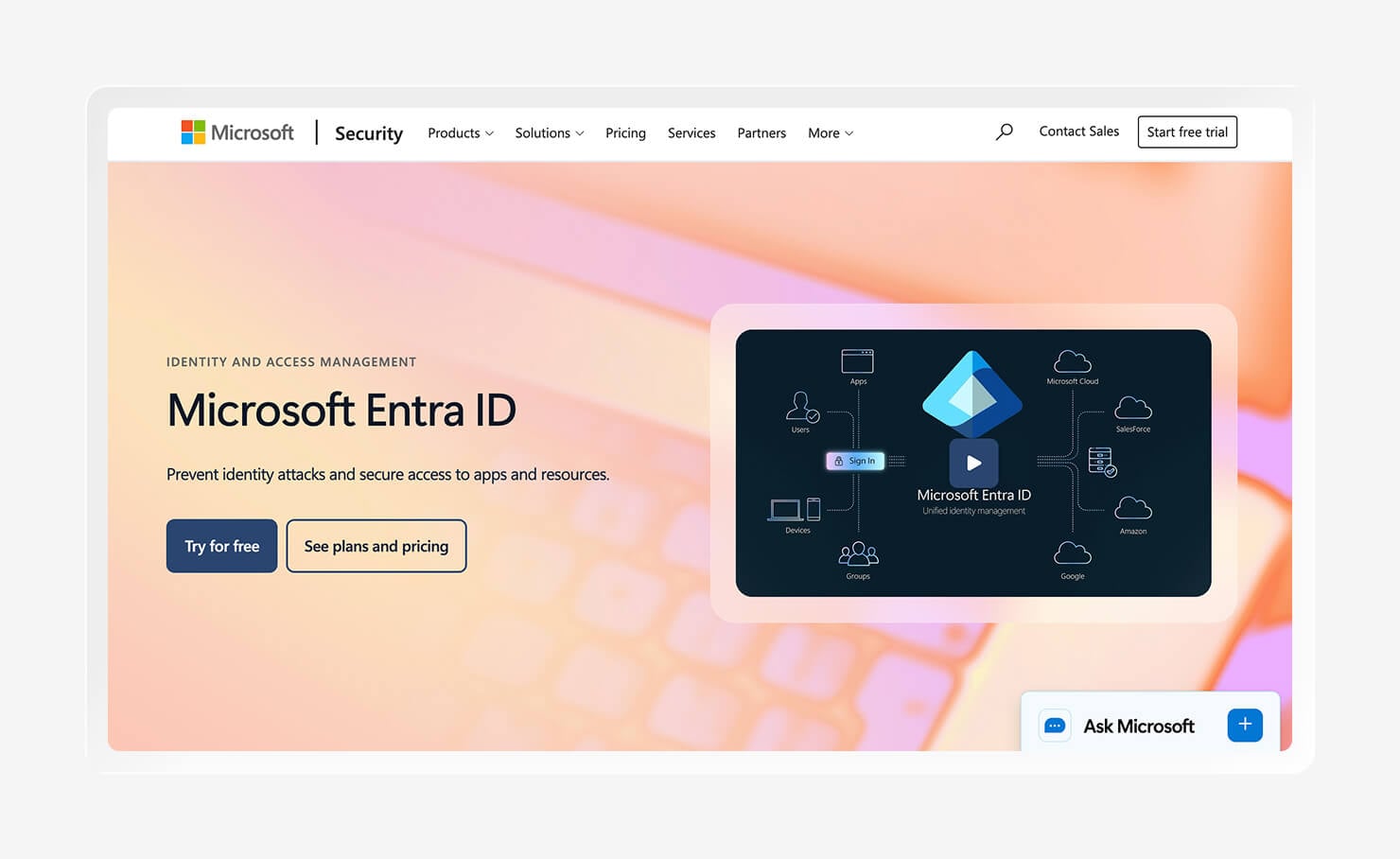
Microsoft Entra ID (formerly Azure Active Directory) is the identity platform built into the Microsoft ecosystem. Its integration with Microsoft 365 and Azure, along with native support for Windows devices, makes it a natural fit for organizations that already rely heavily on Microsoft products. Organizations with Microsoft 365 E3 or E5 licenses may find they’re already paying for Entra ID, making it a cost-effective choice.
Entra ID’s enterprise IAM capabilities are mature, offering support for lifecycle workflows, identity governance and external identity management for B2B and B2C applications.
However, things get trickier outside the Microsoft stack. macOS and Linux environments require additional configuration, while full device management requires Microsoft Intune as a separate product. Teams managing diverse, non-Windows fleets may need to add more Microsoft products to reach the coverage they expected from Entra ID alone.
Features:
- Single sign-on (SSO): Connect users to Microsoft 365 and third-party applications through a single set of credentials via SAML and OpenID Connect (OIDC).
- Multi-factor authentication (MFA): Add a second verification step at sign-in through the Microsoft Authenticator app, FIDO2 security keys, and phone-based verification methods.
- Conditional Access: Enforce policy-based access decisions based on user, device, location, and risk signals before granting access to an application.
- Identity Governance: Manage access reviews, entitlement management, and access packages to ensure users hold appropriate permissions over time.
- Lifecycle workflows: Automates provisioning and deprovisioning tasks—account creation, app access, offboarding — tied to HR events.
- External identities: Manage access for external partners through Azure AD B2B and for consumer-facing applications through Azure AD B2C.
- Hybrid Active Directory integration: Connect on-premises Active Directory environments to Entra ID for consistent identity management across hybrid infrastructure.
- Risk-based identity protection: Detect and respond to identity-based threats, such as leaked credentials and atypical sign-in behavior, using machine-learning signals.
3. JumpCloud
- Best for: SMBs and managed service providers managing mixed Windows, macOS, and Linux environments
- G2 rating: 4.5/5
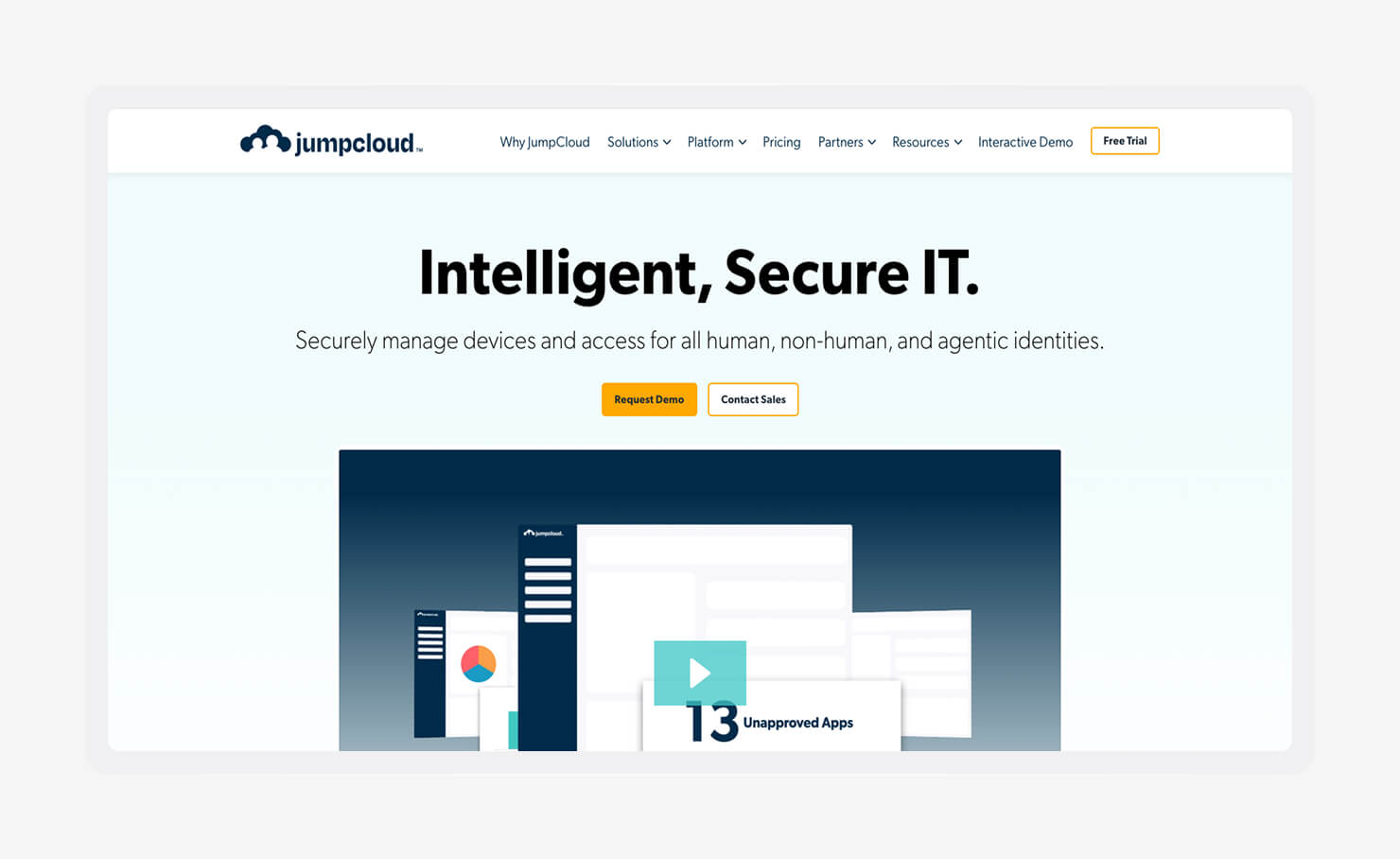
JumpCloud is a cloud-first directory platform that combines IAM and device management for organizations that need both without the overhead of enterprise tools. Cross-platform coverage across Windows, macOS, and Linux makes it a practical choice for managed service providers (MSPs) and growing companies with mixed device fleets.
Directory services, SSO, MFA, and device management run from one admin interface, which is a meaningful consolidation step for teams currently splitting identity and endpoint work across separate products. Administration is generally lighter than enterprise IAM platforms, which smaller IT teams tend to appreciate.
Where JumpCloud hits the ceiling is governance. Access certifications, formal compliance workflows, and built-in endpoint security aren’t possible within the platform. Teams that outgrow JumpCloud typically do so as their security and audit requirements become too demanding for a combined directory-and-device-management platform.
Features:
- Cloud directory: Manage user identities, credentials and group memberships across the organization through LDAP and SCIM.
- SSO: Give users access to assigned SaaS applications through SAML and OIDC, with a central portal for launching apps.
- MFA: Add phishing-resistant verification at sign-in with time-based one-time passwords (TOTP), push notifications and hardware security keys.
- Device management: Manage Windows, macOS and Linux devices with policy enforcement, configuration management and remote commands.
- Patch management: Automate OS and software updates across managed Windows and macOS devices on a set schedule.
- User lifecycle management: Handle onboarding and offboarding by automatically provisioning or deprovisioning user accounts and application access as directory changes occur.
- RADIUS authentication: Connect users to Wi-Fi networks and VPNs through a cloud RADIUS service tied to their JumpCloud identities.
- Cross-platform support: Manage Windows, macOS and Linux devices alongside user identities from a single admin interface.
4. Ping Identity
- Best for: Enterprises with complex authentication requirements, hybrid infrastructure, or customer identity use cases
- G2 rating: 4.4/5
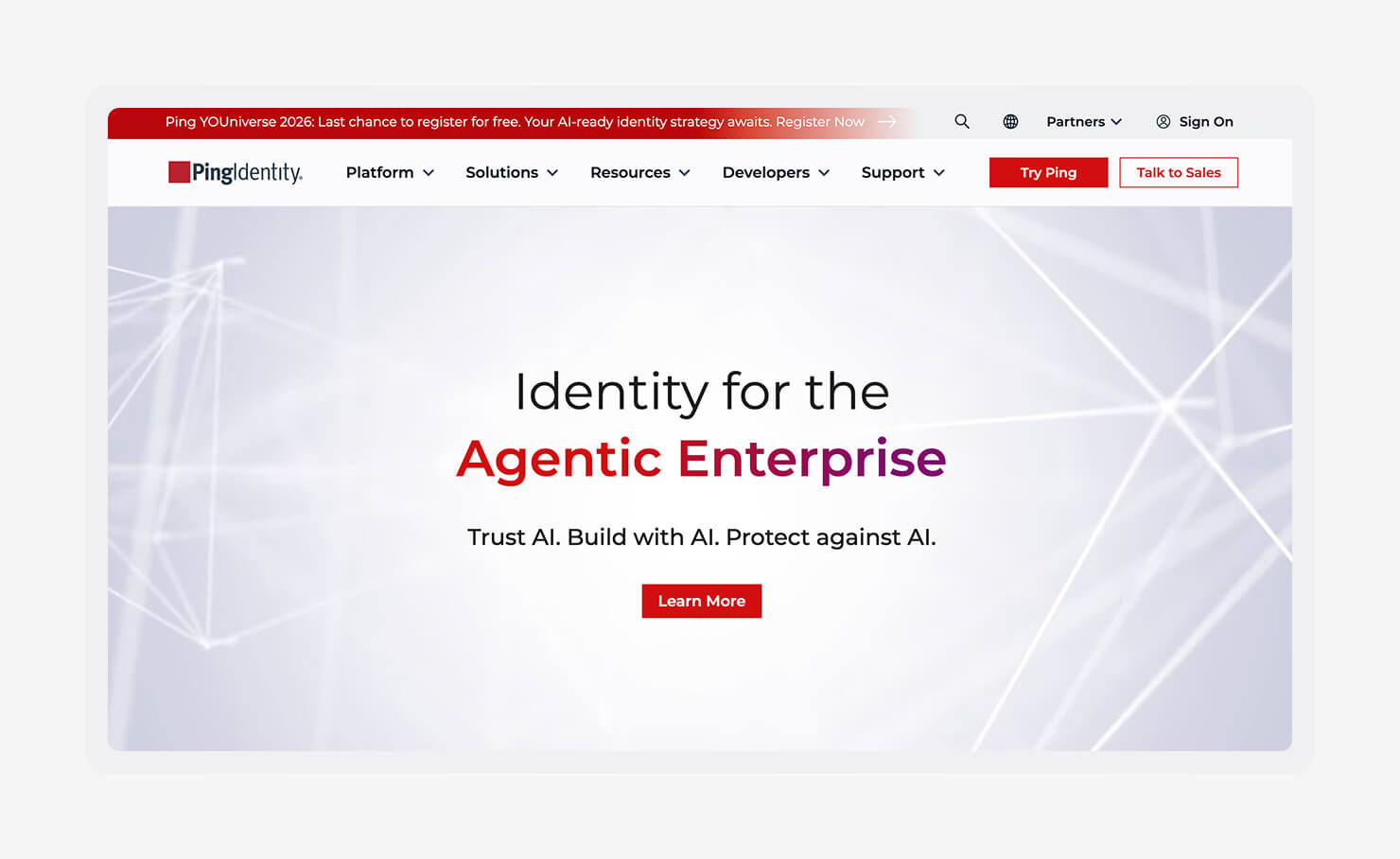
Ping Identity is an enterprise-grade IAM platform built for organizations whose identity requirements extend well beyond standard workforce SSO. It's a standout for companies that need to support complicated login processes, large user bases, or a mix of cloud and on-premises systems. It also offers customer identity and access management (CIAM) for organizations that need to manage customer access across their websites and applications.
You can deploy Ping in the cloud, on-premises, or across both environments. That flexibility can be useful for organizations with data residency requirements or older systems that they can't immediately move to the cloud. Implementation typically requires dedicated resources or a partner, and the total cost of ownership is higher than with SMB-focused platforms.
Teams that primarily need workforce SSO and MFA may find that Ping offers more functionality than they need.
Features:
- Enterprise SSO: Connect users to cloud, on-premises and legacy applications across large enterprise environments using SAML, OIDC and WS-Federation.
- Adaptive MFA: Adjust authentication requirements at sign-in based on risk signals such as device, location, behavior and threat intelligence.
- Identity federation: Connect identities across organizations and domains so users can access multiple environments without maintaining additional credentials.
- Identity orchestration: Build conditional authentication and access flows through a visual policy editor without changing code in connected applications.
- Customer identity (CIAM): Manage authentication, registration and consent for customers across web and mobile applications.
- Risk-based authentication: Evaluate real-time signals at sign-in to require additional verification or block access when risk is high.
- Directory integration: Connect to on-premises Active Directory, LDAP and cloud directories to use existing identity data.
- API security: Protect API access with token-based authorization, OAuth 2.0 and policies enforced at the API gateway.
5. Cisco Duo
- Best for: Organizations prioritizing phishing-resistant MFA and a fast, low-friction authentication rollout
- G2 rating: 4.5/5
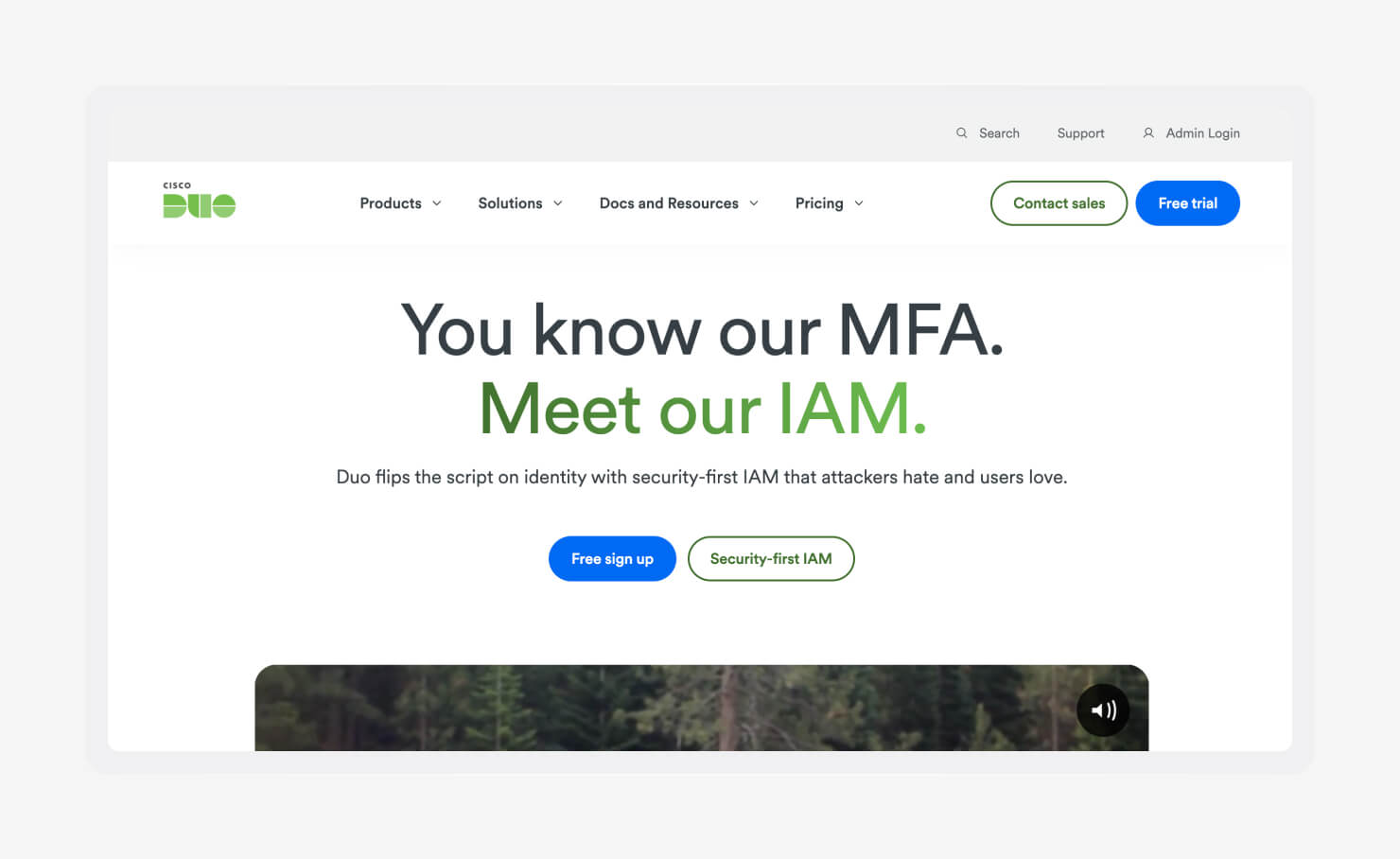
Duo Security, now part of Cisco, built its reputation around easy-to-deploy MFA. Its broad device support and straightforward user experience make it a strong choice for organizations that want to strengthen authentication without lengthy implementation.
For teams whose primary need is MFA, Duo can be easier to adopt than a broader identity platform like Okta. However, teams that need directory services or lifecycle management may need additional tools to fill those gaps.
Features:
- MFA: Verify user identity at sign-in with push notifications and TOTP codes, with hardware token support for environments that require it.
- Passwordless authentication: Let users sign in with biometrics or security keys through FIDO2/WebAuthn, removing the need for a password.
- Device trust: Check device health and compliance at sign-in and enforce access policies based on whether devices meet defined requirements.
- Adaptive authentication: Adjust the authentication challenge based on user behavior, device posture, location and risk level.
- SSO: Give users single sign-on access to cloud and on-premises applications through SAML and OIDC, with a centralized application portal.
- Endpoint visibility: Collect device security information such as OS version, encryption status, browser version and jailbreak detection to inform access decisions.
- Risk-based access: Assess the risk of each sign-in in real time and require additional verification or block access when risk is high.
6. OneLogin
- Best for: Mid-market organizations that want cloud IAM running without a long implementation project
- G2 rating: 4.4/5
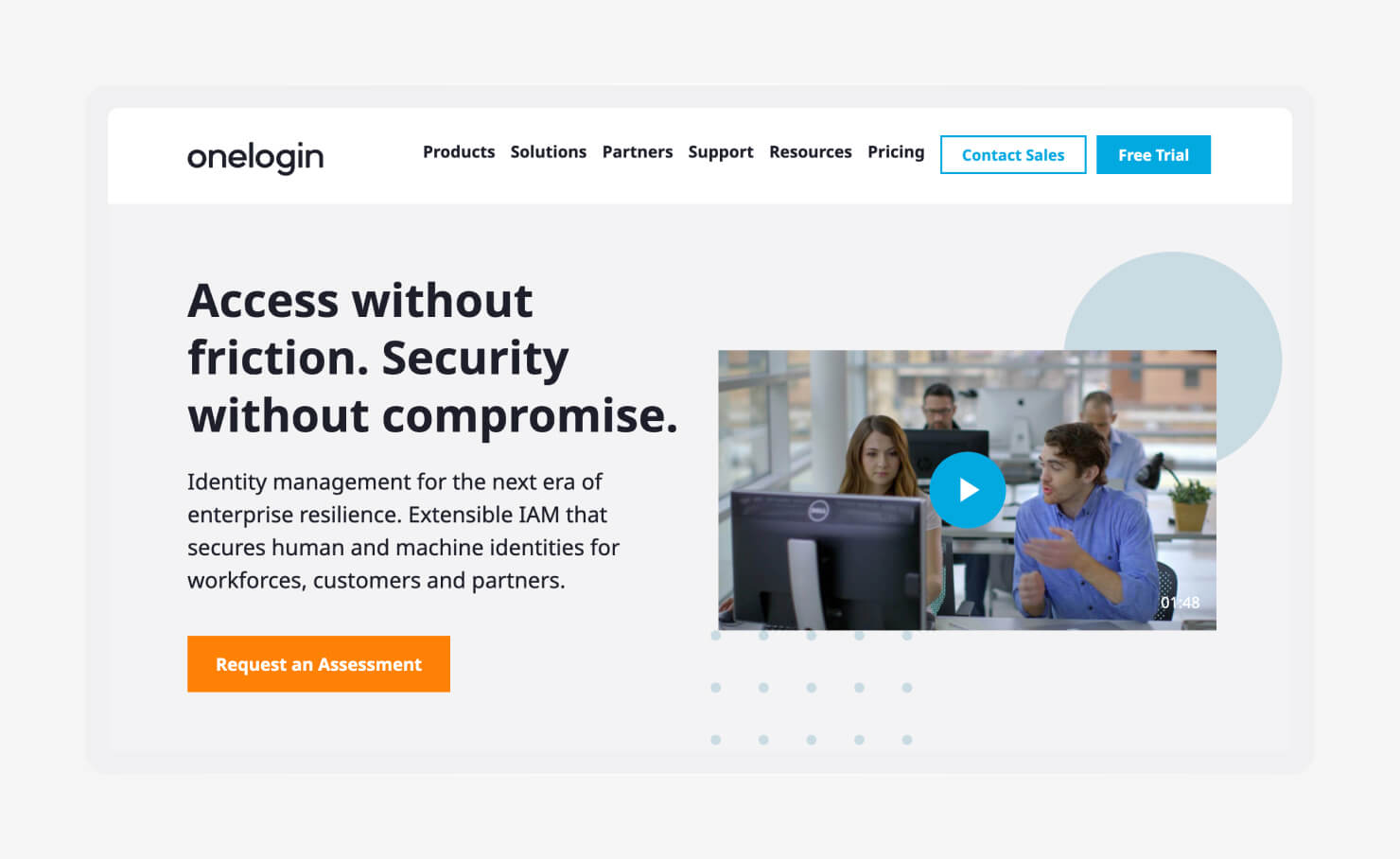
OneLogin is a cloud-based IAM platform built for mid-market organizations that need SSO, MFA, user provisioning and lifecycle management without a lengthy implementation. IT teams without dedicated identity specialists can typically get it up and running faster than more complex enterprise platforms. In addition, its SmartFactor Authentication feature uses risk signals to adjust the level of verification required when users sign in.
OneLogin works well for organizations that mainly need to manage access to business applications and handle user accounts across standard cloud-based SaaS applications such as Microsoft 365, Google Workspace, Salesforce, and Slack. Teams with more demanding governance or federation requirements may find it less capable than Ping Identity or Microsoft Entra ID.
Features:
- SSO: Give users access to cloud and on-premises applications through SAML and OIDC from a centralized portal.
- MFA: Verify user identity at sign-in with OneLogin Protect, TOTP codes and hardware security keys.
- User provisioning: Automate account creation, updates and removal across connected applications based on directory changes and HR events.
- Directory integration: Sync user identities from Active Directory, LDAP and HR systems to keep account information consistent across applications.
- SmartFactor Authentication: Assess each sign-in for risk and adjust authentication requirements based on context and user behavior.
- Lifecycle management: Manage user access throughout onboarding, role changes and offboarding with automated provisioning and deprovisioning.
- Access policies: Set rules for which users can access specific applications and under what conditions.
7. SailPoint
- Best for: Regulated enterprises that require formal identity governance, access certifications, and audit-ready access reporting
- G2 rating: 4.5/5
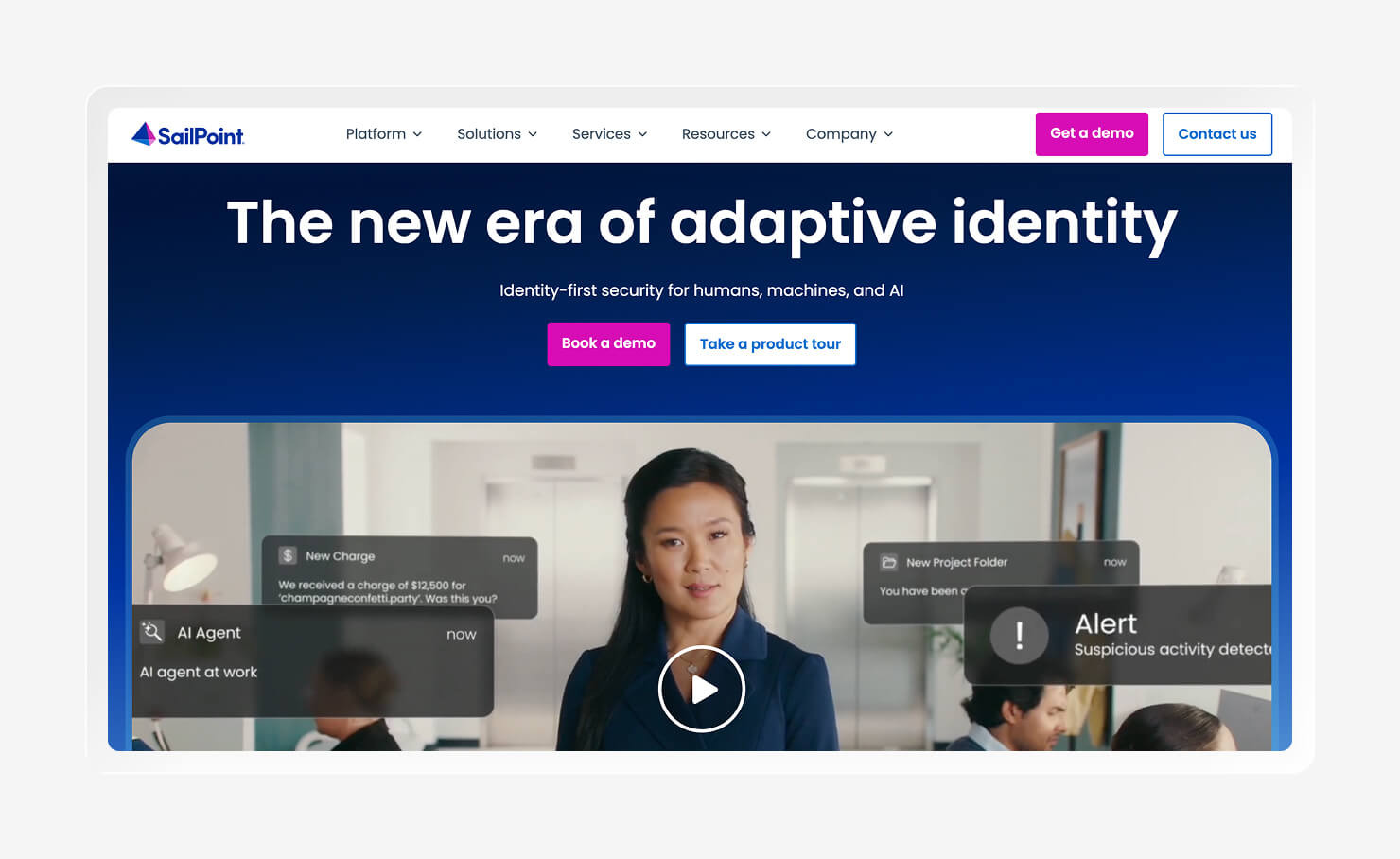
SailPoint is an identity governance platform for organizations that need to control who has access to what and review whether that access is appropriate. Unlike Okta, which focuses on authentication and access, SailPoint focuses on access governance, including access certifications and separation-of-duties (SoD) controls. The platform can help organizations in regulated industries meet requirements for formal access reviews and compliance reporting.
Organizations often use SailPoint alongside an existing IAM platform rather than as a replacement for one. In actuality, this platform adds a layer to your stack rather than fully replacing a tool like Okta. But it may be worth it if you prioritize managing risk and prepping for audits.
Features:
- Identity governance: Manage and enforce policies around who has access to what across the organization, with continuous monitoring for access risk.
- Access certifications: Automate regular access reviews so managers and application owners can approve or revoke access to sensitive resources.
- Role management: Define role-based access based on employees' job functions and business requirements.
- Lifecycle management: Manage user access through onboarding, role changes and offboarding to keep permissions aligned with current responsibilities.
- AI-driven access recommendations: Recommend appropriate access levels during certifications and provisioning based on user roles and access patterns.
- Compliance reporting: Generate audit-ready reports on access activity, certification results and policy exceptions for regulatory and internal reviews.
- Separation of duties: Detect and prevent conflicting access that could violate SoD policies, such as allowing the same person to create and approve financial transactions.
8. Keycloak
- Best for: Engineering teams that need complete ownership of their identity infrastructure and are equipped to run it
- G2 rating: Unrated
Keycloak is a free, open-source IAM solution maintained by Red Hat. Organizations that want full control over their identity stack and user data can get that with Keycloak. That can be useful for data residency requirements or for teams building authentication into their own applications, where managed SaaS platforms may offer less control. It handles SSO, user federation, identity federation and social login, with support for SAML, OAuth 2.0, OpenID Connect and LDAP.
But that control translates into ongoing operational overhead for your team. Self-hosting Keycloak means your team handles upgrades, uptime, performance and security patching on an ongoing basis. Still, it's a good fit for teams with the expertise and resources to run it.
Features:
- Open-source IAM: Inspect, modify and extend the source code to adapt the platform to your organization's needs.
- SSO: Give users single sign-on access across applications and services through SAML 2.0 and OpenID Connect.
- MFA: Add a second verification step at sign-in with TOTP authenticator apps, with additional options available through extensions.
- Identity federation: Connect external identity providers and social login services through SAML and OpenID Connect.
- User federation: Sync identities from existing LDAP directories and Active Directory while keeping those systems as the source of truth.
- OAuth/OpenID Connect/SAML: Use built-in support for OAuth 2.0, OpenID Connect and SAML 2.0 to handle application authentication and API authorization.
- Self-hosted deployment: Run Keycloak on your own infrastructure or in a private cloud to maintain control over data, configuration and availability.
How to choose the right Okta alternative
The right platform depends on what you're actually trying to fix. Switching identity providers happens maybe once per decade for most organizations, so the decision should be data-backed and well thought out.
Some things to consider before landing on an Okta competitor:
- Determine whether you need a cloud-only platform, a hybrid deployment, or a self-hosted model before you shortlist anything. This eliminates most options early.
- Decide whether consolidation is in scope. If your endpoint management, security, and compliance tools are separate from your IdP today, evaluate whether a platform change can close multiple gaps at once — not just identity.
- Make sure the alternatives you're considering work with the systems your team already relies on before you switch.
- Know where your governance requirements land. Standard workforce SSO and MFA is a different buying decision from formal identity governance with access certifications and compliance audit trails. Make sure you're shopping in the right category.
- Map the platform to where you're headed. The platform that fits today should also support your expected headcount growth, new device types, and evolving security requirements — without forcing another migration in two or three years.
Protect your people and data with a combined IAM and UEM
Iru is made for teams moving away from identity-only solutions that want to consolidate identity, device management, and endpoint security. Bringing these capabilities together reduces platform juggling and the cost of maintaining several separate tools, while giving IT a more centralized way to manage users and devices.
If an IAM no longer covers everything you need, schedule an Iru demo to learn how the platform closes existing gaps.