
Skip to content

Automate SOC 2 readiness with adaptive compliance

For most tech companies, SOC 2 has become a buyer requirement. See how growing teams close the single biggest gap between a pilot and a closed deal.

03-Compliance

SOC 2: Prove your systems are protecting customer data

Unified by design. Built for the AI era.

Iru AI is designed from the ground up to connect a grid of agents behind the scenes—across identity, endpoint, and compliance. Powered by the Iru Context Model, it understands your users, apps, and devices to act safely, intelligently, and in context across your organization.

Iru combines native endpoint and identity telemetry with supported integrations, making it easier to prove SOC 2 compliance and stay audit-ready all year.

Support every criterion for SOC 2 with Iru

Full Iru platform vs standalone compliance tools

Iru
Standalone compliance tools

Automate evidence collection

Automatically pull evidence from collected sources via Iru Compliance Automation.

Manage compliance policies

Generate, distribute, and track acknowledgement of security policies via Iru Compliance Automation

Share compliance posture externally

Leverage a public-facing portal to share compliance posture via Iru Trust Center.

Encrypt data on every device

Apply full-disk encryption and maintain a live record of which devices are protected, via Iru Endpoint Management (supporting SOC 2 control CC6.7).

Harden device configuration

Enforce secure baselines across your fleet and evidence every change, via Iru Endpoint Management (CC 6.1, CC 8.1).

Control user access

Register and authorize users before issuing credentials, then remove access when people leave or change role, via Iru Workforce Identity (CC6.2, CC6.3).

Block phishing-based account takeovers

Replace credentials with device-bound passkeys that evaluate device posture before granting entry, via Iru Workforce Identity (CC6.6).

Manage technical vulnerabilities

Continuously detect and remediate OS and third-party software risk, via Iru Vulnerability Management (CC7.1)

Stop malicious software

Prevent and detect unauthorized or malicious software on managed devices, via Iru Endpoint Detection & Response (CC 6.8).

Detect and contain incidents

Monitor for anomalies indicative of malicious acts, then triage and contain, via Iru Endpoint Detection & Response (CC 7.2, CC7.3, CC7.4).
Customize SOC 2 controls for your unique business

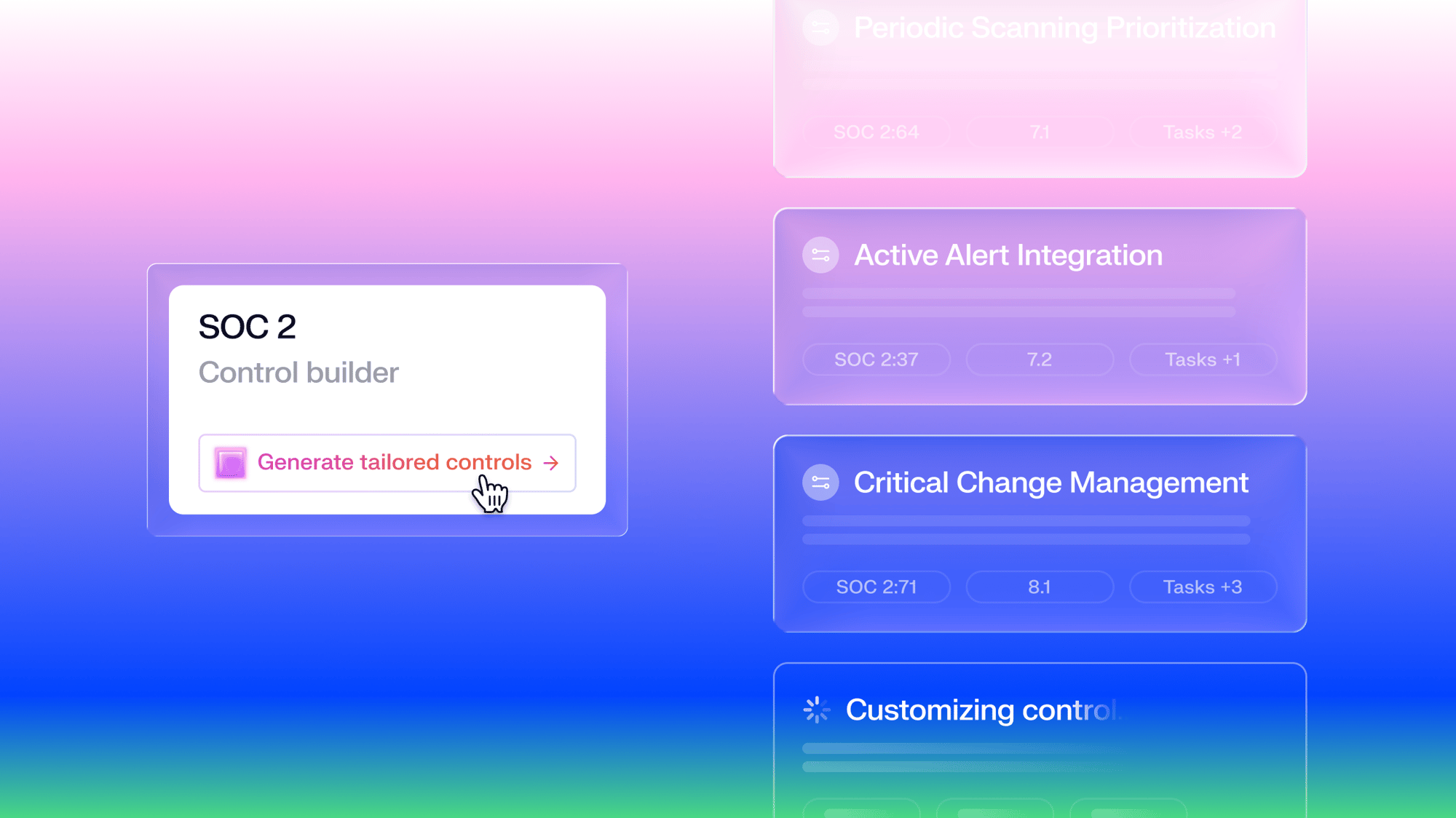
Most compliance tools turn frameworks into generic checklists. Iru generates controls that are specific to your organization, are delivered in plain language, and are mapped to your environment automatically.

  • Iru AI generates tailored controls, based on your company context and audit details
  • You can migrate existing controls over from other products, or upload your own custom control set
  • Controls become actions the moment they are created, with suggested owners and due dates
02-Compliance Inbox

Automate your SOC 2 evidence collection

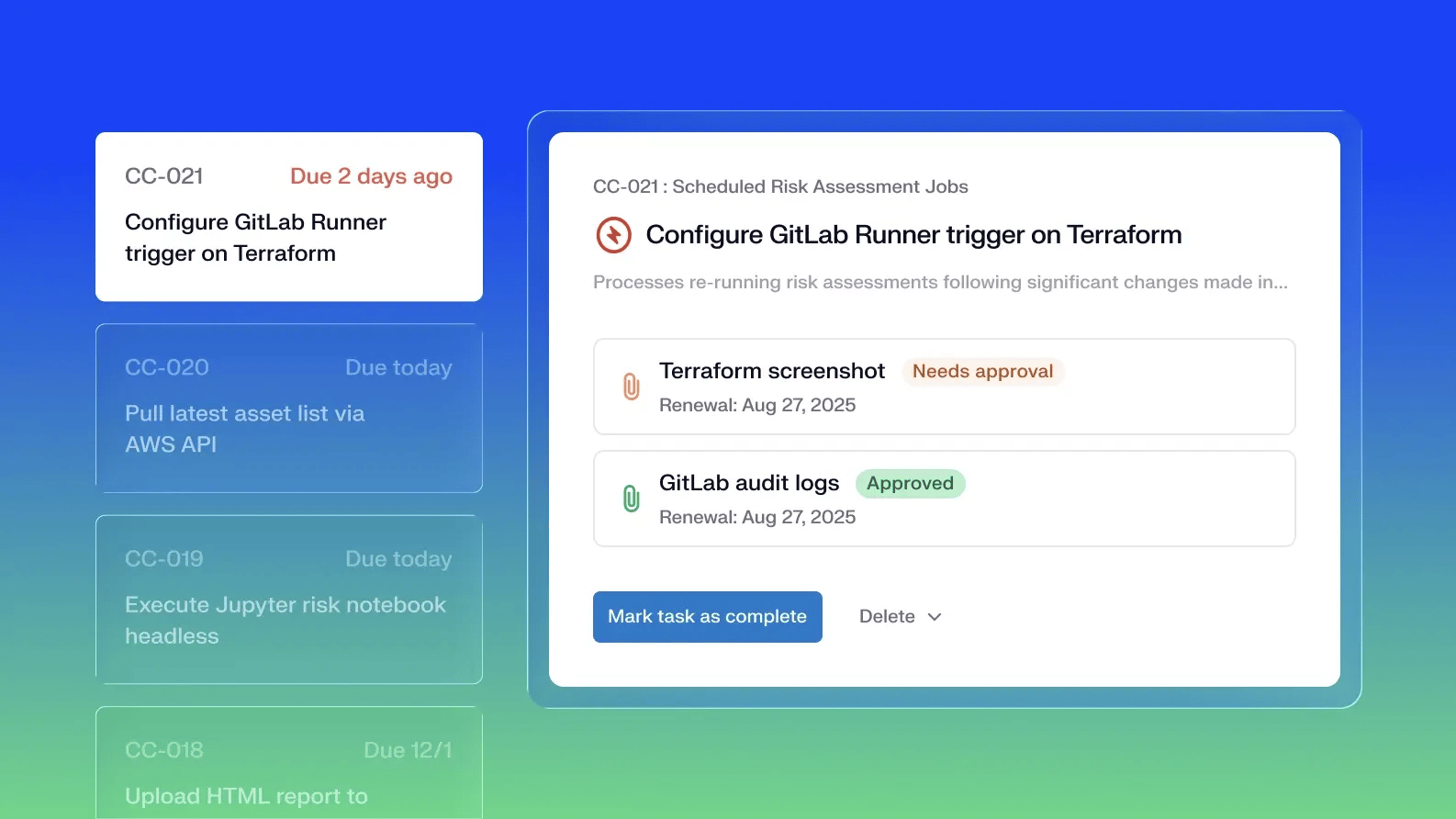
For connected and activated sources, Iru can discover and attach relevant artifacts to the supported control actions, reducing manual uploads. And because you can manage your devices and identity within Iru, that data is pulled natively.

  • Evidence flows in continuously from supported devices, integrations and systems
  • Iru AI helps to identify stale, missing or potentially irrelevant evidence for you to review
  • You stay better prepared before fieldwork begins, with fewer fire drills before your SOC 2 engagement
03-evidence mapping

Ensure continuous SOC 2 audit readiness

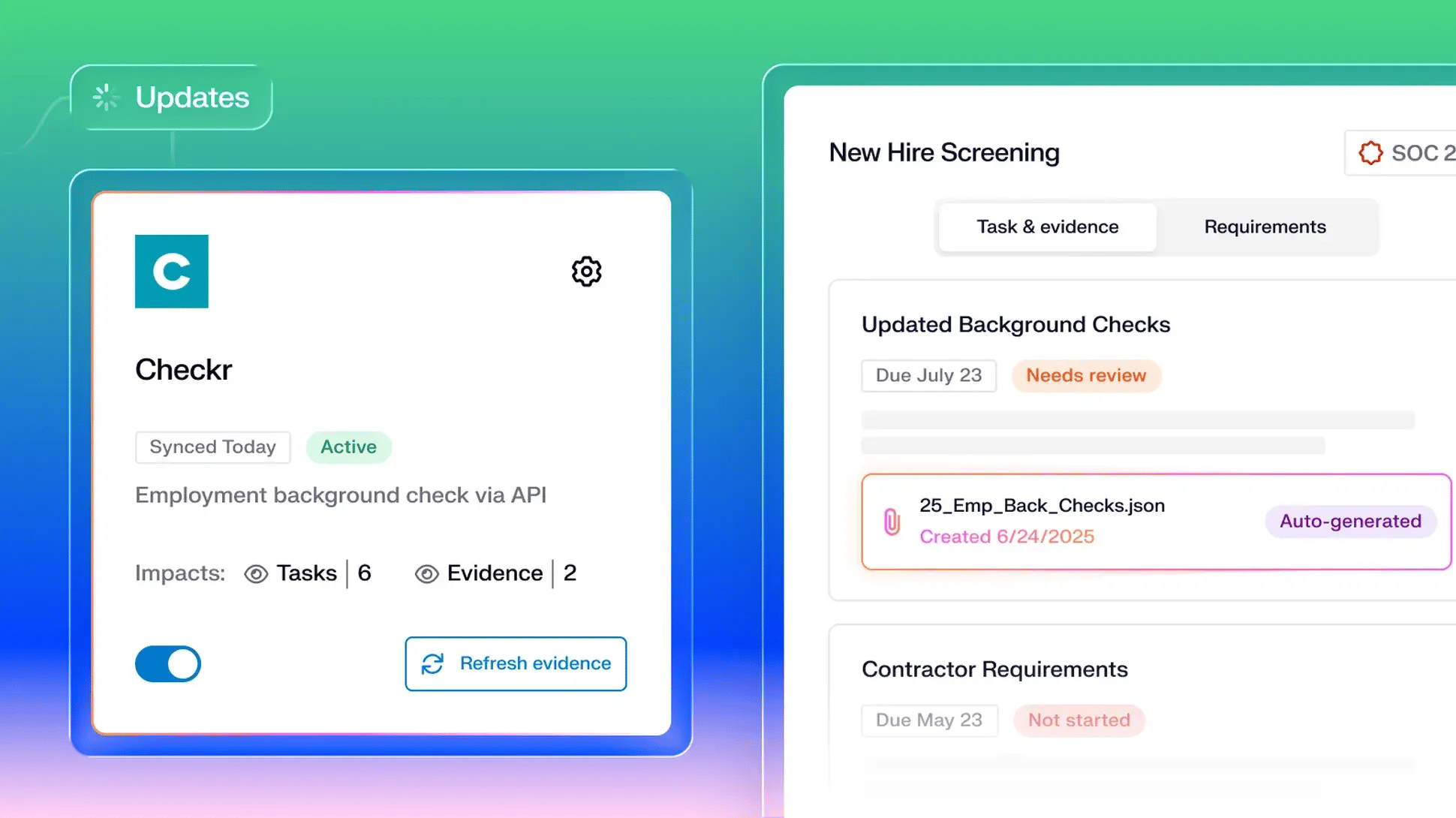
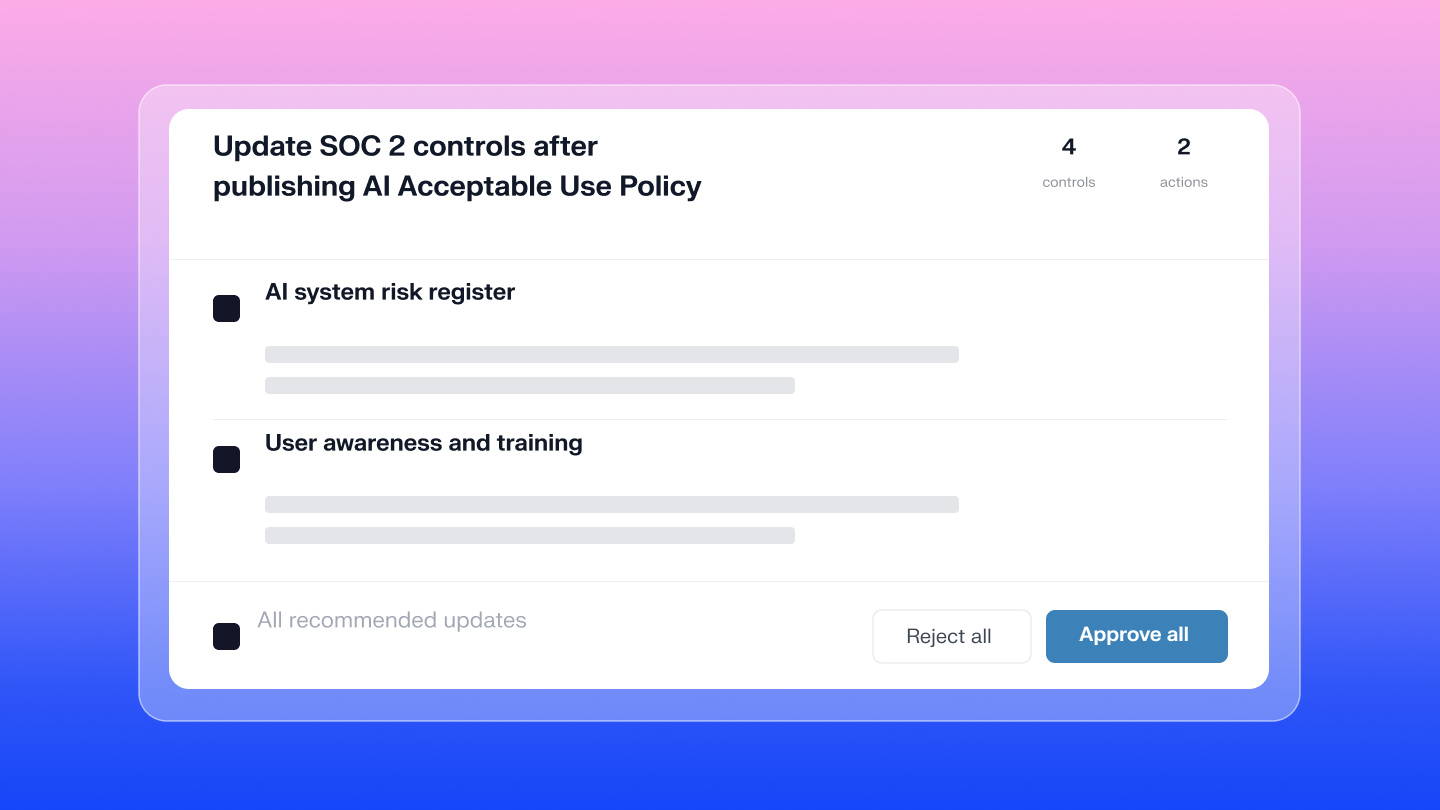
Iru's Adaptive Compliance capabilities watch for changes in your organization, and automatically suggest updates to your controls and actions.

  • Iru AI regularly checks for changes to your sources, artifacts or company profile
  • If a change is detected, a control update recommendation is surfaced for you to review, often within 24 hours
  • No changes are made without your approval, and every change is logged for your auditors to review
SOC2 -adaptive

Turn SOC 2 preparation into an always-on workflow

Iru's AI-powered compliance solution helps IT, security and GRC teams spend less time on manual compliance work and stay audit-ready all year.

Let your team focus 
on what matters

Iru replaces fragmented tools with one AI-powered platform, so IT & security spend less time chasing tickets and more time improving the business.

Frequently asked
questions

Get answers to commonly asked questions

Who defines the SOC 2 reporting requirements?

SOC 2 reports are performed under American Institute of CPAs (AICPA) professional standards. 

What does SOC 2 evaluate?

Put simply, SOC 2 evaluates an organization's security controls. Specifically, this framework evaluates your controls across five Trust Services Criteria — Security, Availability, Processing Integrity, Confidentiality, and Privacy. 

Most startups start with just Security and add the others (like Availability or Confidentiality) later, depending on what their customers request.

What does a SOC 2 engagement look like?

Your management will make an assertion about the controls, and an independent CPA firm will issue their opinions. This is commonly called an audit, but it is technically an examination. 

What does a SOC 2 engagement produce?

The output of a SOC 2 engagement is a SOC 2 report. Reports are typically shared with customers and prospects under NDA, and name the scope and period they cover.

What are the potential outcomes of a SOC 2 engagement?

Outcomes of a SOC 2 engagement are not binary pass/fail. The CPA firm issues an opinion, which is either unmodified or modified.

  • Unmodified (clean) — the most common outcome, and the one you want.
  • Qualified — a specific matter is significant enough to call out, but not pervasive to the report as a whole.
  • Adverse — deficiencies are both material and pervasive. This can relate to the fairness of the system description, the suitability of control design, the operating effectiveness of controls, or any combination.
  • Disclaimer — the auditor could not obtain enough evidence to form an opinion at all.

Importantly, a Type II report can contain test exceptions and still receive an unmodified opinion. Exceptions are documented in the report, and what determines the opinion is their significance and pervasiveness — not their existence. So a clean opinion does not mean a flawless report, and a handful of exceptions does not mean you failed.

A modified opinion is commercially damaging, but you do not technically "fail" a SOC 2.


Is SOC 2 compliance legally mandatory?

No, there is no government law requiring SOC 2. However, it is contractually mandatory for many enterprise buyers. Without it, you will likely fail vendor security assessments or get blocked by procurement teams.

What is the difference between SOC 2 Type I and Type II?

Think of Type I as a snapshot photograph and Type II as a continuous video.

  • Type I tests if your security controls are designed correctly on a specific date.
  • Type II tests how effectively those controls operated over a window of time (usually 3 to 12 months). Enterprise buyers usually demand a Type II report.
How long is a SOC 2 report valid for?

A SOC 2 report covers a specific historical window, and buyers typically consider it valid for 1 year from the end of the audit period. A Bridge Letter (or Gap Letter) is a document you sign covering the gap between the end date of your last report and the start of your new audit cycle, reassuring buyers that your controls haven't lapsed.

Can Iru certify us, or issue a SOC 2 report?

No compliance software can issue a final SOC 2 report. A SOC 2 examination must be performed by an independent, licensed CPA firm, under AICPA professional standards.

Our platform acts as the engine room—it connects to your systems, automatically gathers the evidence, manages your policies, and hands it over to the auditor on a silver platter to save you time and money. If you would like to work with one of the auditors that we partner with, please reach out to your rep.

Stay up to date

Iru's bi-weekly collection of articles, videos, and research to keep IT & Security teams ahead of the curve.