
 Workforce Identity
 Endpoint Management
 Endpoint Detection & Response
 Vulnerability Management
 Compliance Automation
 Trust Center




What is EDR? Endpoint detection and response (EDR) is a security practice that monitors your devices for suspicious activity, investigates threats, and helps stop attacks before they spread across your environment.
Picture this: Your IT team gets an alert about malware on a device in your fleet. By the time someone starts investigating, the threat has already moved to other devices. Now you're dealing with potential data theft, compliance headaches, and damage to customer trust.
EDR tools are built for moments like this. They help you spot threats early, contain them fast, and reduce the blast radius when something slips through. But not every platform takes the same approach. Some prioritize visibility. Others focus on automated containment and remediation.
The challenge isn't finding an EDR tool. It's finding one that matches your environment, team, and security goals. Here are seven of the best EDR solutions to consider.
| Provider | Best for | G2 rating | Key features |
|---|---|---|---|
| Iru | Scaling companies with lean IT teams | 4.7 | Unified EDR agent, real-time behavioral protection, MCP server support, compliance automation tools, and passwordless workforce identification |
| CrowdStrike Falcon | Large enterprises with complex environments and dedicated SOCs | 4.6 | Agentic agents, single sensor architecture, cloud-native platform, threat intelligence, and advanced threat hunting |
| SentinelOne Singularity™ Complete | Enterprises prioritizing autonomous response and strong signature-based detection | 4.7 | Behavioral AI detection, autonomous responses, audit trail, automated remediation, and threat hunting |
| Cortex XDR from Palo Alto Networks | Organizations that use Palo Alto firewalls and want deep cross-domain correlation | 4.6 | Prevention modules, NG-SIEM, Unit 42 managed detection and response (MDR), cross-domain telemetry, and incident investigation |
| Microsoft Defender for Endpoint | Organizations standardized on Microsoft 365 E3/E5 in Windows-heavy environments | 4.4 | Automatic attack disruption, Microsoft Security Copilot, exposure management, threat intelligence, and Microsoft ecosystem integration |
| Trellix Endpoint Security | Mid-to-large enterprises that require robust on-premises, hybrid, and air-gapped support | 4.3 | Endpoint forensics, mobile threat defense, ePolicy Orchestrator, centralized policy management, and incident investigation |
| Symantec Endpoint Security | Complex, hybrid corporate networks requiring deep, centralized security | 4.4 | Multi-layered defense, system hardening, centralized management, threat intelligence, and policy enforcement |
1. Iru
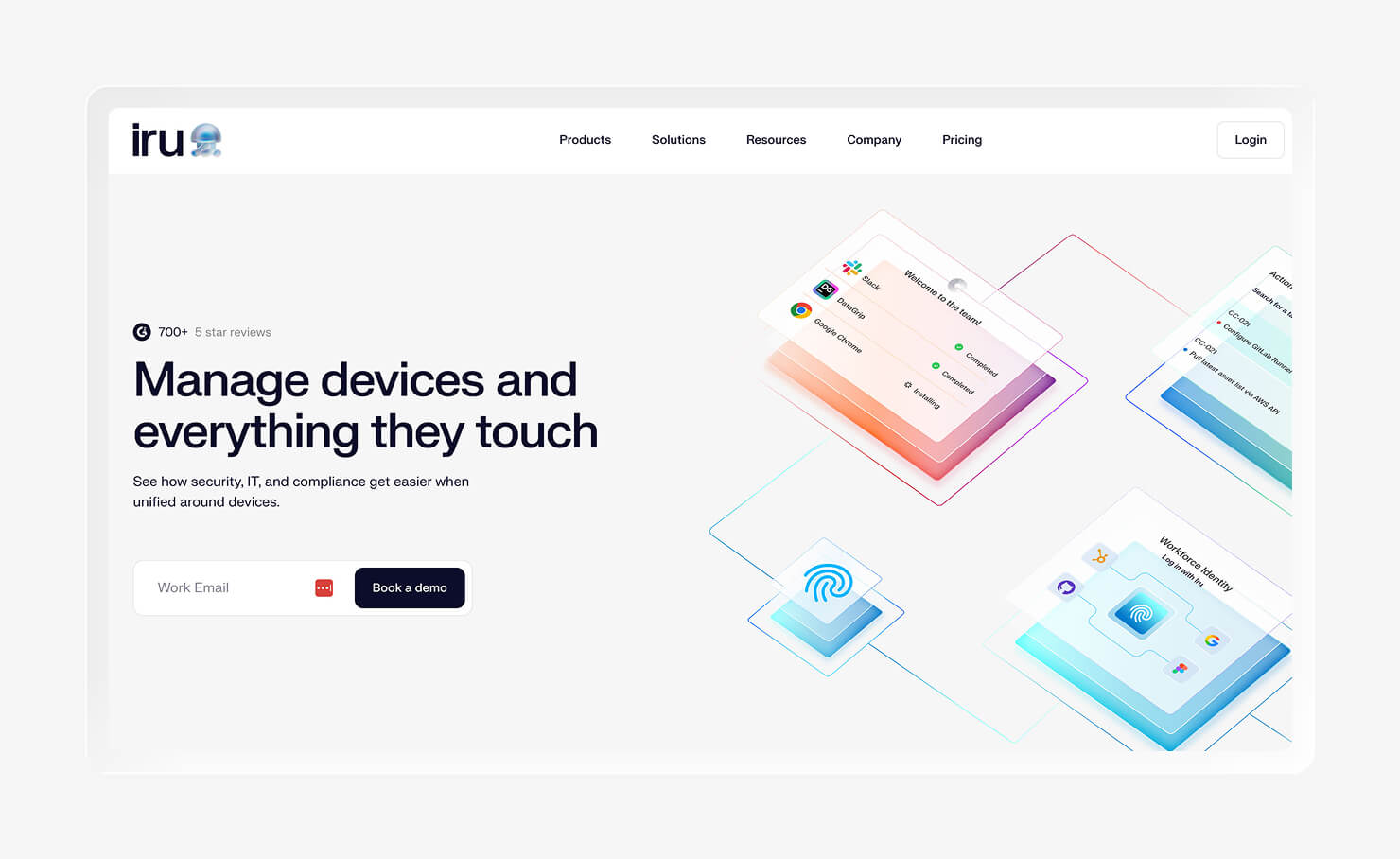
- Best for: Scaling companies with lean IT teams
- G2 rating: 4.7
- Protective features: Unified EDR agent, real-time behavioral protection, MCP server support, compliance automation tools, and passwordless workforce identification
Iru combines endpoint management, EDR, and vulnerability management in a single agent. That means fewer tools to manage, less context switching, and a clearer view of what's happening across your environment.
Unlike tools that rely heavily on known threat signatures, Iru uses behavioral detection to identify suspicious activity as it happens. Iru’s EDR delivers 22% lower resource usage under peak loads and stops 2.3x more zero-day exploits than traditional approaches.
When an incident occurs, Iru gives teams a clear timeline of events so they can see exactly what happened, when it happened, and which actions triggered the threat. Instead of piecing together data from multiple tools, teams get the context needed to investigate and respond quickly.
Deployment is straightforward by design, so teams can roll out protection across Mac and Windows devices without managing multiple agents or complex integrations. Iru also includes support for Model Context Protocol (MCP) servers, allowing organizations to securely connect AI workflows to security data and actions from a controlled environment.
“What I like best about Iru is the centralized visibility it provides over IT assets and software licenses. It simplifies tracking across servers, virtual machines, and user environments, reducing the need for manual spreadsheets and fragmented tools.” — Emanuele M. on G2
Users across industries use Iru to keep their devices safe. For instance, Fountain Lake School District strengthened device security and management while reducing the time spent on day-to-day administration. By consolidating workflows and improving visibility, the IT team gained stronger control over its environment without adding complexity.
Protection features
- Behavioral detection: Identifies suspicious behavior in real time, helping stop new and unknown threats before they spread
- Fast and easy deployment: A unified agent simplifies rollout and reduces the ongoing work required to manage endpoint security
- Compliance Automation: Maps evidence to controls automatically and helps keep your organization audit-ready
- MCP server support: Connects AI-powered workflows to trusted security data, making investigation and response faster
- Workforce Identity: Passwordless authentication reduces credential risk while giving users a faster sign-in experience
2. CrowdStrike Falcon
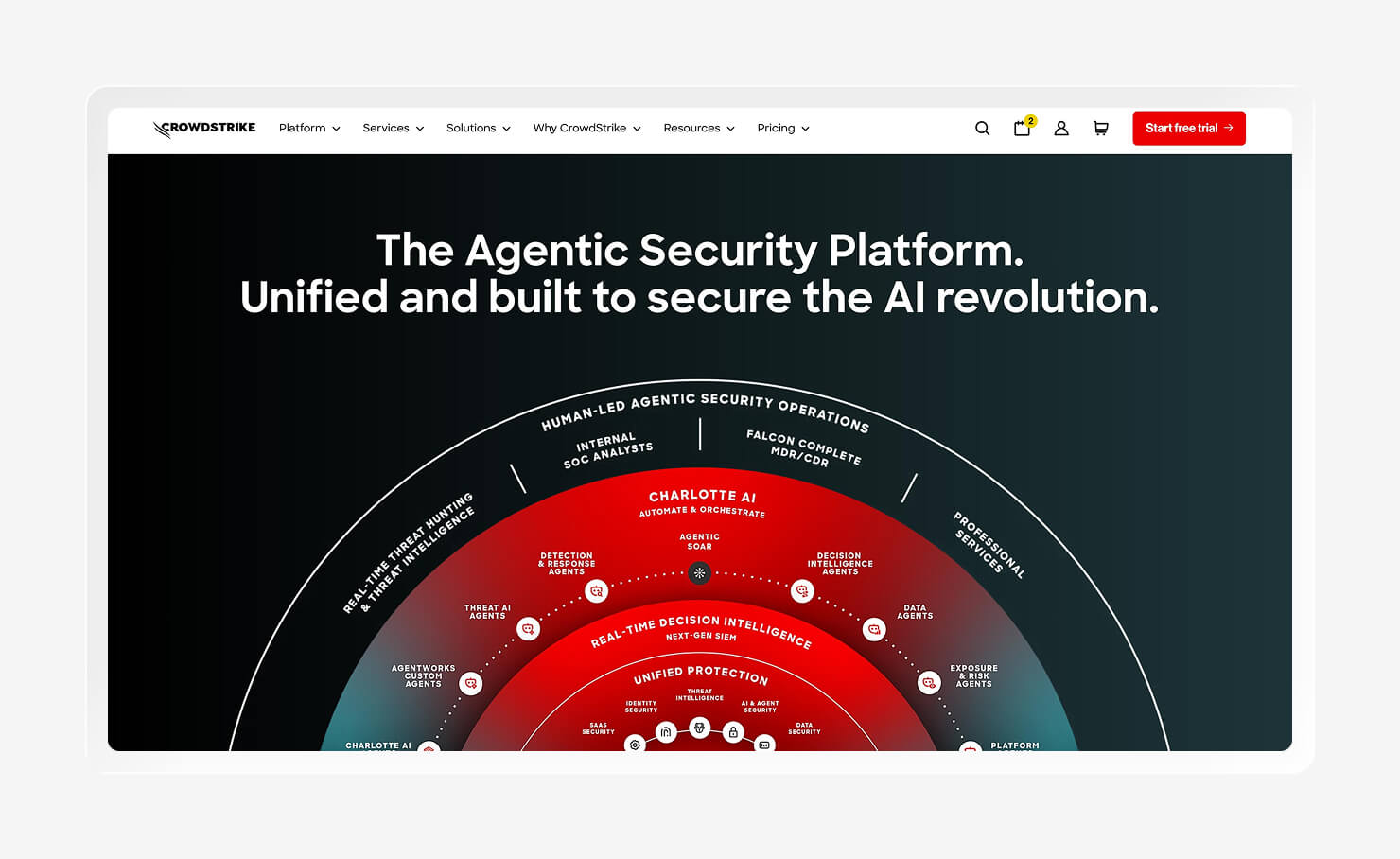
- Best for: Large enterprises with complex environments and dedicated SOCs
- G2 rating: 4.6/5
- Protective features: Agentic AI, single sensor architecture, and cloud-native platform
CrowdStrike Falcon is a leading EDR solution, which combines endpoint protection, threat intelligence, identity security, and incident response capabilities in a cloud-native architecture managed through a single lightweight sensor.
Users like Falcon's behavioral detection capabilities, lightweight performance, and detailed visibility into threats. They particularly talk about its ability to detect advanced attacks, including ransomware, zero-day threats, and malware families such as Atomic Stealer (AMOS), without creating significant performance overhead on endpoints.
The platform is particularly popular among larger security teams because it provides deep telemetry and investigation tools. That said, some reviewers note that the breadth of features can create a learning curve for smaller teams that don't have dedicated security analysts.
Organizations looking for advanced threat hunting and detection capabilities often view that tradeoff as worthwhile.
Protection features
- Agentic AI: AI-powered agents automate investigation and response workflows, helping you analyze and respond to threats faster
- Single sensor: A lightweight sensor collects endpoint telemetry and powers multiple security functions without requiring separate agents on devices
- Cloud-native architecture: Falcon's cloud-native design reduces on-premises infrastructure requirements while making it easier to scale protection across large environments
3. SentinelOne Singularity™ Complete
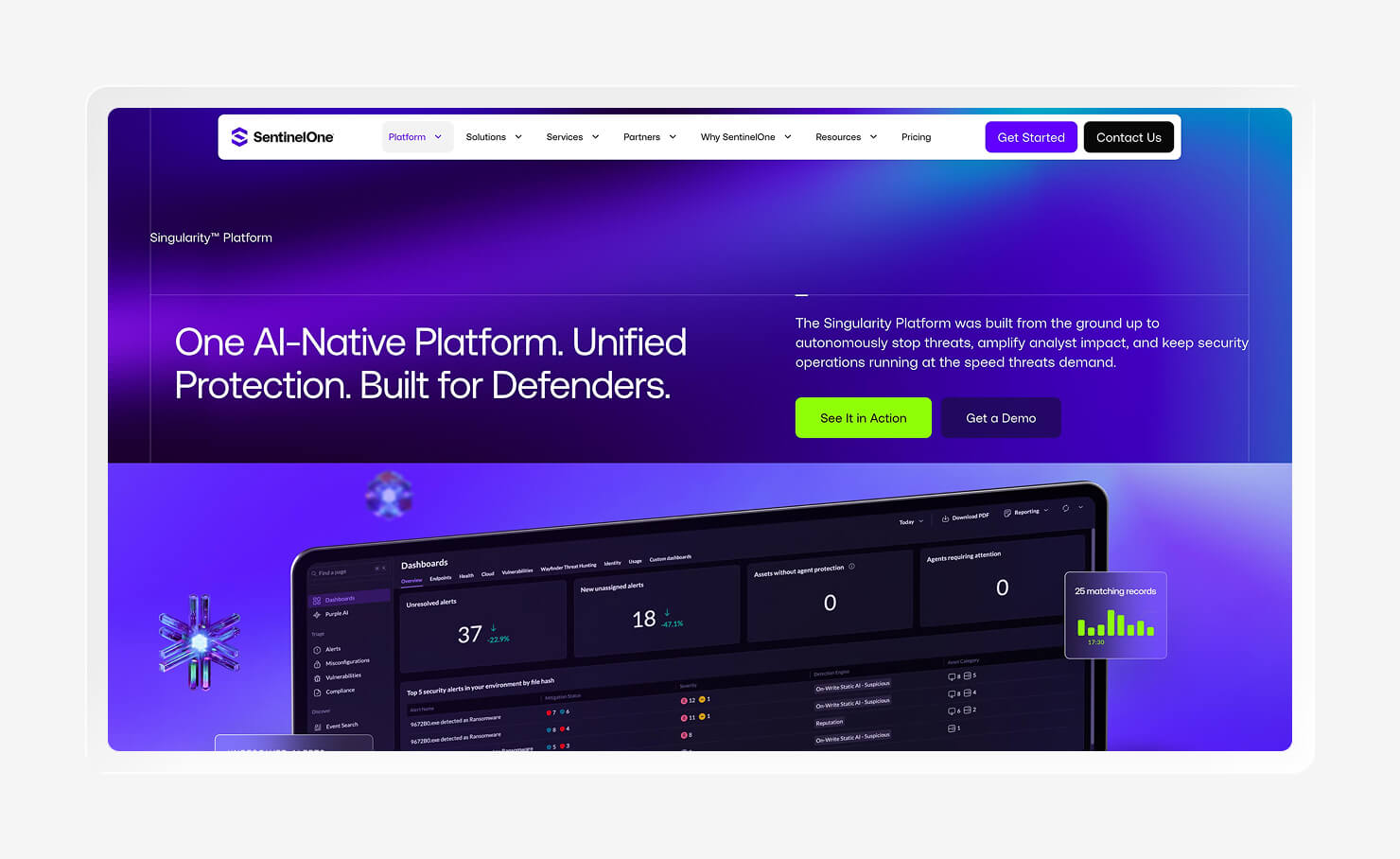
- Best for: Enterprises prioritizing autonomous response and strong signature-based detection
- G2 rating: 4.7/5
- Protective features: Behavioral AI detection, autonomous responses, and audit trail
SentinelOne Singularity Complete is an endpoint protection platform that combines EDR, threat hunting, and automated remediation. It’s designed to detect suspicious activity using behavioral AI rather than relying solely on known threat signatures, making it well-suited for emerging threats and evolving attack techniques.
Among modern endpoint detection and response solutions, SentinelOne stands out for its autonomous approach to security operations. When suspicious activity is detected, the platform can isolate affected devices, stop malicious processes, and begin remediation without waiting for manual intervention.
People like this platform for its strong detection capabilities, automated response actions, and detailed visibility into endpoint activity. Users find that SentinelOne performs well against ransomware and macOS malware, while providing a centralized view of incidents across environments.
That said, some users mention that policy tuning and alert management can require additional effort during deployment, particularly in larger environments.
Protection features
- Behavioral AI detection: Analyzes how files and processes behave to identify malicious activity, including previously unseen threats
- Autonomous responses: Automatically contains and remediates threats, helping reduce the time between detection and response
- Audit trail: Provides a detailed record of events and actions, making investigations faster and simplifying incident reviews
4. Cortex XDR (From Palo Alto Networks)

- Best for: Organizations that use Palo Alto firewalls and want deep cross-domain correlation
- G2 rating: 4.6/5
- Protective features: Prevention modules, NG-SIEM, and Unit 42 MDR
Cortex XDR is Palo Alto Networks' extended detection and response platform. It combines endpoint data with network, cloud, and identity telemetry to help you investigate threats from a broader context. This approach can make it easier to identify attack patterns that might be missed when security tools operate in isolation.
Among modern EDR security solutions, Cortex XDR is often chosen by organizations that want to reduce blind spots across their security stack. The platform can also help identify issues such as endpoint drift, where devices gradually move away from approved configurations and security policies, increasing risk over time.
According to G2 reviewers, Cortex XDR does a good job of surfacing meaningful threats without overwhelming teams with alerts. Users also highlight its investigation capabilities and the visibility it provides into security events.
On the flip side, some reviewers note that the platform can take time to learn, especially for teams that are new to extended detection and response (XDR) technologies or managing complex environments.
Protection features
- Prevention modules: Combine exploit protection, malware prevention, and behavioral analysis to stop threats before they can gain a foothold on endpoints
- NG-SIEM: Centralizes security data and investigations, helping analysts correlate events and respond to incidents faster
- Unit 42 MDR: Provides access to Palo Alto Networks' managed detection and response team for organizations that need additional security expertise and around-the-clock monitoring
5. Microsoft Defender for Endpoint
- Best for: Organizations standardized on Microsoft 365 E3/E5 in Windows-heavy environments
- G2 rating: 4.4/5
- Protective features: Automatic attack disruption, Microsoft Security Copilot, and exposure management
Microsoft Defender for Endpoint is Microsoft's EDR platform for Windows, macOS, Linux, Android, and iOS devices. It integrates closely with Microsoft security products, making it a common choice for organizations already using Microsoft 365, Microsoft Entra ID, and other Microsoft services.
For those looking for the best endpoint management software and security tools from a single vendor, Defender for Endpoint offers a tightly integrated approach. You can monitor threats, investigate incidents, and manage exposure risks from a unified platform while benefiting from Microsoft's extensive threat intelligence network.
The platform's native integration with the Microsoft ecosystem, centralized management experience, and strong capabilities for securing Windows environments are some of the top features users like. They also find its threat detection, vulnerability management, and automated investigation features quite useful.
However, some reviewers note that licensing can be complex and that getting the most value from the platform often requires familiarity with Microsoft's broader security stack.
Protection features
- Automatic attack disruption: Automatically interrupts active attacks by isolating affected assets and limiting an attacker's ability to move through your environment
- Microsoft Security Copilot: Uses generative AI to help you investigate incidents, understand alerts, and respond to threats more efficiently
- Exposure management: Identifies security weaknesses and prioritizes remediation efforts based on potential risk to your organization
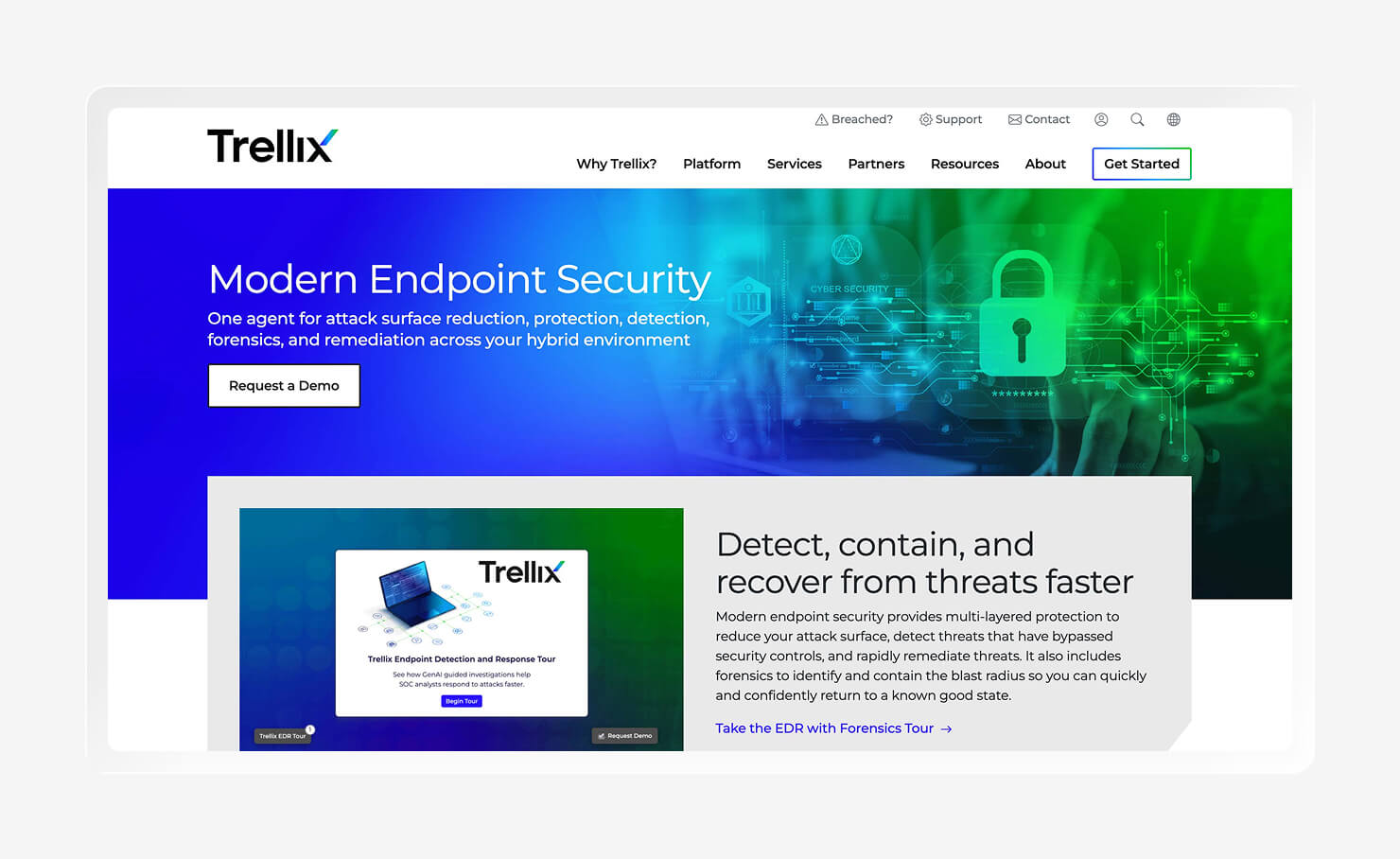
6. Trellix Endpoint Security
- Best for: Mid-to-large enterprises that require robust on-premises, hybrid, and air-gapped support
- G2 rating: 4.3/5
- Protective features: Endpoint forensics, mobile threat defense, and ePolicy Orchestrator
Trellix Endpoint Security combines threat prevention, detection, and investigation capabilities in a single platform. Built on technology from the former McAfee Enterprise portfolio, it provides protection for desktops, laptops, servers, and mobile devices while giving you centralized visibility into endpoint activity.
Trellix is commonly used in larger environments where centralized management and detailed endpoint telemetry are priorities. Its investigative capabilities can help you understand how threats entered an environment, including risks associated with phishing campaigns, malicious downloads, and cracking tools.
G2 reviewers talk about its malware detection capabilities, policy controls, and integration with the broader Trellix security ecosystem. They also feel that the detailed investigation tools available during incident response are pretty efficient.
Some reviewers note that deployment and policy management can be complex, particularly for teams without dedicated security administrators.
Protection features
- Endpoint forensics: Collects detailed endpoint data that helps you investigate incidents and understand how attacks occurred
- Mobile threat defense: Extends protection to mobile devices by identifying malicious apps, unsafe networks, and mobile-specific threats
- ePolicy Orchestrator: Provides a centralized console for managing security policies, monitoring endpoints, and coordinating responses across the environment
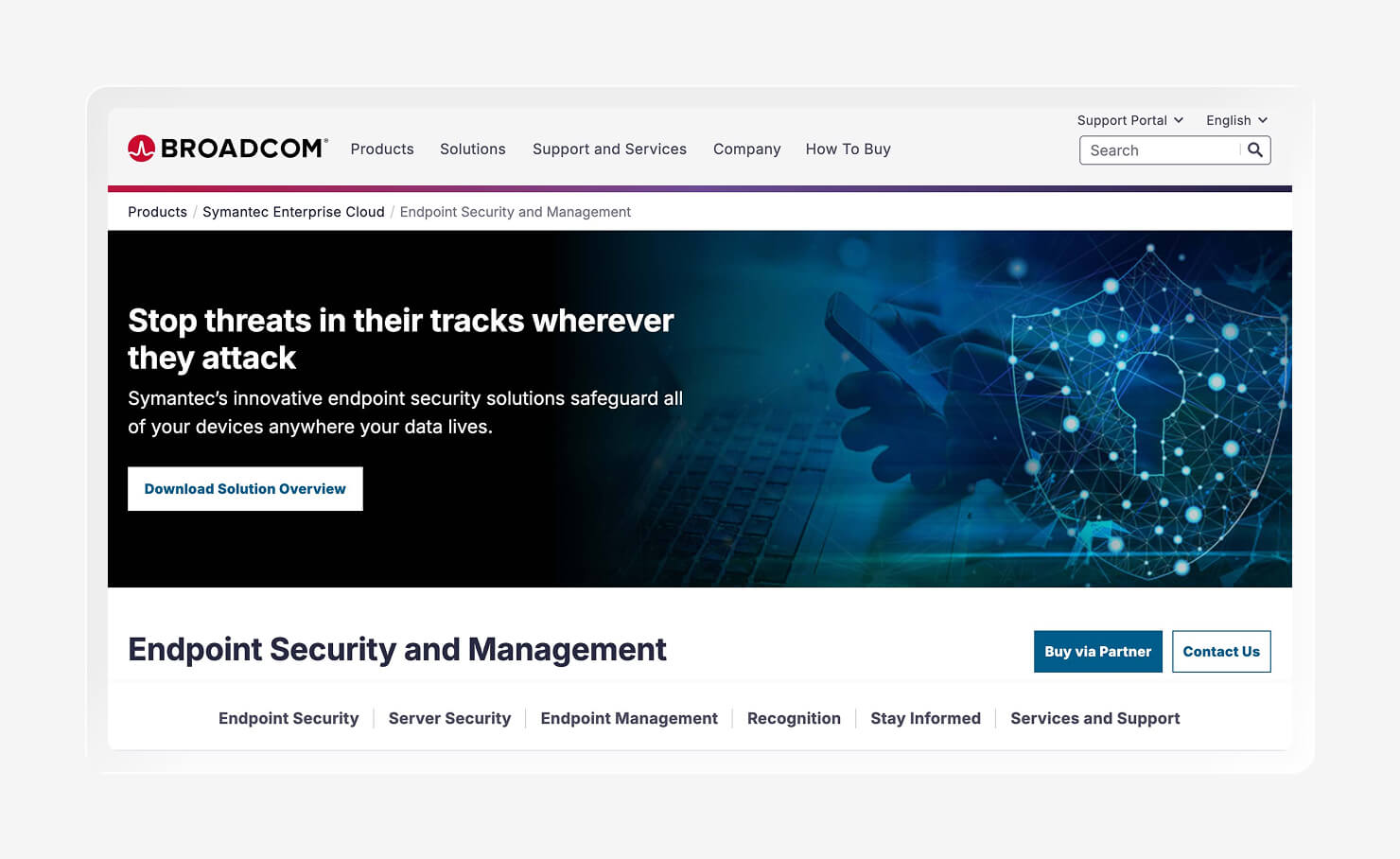
7. Symantec Endpoint Security
- Best for: Complex, hybrid corporate networks requiring deep, centralized security
- G2 rating: 4.4/5
- Protective features: Multi-layered defense, system hardening, and centralized management
Symantec Endpoint Security is Broadcom's endpoint protection platform that combines malware prevention, attack protection, EDR, and threat intelligence. The platform uses multiple security layers to detect known and unknown threats across Windows, macOS, and Linux environments.
Symantec is often used by organizations that need consistent security controls across large endpoint fleets. Its centralized management tools can also help you address shadow IT by giving administrators greater visibility into devices, applications, and activity across the environment.
G2 reviewers like Symantec's malware detection capabilities, policy controls, and broad feature set. Its ability to identify suspicious activity and protect devices against a wide range of threats often comes in handy. While the pros are great, some reviewers note that the management experience can feel complex at times, particularly for smaller teams without dedicated security resources.
Protection features
- Multi-layered defense: Combines signature-based detection, behavioral analysis, and threat intelligence to protect against a wide range of attacks
- System hardening: Reduces the attack surface by restricting risky behaviors and preventing unauthorized changes to critical systems
- Centralized management: Allows security teams to manage policies, monitor threats, and respond to incidents from a single console
How to pick the best EDR solution
Threats are moving faster than ever. Iru's latest threat report revealed a surge in ClickFix attacks, software supply chain compromises, and North Korean recruiter scams targeting developers. The common thread? Attackers are increasingly relying on new techniques that bypass traditional security controls.
The best EDR platforms can identify suspicious behavior early, limit the spread of attacks, and give you the context you need to respond quickly. Here are a few things to keep in mind while evaluating the top EDR solutions so you can pick the best tool for your needs.
AI-driven threat detection
Many modern attacks don't rely on known malware. Instead, they abuse trusted tools, social engineering, or legitimate software to evade traditional signature-based detection. That's why behavioral detection has become one of the most important EDR capabilities.
AI-driven threat detection analyzes how processes behave rather than simply checking whether a file matches a known threat. For example, Iru EDR detects suspicious execution chains commonly used in ClickFix attacks, while SentinelOne uses behavioral AI to identify emerging threats and suspicious activity.
This approach can help stop malware before it infects additional devices, including new threats such as the MonetaStealer macOS threat.
Automated patching
Threat actors often move quickly after a vulnerability becomes public. The longer a device remains unpatched, the greater the risk of exploitation. Automated patching reduces that window by deploying updates without requiring manual intervention from IT teams.
Platforms that combine EDR with patch management can simplify this process. For instance, Iru pairs endpoint protection with automated remediation and vulnerability management, while Microsoft Defender integrates with Microsoft's broader security and device management ecosystem.
Forensic tools
Detecting an attack is only part of the job. Your security teams also need to understand how it happened, what systems were affected, and whether attackers established persistence elsewhere in the environment.
Strong forensic capabilities provide detailed audit trails, process histories, and investigation timelines. Tools such as SentinelOne and Cortex XDR help you trace activity back to its source, while Iru provides event timelines that show what triggered a threat and how it unfolded. These capabilities can significantly reduce investigation time during active incidents.
Easy deployment
A security platform only works if your teams can deploy and manage it effectively. Complex deployments often delay protection and increase administrative overhead.
Look for tools that support fast rollout, centralized management, and zero-touch enrollment workflows. For example, Iru simplifies deployment through a unified agent and automated device management workflows, while Microsoft Defender benefits from native integration across Microsoft environments.
Many organizations also prioritize automated endpoint management software to reduce manual setup and ongoing maintenance.
In-house research
Security vendors with dedicated research teams often identify new threats before they become widespread. That research can lead to faster detections, stronger threat intelligence, and better protection against emerging attacks.
Iru's security researchers published more than 100 new detection rules in a single quarter and uncovered previously undocumented threats, including MonetaStealer. CrowdStrike's threat intelligence team and Palo Alto Networks' Unit 42 researchers also regularly publish original threat research.
When evaluating vendors, consider whether they actively contribute to the security community or primarily rely on third-party intelligence feeds.
MCP support
MCP is an emerging standard that allows AI systems to securely access data, tools, and workflows. An MCP server acts as the bridge between AI-powered assistants and the systems they need to interact with.
For IT and security teams, MCP support can unlock new automation opportunities. Instead of manually searching dashboards or switching between tools, AI assistants can retrieve context, investigate alerts, and help coordinate actions through approved workflows.
Iru supports MCP servers, allowing you to securely connect AI-driven workflows to endpoint management and security operations. And as organizations adopt AI across IT and security, MCP support is likely to become increasingly important.
Defend your endpoints with Iru, before they’re attacked
Modern threats don't wait for your security teams to catch up. From malware delivered through fake software downloads to sophisticated supply chain attacks, endpoint threats are becoming harder to detect and faster to spread.
Iru’s EDR software uses behavioral detection, autonomous containment, and continuous threat research to stop attacks before they turn into incidents. With a unified agent, built-in vulnerability management, workforce identity, and compliance automation, you can reduce complexity while strengthening security across your environment.
Book a free demo to see how Iru can help you detect and eliminate threats faster and give your team time and control back.