 Workforce Identity
 Endpoint Management
 Endpoint Detection & Response
 Vulnerability Management
 Compliance Automation
 Trust Center


The challenge
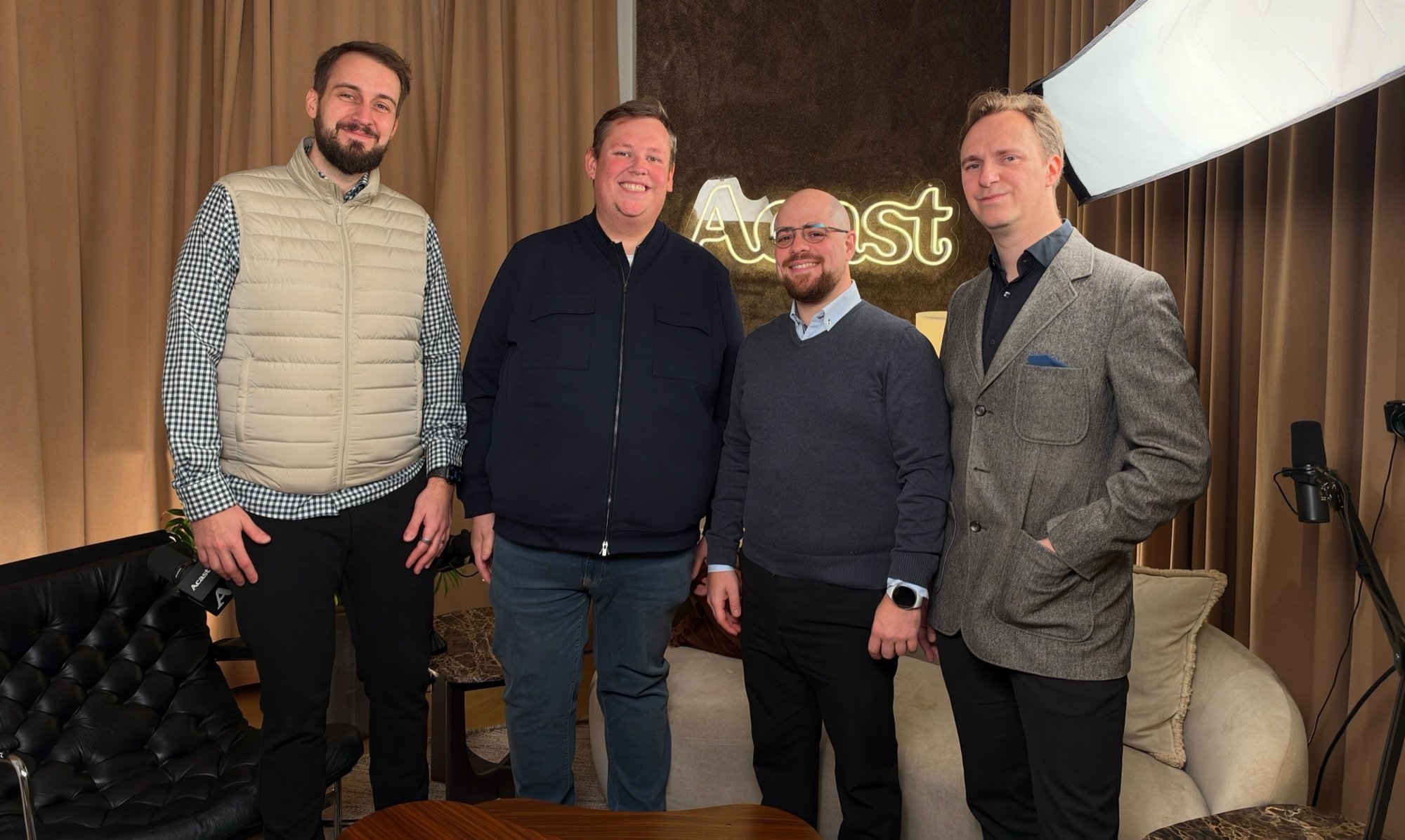
Acast connects podcast creators with advertisers, helping creators monetize their shows across every medium. When Dragan Ovrlinic joined in 2020, the company didn't have an IT department. He built one from scratch and ran it alone for about a year. Since then, the IT department has grown into a team of eight people (six in IT, two in Security), most of them in Sweden, with colleagues in 12 different countries. Today he's Acast's Global Director of IT.
Acast is remote-first, and that shaped everything the team needed from its tools. New hires had to get started without IT ever touching their devices, and Macs had to ship straight to people all over the world.
When Nils Pettersson joined as an IT support specialist in October 2024, coming from a large enterprise IT environment, he found an MDM he couldn't get comfortable with. "I just couldn't find myself around," he says. Every setting lived in its own profile, so configurations piled up. Getting help from the vendor could take 24 to 48 hours, and the answer was often that a basic feature wasn't supported. Even the admin console worked against them: pressing the back button logged you out mid-task.
End users felt it too. The old MDM's login component generated a couple of support tickets a week, and the way it handled updates frustrated people across the company.
Nils half-jokingly told Dragan he wanted to replace it. Dragan told him to go see what was out there.
The solution
A product that was better on every front
Iru cost more than Acast's previous MDM, so they made the case to leadership. The argument was simple: Acast had outgrown their budget tool and needed a more robust system for the long term.
With the old MDM, getting what Acast needed meant scripting around the product and bolting the team’s own fixes onto it. Dragan knew where that led. Every workaround the team builds is something it also has to maintain, fix, and document, and those hours cost money. He’d seen homegrown fixes work fine on day one, then break just when the team was too busy to deal with them. For a lean team at a company scaling quickly, paying for a platform that already did the job was the better investment.
"With Iru you get a more polished product. It made sense to get something more robust and nicer, something we can put our own stamp on. You have all the tools built in."
 Dragan OvrlinicGlobal Director of IT, Acast
Learning to think the Iru way
Most MDMs ask IT to think in terms of machines. To get a setting onto the right devices, admins build conditional rules: the Macs on this macOS version, in this department, with this chip. The old MDM worked that way, and so did the larger platform Nils had used before. Every new need meant another rule, and every rule was one more thing to maintain.
Iru starts from the other end. IT defines the desired state for a group of people, like everyone in sales, and Iru makes sure each of their devices matches it. Audit scripts check every Mac against that state, and remediation scripts change only the ones that are out of line. There’s no need to pre-sort devices into ever-smaller groups, because checking a device is cheap and Iru only acts where it needs to.
When Nils asked one of Iru’s Solutions Engineers where the device-level controls were, that was the answer: define the end state, scope by people, and let Iru handle the rest.
"In our mind, we wanted to scope per device, so we only target the devices that have one issue. With Iru, we can target all devices, and it will only affect the ones that actually need it."
 Nils PetterssonIT Manager, Acast
Acast now manages its fleet through Assignment Maps that describe how things should be for each group. The team spends its time deciding what good looks like, not maintaining a web of exceptions.
The shift has paid off for the whole team. Instead of digging through a pile of single-setting profiles, anyone on the team can open an Assignment Map and see how everything is scoped.
"The assignment map is quite easy to follow if you need to find something. For me, that has been the biggest win long term, and that is what I really like about Iru."
Dragan OvrlinicGlobal Director of IT, Acast
500+ Macs in three weeks
Iru's support carried through the whole MDM migration, from building the migration script to running tests alongside the team and checking in on progress.
"They held our hands through the whole journey of migrating over, creating the script, running the tests for us, and checking in on how it was going. That was a good start for us to understand: okay, we have a good product here."
Nils PetterssonIT Manager, Acast
The team spent about a month testing Iru on their own devices before bringing anyone else in. Iru's Auto Apps already covered almost every app the fleet needed. They built a separate Blueprint for Acast's recording studios, so those machines could be locked down and managed separately from staff laptops.
Then, they rolled out in stages: first, IT team, second, a larger test group, then everyone. To make sure everyone moved smoothly, Nils ran live migration sessions of 50 to 60 people at a time. The steps were short. Employees saw a prompt, signed in with their Google account, and Iru's Liftoff took it from there.
The snags they did hit got solved quickly. Leftover components from the old MDM's login tool blocked some sign-ins, and Iru already had a script ready to clean them up. Some employees had local usernames that didn't match the expected format, and Iru Solutions Engineers helped the team quickly adjust their Passport configuration to accept any username.
In all, Acast migrated more than 500 Macs company-wide in about three weeks.
"We had no issues there. The whole migration process was so smooth."
Nils PetterssonIT Manager, Acast

IT that works quietly
Dragan knows that good work usually goes unnoticed, so when IT is quiet, systems are running smoothly.
Sign-ins used to cause the most noise. The old MDM's login tool generated a couple of tickets every week. Passport, Iru's feature for signing in to the Mac with company credentials, ended most of that. When IT resets a password, the change reaches the Mac quickly, so remote employees anywhere in the world aren't left locked out.
"As long as your machine has an internet connection, we can always change the password and people will be able to sign in."
Nils PetterssonIT Manager, Acast
When employees do notice Iru, it's usually because something was easier than they expected.
"When you tell people, 'You can just install the app from Self Service,' they're like, 'Oh, wow, that was really smooth. That worked really great.'"
Dragan OvrlinicGlobal Director of IT, Acast
The rest of what employees notice is policy, like when updates get installed. Iru gives employees seven days to install an update on their own schedule before it's enforced at a set time for their region. When the US team asked to keep updates out of their lunch meetings, Dragan moved their enforcement time but kept the deadline. Iru enforces that consistently, so Dragan's team can spend its energy explaining the why to people.
Bringing Windows into the same platform
Acast had been managing its Windows machines with a separate Windows-specific tool. So when Iru announced Windows management, the IT team was quick to take notice.
"When you released that you were going to have MDM for Windows, that was a bit mind-blowing for us. We were like, 'Okay, they are doing Mac so great, and now they're going to do Windows so great as well.'"
Nils PetterssonIT Manager, Acast
Acast has since brought its Windows machines into Iru, so the team can manage both platforms from one place.
Results
The clearest change is in the ticket queue. Dragan estimates that MDM-related support tickets are down about 95%, and the weekly login tickets have all but disappeared.
"We have very few support cases relating to the MDM. I would say they're down by about 95%."
Dragan OvrlinicGlobal Director of IT, Acast
Onboarding runs quietly too. When Liftoff finishes, new hires see a welcome screen with a link to a feedback form. The responses are consistent: "It was smooth, it went good. There's no issues." Employees who discover they can install their own apps from Self Service are just as pleased.
For an IT team, quiet is the goal. As Dragan puts it, in IT "as long as things are working, you're doing a good job." Leadership has noticed anyway: the switch to Iru was recognized higher up as a positive change, and employees regularly tell the IT team how smooth Acast's environment is.
That frees the team for the work Dragan cares about most. "I manage people more than I manage systems," he says. His goal is to put the right systems in place so people can be productive, and Iru handles the device side of that.
Looking ahead
Next is identity. Acast runs on Google Workspace, and Dragan has long wanted identity features that go further than what the team had. After a couple of months of early access, Acast has purchased Iru Identity and is starting its rollout.
"It looks very capable, and it has the same level you're used to with the endpoint solution. We're really, really excited about rolling that out."
Dragan OvrlinicGlobal Director of IT, Acast
About Acast
Founded in Stockholm in 2014, Acast is a podcast and content company that connects creators, advertisers, and listeners. Acast helps creators host, distribute, and monetize their content across audio, video, and clips, and gives advertisers a way to reach engaged audiences at scale.