
Support NIST 800-53 readiness with adaptive compliance
For organizations working to the federal control catalog, NIST 800-53 is the deepest set you'll be measured against. See how growing teams implement the technical control families and keep the evidence current.

Unified by design. Built for the AI era.
Iru AI is designed from the ground up to connect a grid of agents behind the scenes—across identity, endpoint, and compliance. Powered by the Iru Context Model, it understands your users, apps, and devices to act safely, intelligently, and in context across your organization.
Implement NIST 800-53 controls, don't just document them
Automate evidence collection
Automatically pull evidence from connected sources via Iru Compliance AutomationAnswer customer security reviews
Share your security posture through a public-facing portal via Iru Trust CenterControl access to systems
Device-bound multi-factor authentication and separated admin accounts via Iru Workforce Identity (Access Control, Identification and Authentication)Maintain secure configuration
Enforce secure baselines across your fleet via Iru Endpoint Management (Configuration Management)Keep software patched
Continuously detect and remediate OS and third-party software risk via Iru Vulnerability Management (Risk Assessment, System and Information Integrity)Detect and respond to incidents
Contain threats and document what happened via Iru Endpoint Detection & Response (Incident Response)Control media and device disposal
Govern secure disposal and reuse of devices via Iru Endpoint Management (Media Protection)Encrypt data at rest
Apply full-disk encryption and maintain a live record of protected devices via Iru Endpoint Management (System and Communications Protection)NIST 800-53: Prove your controls operate, continuously
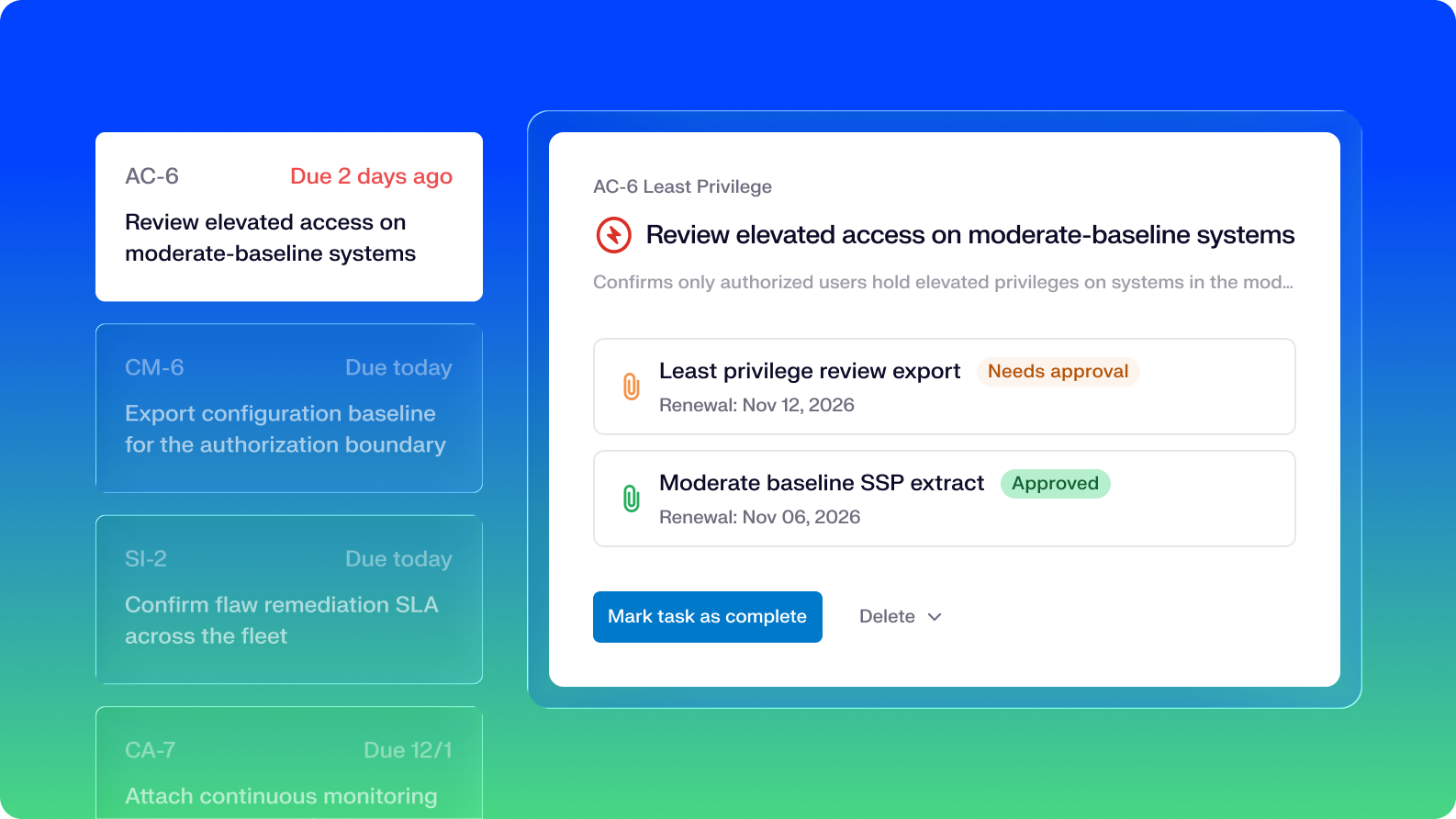
Iru combines native endpoint and identity telemetry with continuous evidence collection, making it easier to implement the technical control families in NIST 800-53 and keep evidencing that they work.
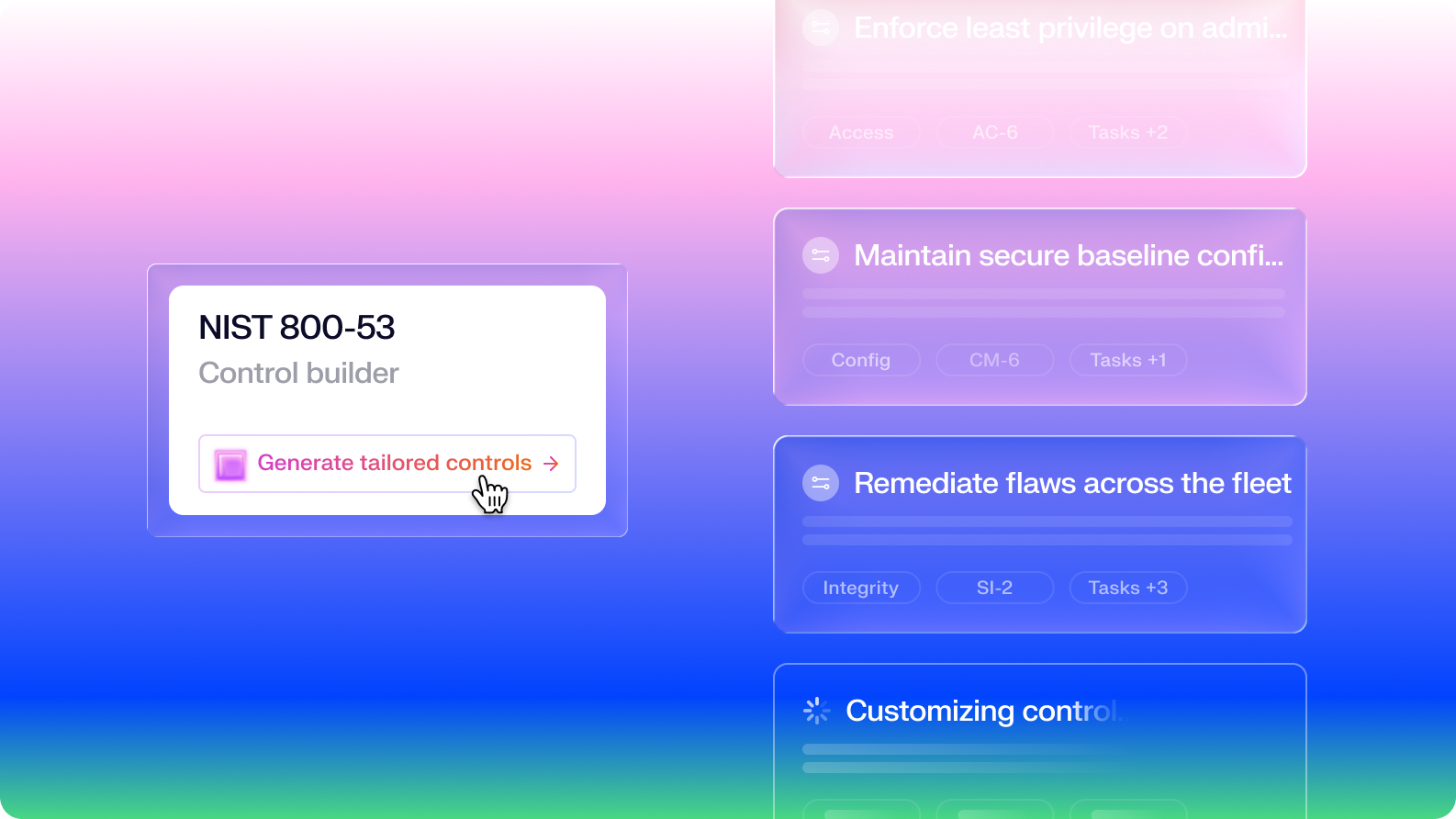
Customize NIST 800-53 controls for your unique business
Most compliance tools turn frameworks into generic checklists. Iru generates controls that are specific to your organization, in plain language, broken down into sub-tasks.
- Iru AI generates tailored controls, based on your company context and audit details
- You can migrate existing controls over from other products, or upload your own custom control set
- Controls become actions the moment they are created, with suggested owners and due dates

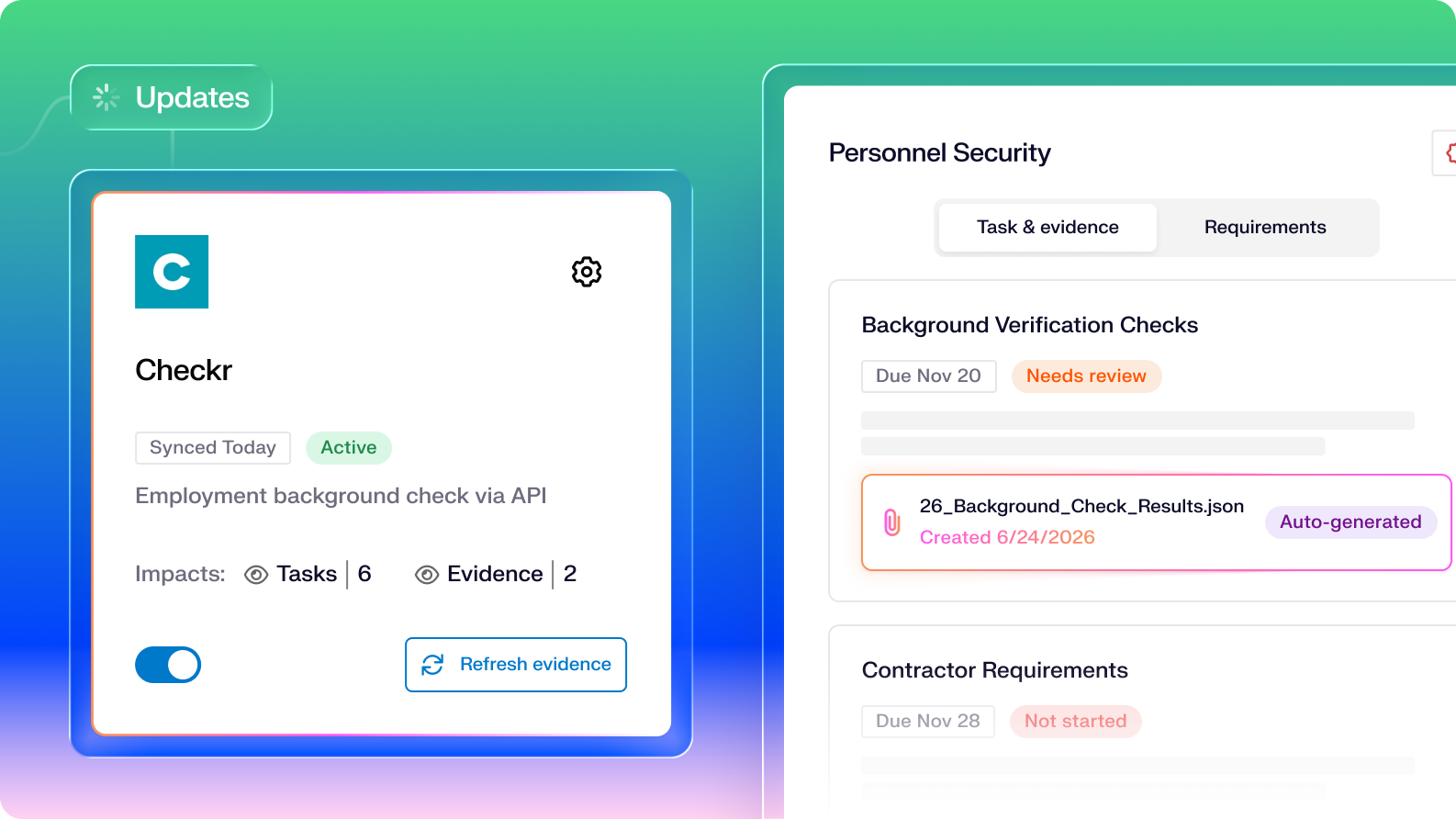
Automate your NIST 800-53 evidence collection
For connected and activated sources, Iru can discover and attach relevant artifacts to the supported control actions, reducing manual uploads. And because you can manage your devices and identity within Iru, that data is pulled natively.
- Evidence flows in continuously from supported devices, integrations and systems
- Iru AI helps to identify stale, missing or potentially irrelevant evidence for you to review
- You stay better prepared before fieldwork begins, with fewer fire drills before your engagement

Ensure continuous NIST 800-53 audit readiness
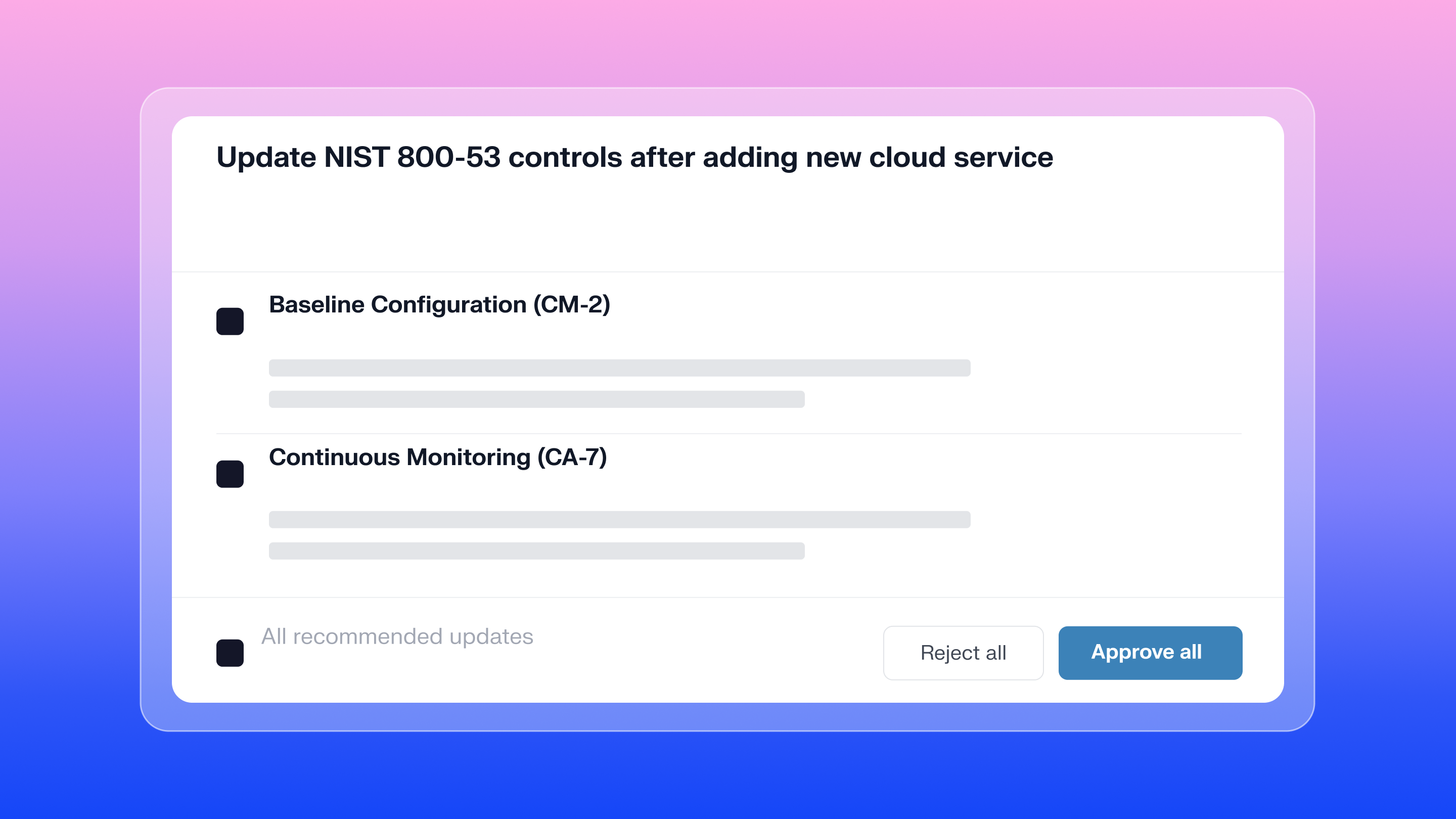
Iru's Adaptive Compliance capabilities watch for changes in your organization, and automatically suggest updates to your controls and actions.
- Iru AI regularly checks for changes to your sources, artifacts or company profile
- If a change is detected, a control update recommendation is surfaced for you to review, often within 24 hours
- No changes are made without your approval, and every change is logged for your auditors to review

Turn NIST 800-53 preparation into an always-on workflow
Iru's AI-powered compliance solution helps IT, security and GRC teams spend less time on manual compliance work and stay audit-ready all year.
Let your team focus on what matters
Iru replaces fragmented tools with one AI-powered platform, so IT & security spend less time chasing tickets and more time improving the business.
Frequently asked
questions
Get answers to commonly asked questions
Who publishes NIST 800-53, and who has to follow it?
NIST (the National Institute of Standards and Technology) publishes it. Federal agencies are required to use it for their information systems; everyone else encounters it indirectly: through a contract, through a framework derived from it, or because a customer has asked them to align.
NIST itself enforces nothing and certifies nobody.
How many controls are there, and do we need all of them?
More than a thousand, counting control enhancements — and no, you don’t implement all of them.
Controls are selected by baseline. SP 800-53B defines three security baselines, for low, moderate and high impact systems, plus a privacy baseline that applies regardless of impact level. Your system’s categorization determines which baseline you start from; you then tailor it to your environment.
The practical consequence is that two organizations both "doing 800-53" may have very little in common.
What are the twenty control families?
Access Control; Awareness and Training; Audit and Accountability; Assessment, Authorization, and Monitoring; Configuration Management; Contingency Planning; Identification and Authentication; Incident Response; Maintenance; Media Protection; Physical and Environmental Protection; Planning; Program Management; Personnel Security; PII Processing and Transparency; Risk Assessment; System and Services Acquisition; System and Communications Protection; System and Information Integrity; and Supply Chain Risk Management.
How does 800-53 relate to NIST 800-171?
NIST 800-171 is derived from it. Its requirements are tailored from the 800-53 moderate baseline for nonfederal systems handling Controlled Unclassified Information.
That lineage is explicit: Revision 3 of 800-171 added three new families — Planning, System and Services Acquisition, and Supply Chain Risk Management — specifically for consistency with the 800-53B moderate baseline.
If you’ve implemented 800-53 at moderate, you’ve done much of 800-171 already. The reverse is not true: 800-171 is a subset.
How does 800-53 relate to NIST CSF 2.0?
They do different jobs. 800-53 is the control catalog — what to implement. CSF 2.0 is the organizing framework — how to structure a program and talk about it.
CSF came later. It was created under an executive order for organizations that needed a common way to talk about cyber risk without adopting a full federal control catalog. It doesn’t replace catalogs like 800-53; it points to them.
Most organizations use both: CSF to organize and communicate, 800-53 to specify.
Can we get "NIST 800-53 certified"?
No. NIST doesn’t certify anyone and there’s no 800-53 credential.
Federal systems go through an authorization process. Nonfederal organizations are assessed by whoever is asking — a customer, a prime, a regulator, or themselves. NIST publishes SP 800-53A with assessment procedures, but the output is an assessment result rather than a certificate.
Is this the same as FedRAMP?
No, but they’re closely connected. FedRAMP is the US government’s authorization program for cloud services, and it uses 800-53 controls as its baseline. If you’re pursuing FedRAMP, you’re implementing 800-53 — with a specific selection, a specific process, and a specific authorizing body on top.
Working to 800-53 directly doesn’t give you FedRAMP authorization.
Can Iru get us compliant with NIST 800-53?
No platform can. 800-53 is a catalog of more than a thousand controls spanning program management, personnel, physical security and acquisition — most of which aren’t technology problems at all.
What Iru does is the technical control families, and it takes the platform rather than the compliance product alone. Iru Workforce Identity enforces access control and authentication. Iru Endpoint Management maintains secure configuration and governs media and device disposal. Iru Vulnerability Management keeps software patched. Iru Endpoint Detection & Response detects and responds to incidents. Iru Compliance Automation collects the evidence from all of them continuously, so an assessment reflects current state rather than a snapshot.
If you need an assessment, we can connect you with one of the assessors in our auditor network. Book a demo to explore the compliance solution, or if you’re already a customer, reach out to your rep for details on our audit partners.