
Skip to content
Kandji Continues Global Expansion with New East Coast Headquarters in Miami
Iru Team

4 min read

Kandji Continues Global Expansion with New East Coast Headquarters in Miami

Today we are officially announcing the opening of our new East Coast headquarters to further our global scaling efforts, attract world-class talent, and support rapid customer growth. Our new East Coast headquarters in Miami is in addition to our offices in California, London, Sydney, and Japan.

Recent News
Kandji Introduces Device Management for Apple Vision
Alexandre Morin

5 min read

Kandji Introduces Device Management for Apple Vision

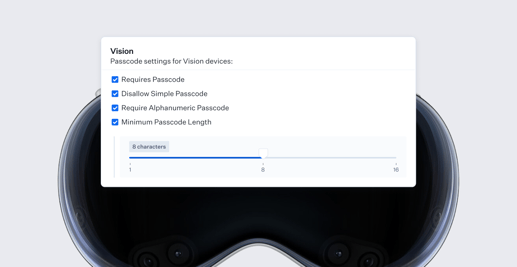
As spatial computing with Apple’s Vision Pro transforms the enterprise landscape, IT teams face new challenges in managing and securing Apple Vision devices. Today, we're excited to announce Device Management for Vision, bringing Vision device support to the existing device management capabilities in Kandji. By automatically choosing Apple's next-generation Declarative Device Management (DDM) protocol for all the configurations that support it, we’re helping customers experience the same effortless management of their Vision devices. It’s included for free with the iOS Device Management product in Kandji.

Product Update
Behavioral Detections: Kandji EDR's Latest Defense Update Against Threats
David Larrea

3 min read

Behavioral Detections: Kandji EDR's Latest Defense Update Against Threats

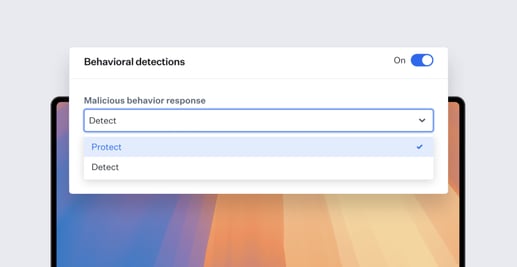
As attackers increasingly regard Mac computers as enterprise targets and evolve their attack methods, file-based malware detections can fall short in catching emerging and unknown threats. Sophisticated malware can evade these conventional security measures by operating entirely in memory without writing files to disk, using polymorphic code that constantly changes its signature, or leveraging legitimate system tools for malicious purposes.

Product Update
Why You Need an MDM Solution that’s Built Specifically for Apple
Iru Team

7 min read

Why You Need an MDM Solution that’s Built Specifically for Apple

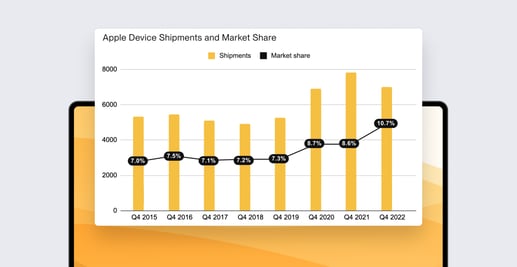
Introduction The last decade has seen tremendous growth of Apple devices in the enterprise. It started with the popularity of the iPhone but then grew to include the much wider adoption of the Mac as well. As organizations began to deploy and manage more and more Apple devices, they also began to adopt a suite of software tools collectively referred to as mobile device management (MDM.) These tools allow organizations to wirelessly and securely manage their fleets of devices and to send configuration profiles, content, and commands to them.

Thought Leadership
Manage Homebrew at Scale with New Workbrew Integration
Matt Wilson

3 min read

Manage Homebrew at Scale with New Workbrew Integration

Managing developer tools across a fleet of Mac devices presents unique challenges for IT teams. While tools like Homebrew are essential for developers, ensuring consistent deployment and maintaining visibility across an organization's devices has traditionally been complex. Today, we're excited to announce a new integration with Workbrew, which just announced its 1.0 launch. This new integration will streamline Homebrew deployment and management for Kandji and Workbrew customers.

Product Update
Introducing In-House Apps and Web Clips: iPhone & iPad App Deployment
Alexandre Morin

3 min read

Introducing In-House Apps and Web Clips: iPhone & iPad App Deployment

Whether you're managing devices for a retail operation, healthcare facility, or service organization, your teams need the right tools to get their work done. While the App Store is great for public apps, you often need more flexibility in how you deploy internal proprietary (in-house) apps and web apps to your Apple mobile devices. That's why we're excited to introduce two new Library Items that complete your app deployment toolkit in Kandji: In-House Apps and Web Clips. Combined with Kandji's existing management capabilities for apps from the Apple App Store, you now have everything you need to handle any app deployment scenario for your organization.

Product Update
Apple in the Enterprise: 2024's Latest Trends
Iru Team

4 min read

Apple in the Enterprise: 2024's Latest Trends

While cyberattacks continue to rise, the majority of IT professionals (72%) believe that Apple products are more secure than other end-user devices, according to new survey data. Despite growing threats, the security benefits of Apple products remain a contributing factor to Apple’s growth in the enterprise, with over three-fourths of IT professionals reporting that Apple products are easier to secure than other end-user devices, and the majority (59%) stating that they are less likely to be impacted by widespread cyber outages. Our third annual “Apple in the Enterprise” survey explores Apple’s continued growth in the enterprise, the security and reliability benefits of Apple products, and how IT professionals feel about the use and regulation of artificial intelligence (AI) in the workplace.

Recent News
Kandji Announces Kai: Artificial Intelligence for Device Management
Iru Team

3 min read

Kandji Announces Kai: Artificial Intelligence for Device Management

Kandji has just released Kai, our new AI-powered assistant for Apple device management. Kai allows admins to quickly gain insights into the state of their Apple device fleets using simple, natural-language queries. Kai does so by harnessing the world’s leading large language model—with complete data privacy.

Product Update
New Integration Uses Kandji Data for Microsoft Device Compliance
Matt Wilson

1 min read

New Integration Uses Kandji Data for Microsoft Device Compliance

We’ve developed a new integration that allows Kandji customers to use their Kandji device data in Microsoft conditional access policies. That means admins can now control access to organization resources based on whether or not Kandji is managing the devices.

Product Update
Kandji Announces Day 1 Support for Apple’s New OSes
Iru Team

5 min read

Kandji Announces Day 1 Support for Apple’s New OSes

Apple has released its latest generation of operating systems—macOS Sequoia, iOS and iPadOS 18 and tvOS 18—and Kandji is ready for all of them. Right now, on Day 1 of their release, you can deploy these new OSes to your Apple endpoints and then manage their new features using Kandji.

Product Update
Update Only Mode for Auto Apps: A New Way to Patch Mac Software
Mike Boylan

2 min read

Update Only Mode for Auto Apps: A New Way to Patch Mac Software

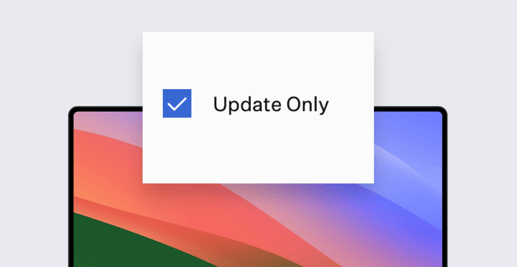
Kandji’s Auto Apps let IT teams distribute Mac software titles—nearly 200 and counting—either by deploying them automatically to endpoints or by letting users install them as they wish via Kandji’s Self Service. We’re now adding another option: Update Only.

Product Update
Apple's Next Operating Systems: How and Why to Test Them Now
Iru Team

10 min read

Apple's Next Operating Systems: How and Why to Test Them Now

We say it every year at this time: Now that Apple’s Apple’s beta software programs for its next operating systems are open (this year, that includes macOS Sequoia, iOS and iPadOS 18, watchOS 11, and visionOS 2), it’s time for you as an Apple admin to begin testing them.

Recent News
Kandji Raises $100 Million in Funding to Advance Apple in the Enterprise
Iru Team

3 min read

Kandji Raises $100 Million in Funding to Advance Apple in the Enterprise

Kandji has raised $100 million in capital from General Catalyst, with $50 million allocated to equity financing for its Series D and $50 million for go-to-market investment. This latest round brings Kandji’s valuation to $850 million. Deep Nishar from General Catalyst will join the company’s Board of Directors.

Recent News
By the Numbers: Enforcing Password Policies on Apple Devices
Alexandre Morin

11 min read

By the Numbers: Enforcing Password Policies on Apple Devices

IT admins naturally care about the passcodes their users choose to unlock their Apple devices.

Recent News
Kandji Releases Tags for Creating Device Groups on the Fly
Iru Team

2 min read

Kandji Releases Tags for Creating Device Groups on the Fly

We’ve added a new way to group devices in Kandji: tags. You can now define device groups in Kandji based on the tags that you apply to them. Among other applications, you can use tags to define assignment rules for Blueprints—both Classic Blueprints and the Assignment Maps we introduced just a few weeks ago. Using tags with assignment rules in a Blueprint, you can deploy configurations from Kandji with greater granularity than ever before.

Product Update

Stay up to date

Iru's weekly collection of articles, videos, and research to keep IT & Security teams ahead of the curve.