
 Workforce Identity
 Endpoint Management
 Endpoint Detection & Response
 Vulnerability Management
 Compliance Automation
 Trust Center




What is EPP? An endpoint protection platform (EPP) is a security solution that helps organizations secure laptops, desktops, servers, smartphones, and other connected devices from cyberthreats.
Every device connected to your environment expands your attack surface. Attackers increasingly target endpoints through social engineering, compromised software packages, and malware designed to evade traditional defenses.
And the pace of change is accelerating. In a single quarter, Iru researchers shipped 115 new endpoint detection rules to address emerging threats, including ClickFix attacks, software supply chain compromises, and North Korean fake-interview campaigns targeting developers. This means security teams need EPPs that can keep up.
Understanding how these platforms work is the first step. In this guide, we'll explain what EPPs do, the security tools they include, how they differ from endpoint detection and response (EDR), and what to consider when evaluating a solution.
How does an EPP work?
An EPP works by continuously monitoring your devices for signs of malicious activity. Most endpoint protection software programs combine multiple detection methods to identify threats early and stop them before they can spread.
Here’s how the process works:
- An agent is installed on each device.A lightweight software agent runs on every protected laptop, desktop, server, or mobile device. It acts as the EPP’s eyes and ears on the endpoint.
- The agent monitors device activity.The agent watches what's happening on the device, including running processes, file changes, application activity, and system events. This gives the platform visibility into behavior that could indicate an attack.
- The platform analyzes activity for threats.The EPP evaluates activity using multiple detection methods, such as:
- Signature-based detection identifies known malware by comparing files and activity against a database of known threat patterns.
- Behavioral analysis looks for suspicious actions, such as a process attempting to encrypt large numbers of files or download malicious code.
- Machine learning helps identify unusual activity and previously unseen threats that may not match known malware signatures.
- Threats are blocked or quarantined.If the platform detects malicious behavior, it can block the activity, isolate the affected file, or quarantine the threat before it causes damage.
- The security team is alerted.The EPP generates alerts and logs details about the event so your security and IT teams can investigate and take additional action if needed.
By combining behavioral detections, machine learning, and signature-based detection, modern EPPs can identify both known and emerging threats. This automation reduces manual monitoring, improves response times, and helps your security and IT teams manage endpoint security more efficiently.
Traditional vs. cloud-native EPPs
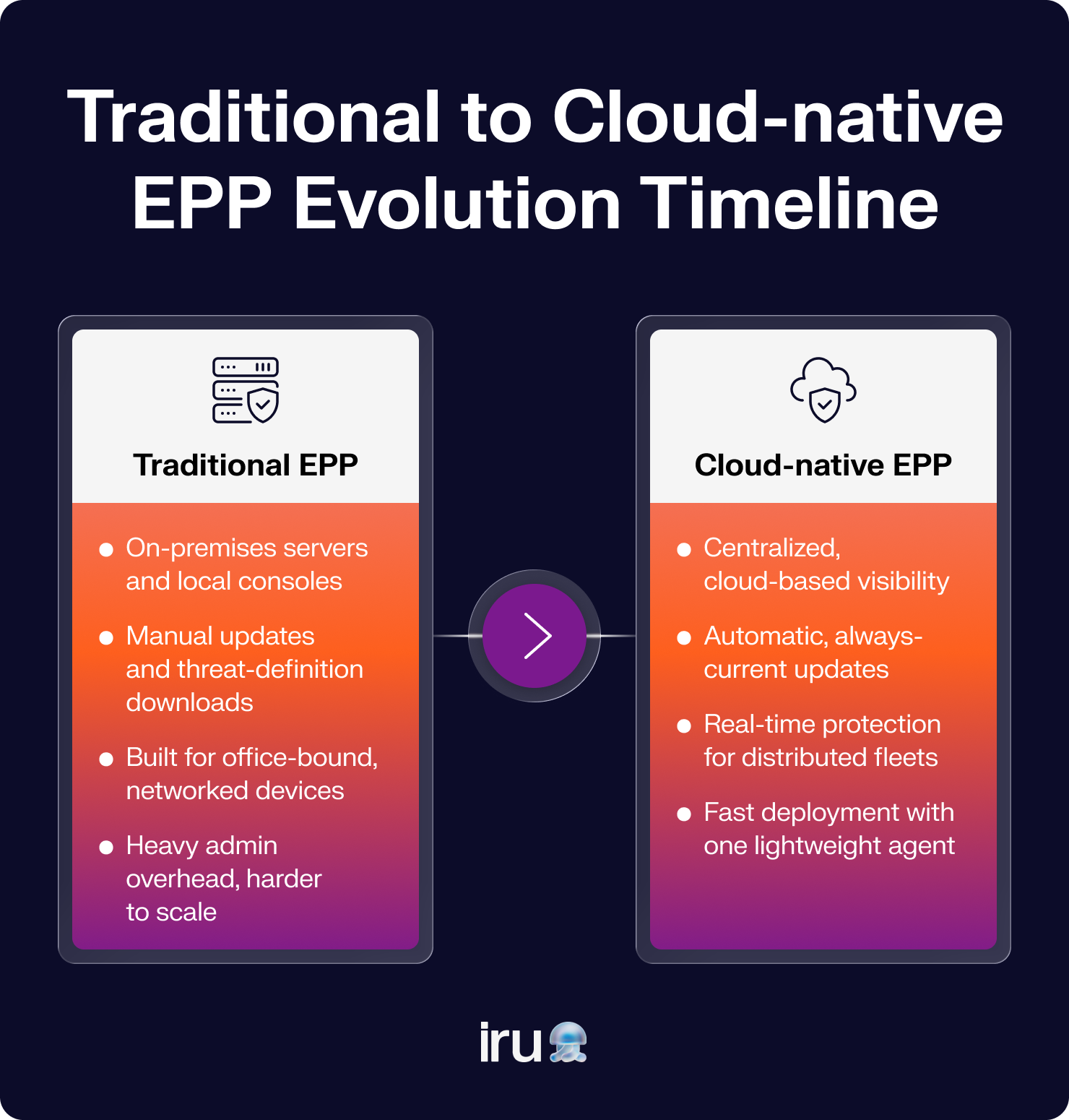
Traditional EPPs rely heavily on on-premises infrastructure, while cloud-native EPPs deliver protection, visibility, and management through the cloud. In many ways, cloud-native EPPs are the modern evolution of the traditional model.
Traditional EPPs were designed for a time when most users worked from the office and devices stayed on corporate networks. They often required on-premises servers, manual updates, and a lot of administrative overhead.
Modern work environments look very different. Employees work remotely, use cloud applications, and access company resources from multiple devices and locations. This is why you need an endpoint security platform that can adapt just as quickly.
Cloud-native EPPs have centralized visibility, faster deployment, automatic updates, and real-time protection across distributed environments.
For example, payment platform Opn used Iru to automate device management and strengthen security across a global workforce. By replacing manual processes with centralized workflows, the team gained greater control over endpoints while reducing the operational burden on IT.
Features of an endpoint protection platform
Modern endpoint protection platforms combine security and device management capabilities to help you protect endpoints, enforce policies, and maintain visibility across your environments via features like:
- Antivirus: Detects and blocks known malware using threat signatures. In an EPP, antivirus is typically integrated with other security controls for broader protection and faster response.
- Behavioral analysis: Identifies suspicious activity based on how applications and processes behave. This helps detect new and emerging threats that may not match known malware patterns.
- Firewall and host intrusion prevention: Controls network traffic and blocks potentially malicious activity on the device, reducing opportunities for attackers to gain access.
- Data encryption: Protects sensitive data by making it unreadable without the proper credentials. This helps reduce the impact of lost, stolen, or compromised devices.
- Data loss prevention (DLP): Helps prevent sensitive information from being copied, shared, or transferred outside approved channels.
- Device management: Enables IT teams to deploy software, configure settings, manage updates, and secure devices remotely. Solutions like Iru’s UEM tool combine endpoint management and security in a single platform.
- Policy management: Automates the enforcement of security and compliance requirements across all managed devices, helping your teams maintain consistency at scale.
Many modern platforms also combine these capabilities with endpoint security and management workflows. This is one reason they’re often considered among the best endpoint management software options for organizations looking to reduce tool sprawl while strengthening their endpoint security and cross-platform protection.
EPP vs. EDR vs. XDR
EPP prevents threats, endpoint detection and response (EDR) detects and responds to threats that bypass preventive controls, and extended detection and response (XDR) connects data from multiple security tools to give broader visibility and faster investigations.
One way to think about it:
- EPP answers, “Can we stop this attack?”
- EDR answers, “What happened?”
- XDR answers, “How far did it spread?”
Each builds on the one before it, helping security teams answer different questions during an incident.
For more context, an EPP focuses on prevention through antivirus, behavioral analysis, policy enforcement, and device controls. Modern EPP security tools can also help you reduce risk by identifying vulnerable software and supporting activities such as finding vulnerabilities in Apple Packages.
EDR helps you investigate and contain active threats on endpoints. XDR expands that visibility beyond endpoints to include identities, cloud services, email, and other security tools.
Here’s a quick comparison for EPP vs. EDR vs. XDR:
| Category | EPP | EDR | XDR |
|---|---|---|---|
| Primary goal | Prevent threats before they execute | Detect and contain active threats | Connect and investigate threats across multiple systems |
| Main focus | Endpoint protection | Endpoint investigation and response | Cross-environment visibility |
| Typical user | IT and security teams | Security analysts and incident responders | Security operations teams |
| Data source | Endpoint activity | Endpoint activity and telemetry | Endpoints, identities, cloud apps, email, networks, and more |
| Example question it answers | Can we stop this malware? | What happened on this device? | How widespread is this attack? |
| Response scope | Blocks or quarantines threats | Investigates and contains threats | Coordinates response across multiple systems |
| Best for | Reducing risk and preventing infections | Incident response and threat hunting | Complex environments with multiple security tools |
Some organizations also use managed detection and response (MDR) services. MDR combines EDR technology with 24/7 monitoring and response from security experts, making it a popular option for organizations evaluating the best EDR solutions.
Why you should get an EPP?
Every laptop, desktop, smartphone, and server in your environment creates another potential entry point for attackers. Without an EPP, security teams often rely on disconnected tools, manual processes, and limited visibility into what’s happening across their devices.
The result is more risk and more work. Threats can go unnoticed, software can fall out of date, and security teams spend valuable time switching between tools instead of responding to issues.
An EPP brings prevention, visibility, and control into a single platform. This means your security teams can detect threats faster, enforce policies consistently, and protect endpoints without adding unnecessary complexity.
For many organizations, an EPP is also a step toward unified endpoint management (UEM). Instead of managing security and devices separately, you can reduce tool sprawl and gain a clearer view of your entire endpoint environment.
How to choose an EPP
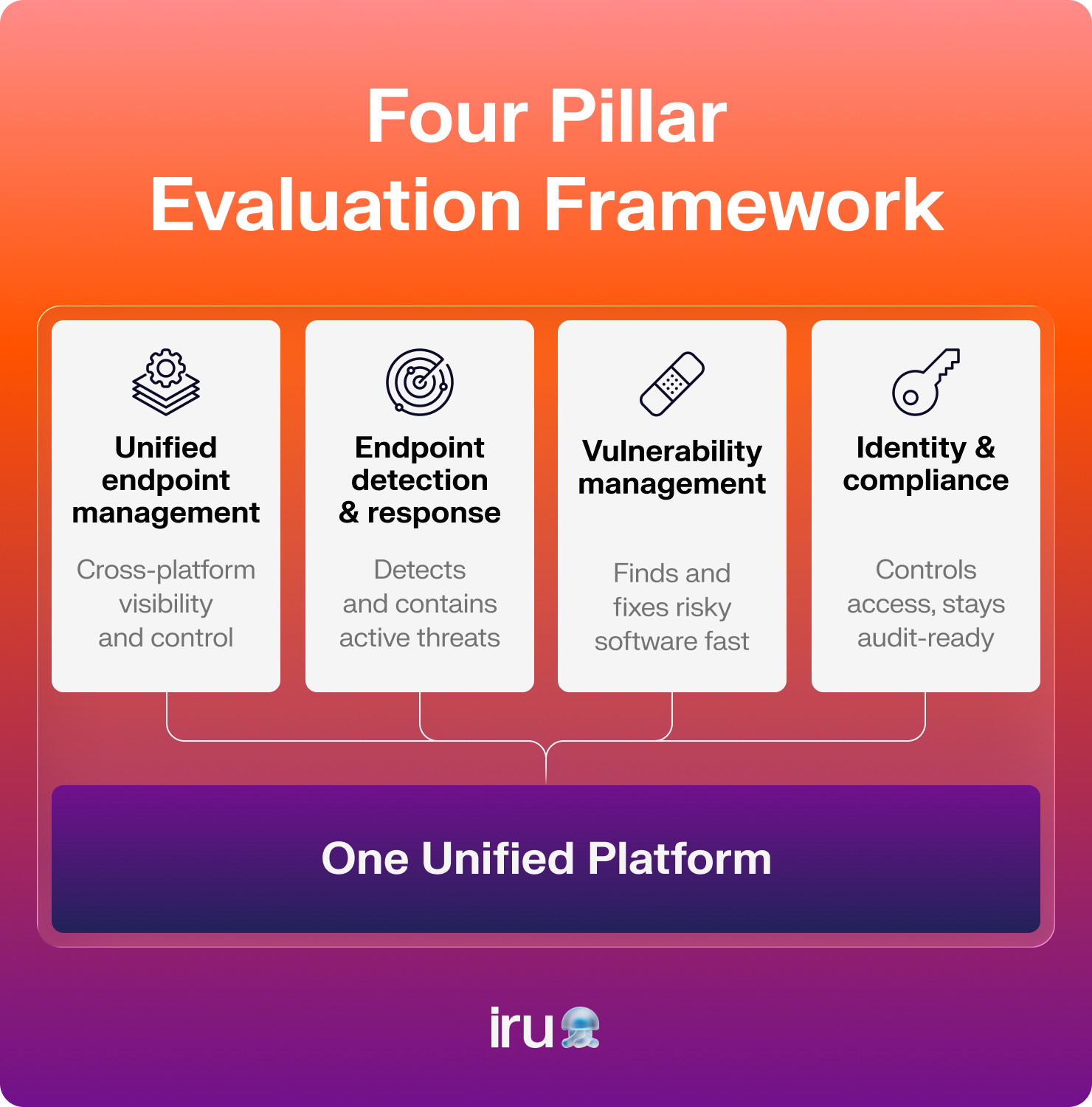
The best EPPs do more than block malware. They combine security, device management, vulnerability management, and identity controls to help you protect endpoints while reducing complexity.
Unified endpoint management
Modern EPPs increasingly include UEM capabilities because security and device management work best together. A UEM solution gives your teams visibility and control across the entire device lifecycle from a single platform.
When evaluating an EPP’s UEM capabilities, look for:
- Cross-platform support: Look for support across Apple, Windows, Android, and other operating systems. Managing devices through a single platform reduces tool sprawl and administrative overhead.
- Zero-touch deployment: Devices should be ready for users out of the box. Zero-touch deployment automates enrollment, configuration, and policy application without requiring manual setup from IT.
- Assignment Maps: They automatically apply the right configurations, applications, and policies based on device or user attributes. This eliminates manual assignments and helps ensure devices are configured correctly from day one.
Endpoint detection and response
While an EPP focuses on prevention, EDR helps detect and respond to threats that bypass preventive controls. Together, they provide stronger endpoint security coverage.
Key EDR capabilities include:
- Behavioral detections: Effective EDR solutions monitor endpoint activity and identify suspicious behavior as it happens. This helps detect emerging threats that may not match known malware signatures.
- Device isolation: The ability to automatically isolate a compromised device can stop threats from spreading while security teams investigate the incident.
- Lightweight agent: Endpoint agents should provide strong visibility without slowing down devices. Lightweight agents improve user experience while maintaining protection.
Vulnerability management
Vulnerability management addresses security risks before attackers can exploit them. It helps organizations identify, prioritize, and remediate vulnerable software across their endpoint fleet.
Look for vulnerability management features such as:
- Automated patching: Automated patch management helps keep applications and operating systems up to date without relying on manual intervention.
- Vulnerability impact analysis: Not every vulnerability carries the same level of risk. AI-driven prioritization helps teams focus on the vulnerabilities most likely to impact their environment.
- Software visibility: Comprehensive visibility into installed applications, versions, and exposures helps you identify security gaps and reduce your attack surface more effectively.
Identity and compliance
Strong endpoint security also depends on controlling who can access resources and ensuring security requirements are consistently enforced. Identity and compliance capabilities help you reduce risk from compromised credentials, insider threats, and regulatory requirements.
Essential identity and compliance capabilities include:
- Passwordless authentication: Passwordless sign-on reduces reliance on passwords and helps protect against phishing and credential theft.
- Compliance automation: Automated evidence collection, control mapping, and monitoring help organizations stay audit-ready while reducing manual work.
- Trust portal: A trust portal provides a centralized location to share certifications, reports, and security documentation with customers and stakeholders.
Real-world example: Bindplane used a unified platform for endpoint management, EDR, and vulnerability management to simplify audit evidence collection and reduce the manual effort required to maintain ISO 27001 compliance.
Protect your device fleet with Iru
Managing endpoint security shouldn’t require a patchwork of disconnected tools. As threats evolve and device fleets grow, IT and security teams need visibility, automation, and protection that work together.
Iru’s ERD software brings endpoint management and vulnerability management into a single platform. With real-time behavioral detections, autonomous containment, and automated workflows, you can secure devices, reduce manual work, and respond to threats faster.
Book a free demo to see how Iru can protect your endpoints, reduce complexity, and give you more control.