
Support NIST CSF 2.0 readiness with adaptive compliance
For teams building a security program from scratch, NIST CSF 2.0 is the most widely recommended place to start. See how growing teams turn its outcomes into controls that actually run.

Unified by design. Built for the AI era.
Iru AI is designed from the ground up to connect a grid of agents behind the scenes—across identity, endpoint, and compliance. Powered by the Iru Context Model, it understands your users, apps, and devices to act safely, intelligently, and in context across your organization.
Deliver the outcomes, don't just describe them
Document your Organizational Profile
Record current and target outcomes via Iru Compliance AutomationShare your posture with buyers
Publish through a public-facing portal via Iru Trust CenterKnow what assets you actually have
Maintain a live inventory of devices and identities via Iru Endpoint Management — IdentifyProtect devices and accounts
Enforce encryption, secure configuration and device-bound authentication via Iru Endpoint Management and Workforce Identity — ProtectDetect anomalies
Monitor managed devices for indicators of compromise via Iru Endpoint Detection & Response — DetectRespond to and contain incidents
Contain threats and document the response via Iru Endpoint Detection & Response — RespondNIST CSF 2.0: Turn outcomes into controls that operate
Iru combines native endpoint and identity telemetry with continuous evidence collection, making it easier to deliver the outcomes CSF describes and show they’re being met.
Customize NIST CSF 2.0 controls for your unique business
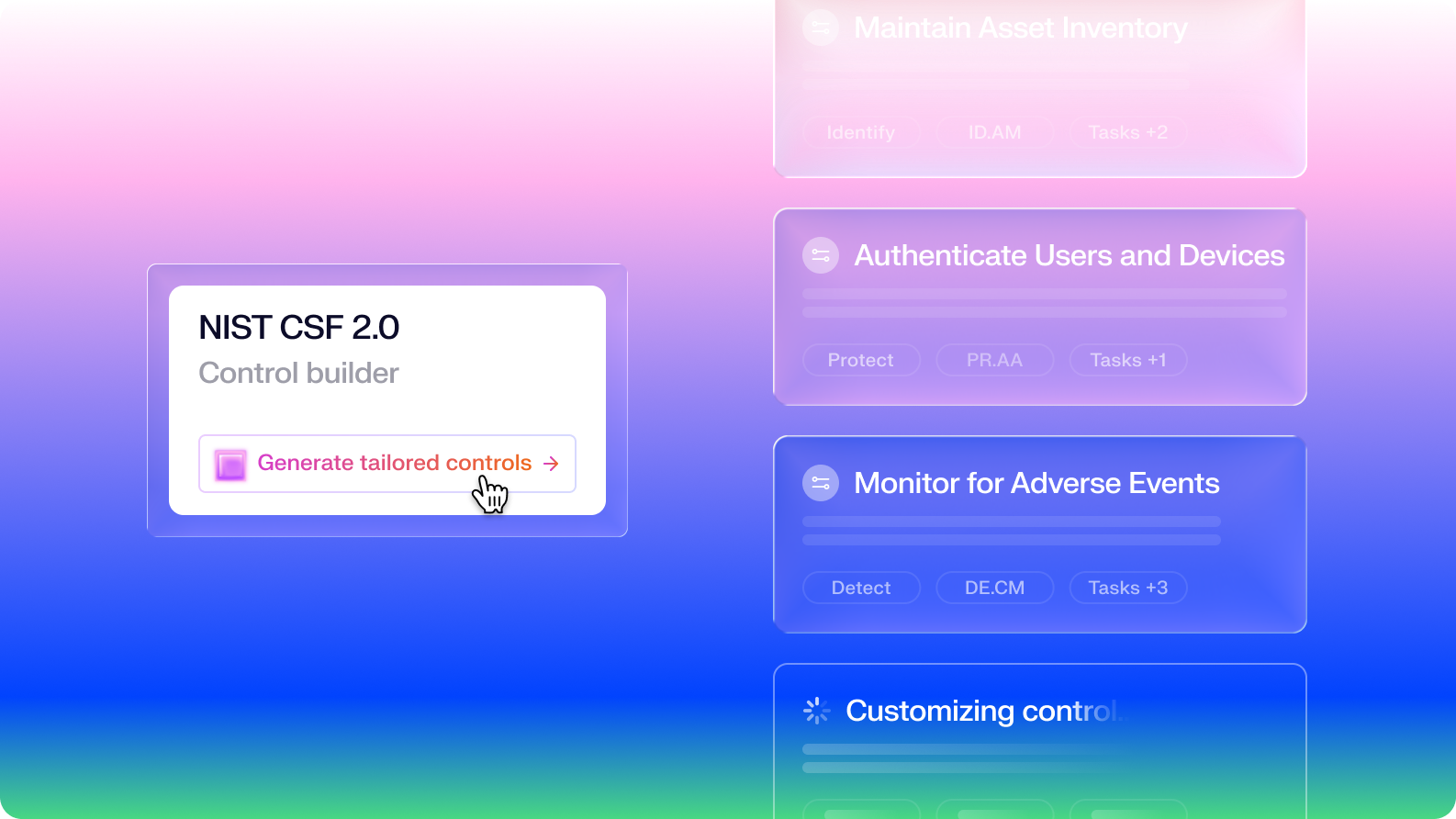
Most compliance tools turn frameworks into generic checklists. Iru generates controls that are specific to your organization, in plain language, broken down into sub-tasks.
- Iru AI generates tailored controls, based on your company context and audit details
- You can migrate existing controls over from other products, or upload your own custom control set
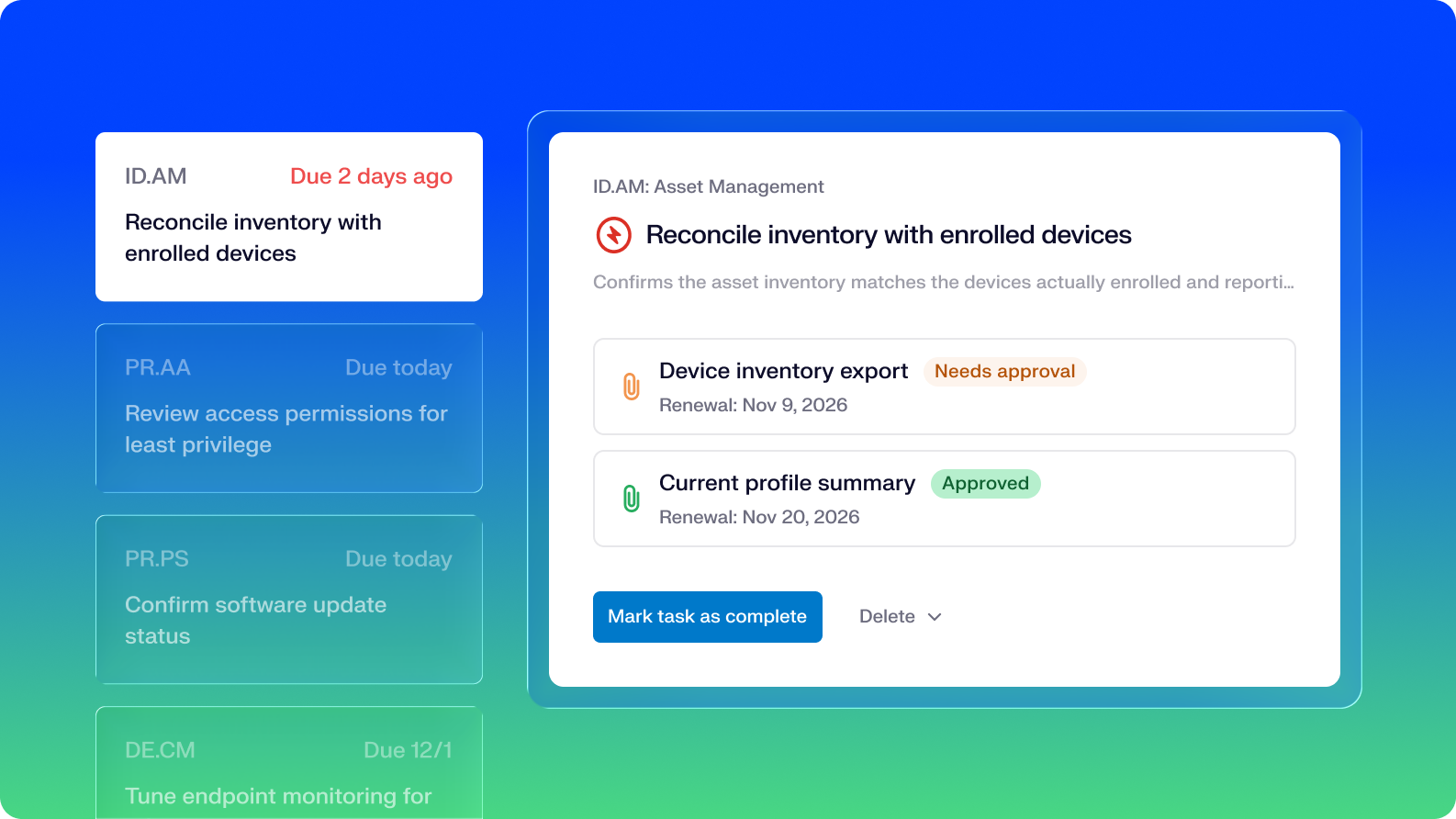
- Controls become actions the moment they are created, with suggested owners and due dates

Automate your NIST CSF 2.0 evidence collection
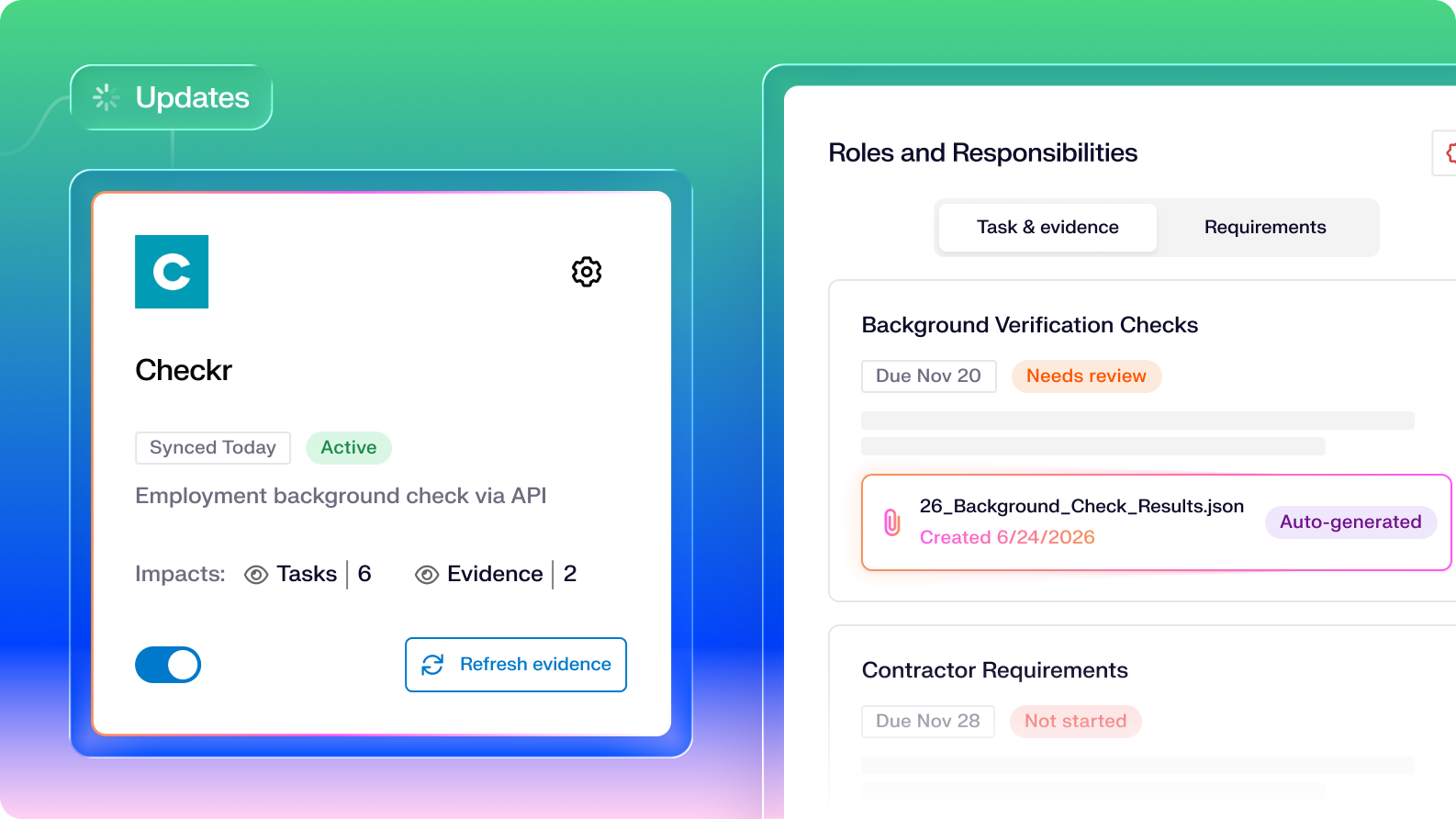
For connected and activated sources, Iru can discover and attach relevant artifacts to the supported control actions, reducing manual uploads. And because you can manage your devices and identity within Iru, that data is pulled natively.
- Evidence flows in continuously from supported devices, integrations and systems
- Iru AI helps to identify stale, missing or potentially irrelevant evidence for you to review
- You stay better prepared before fieldwork begins, with fewer fire drills before your engagement

Ensure continuous NIST CSF 2.0 audit readiness
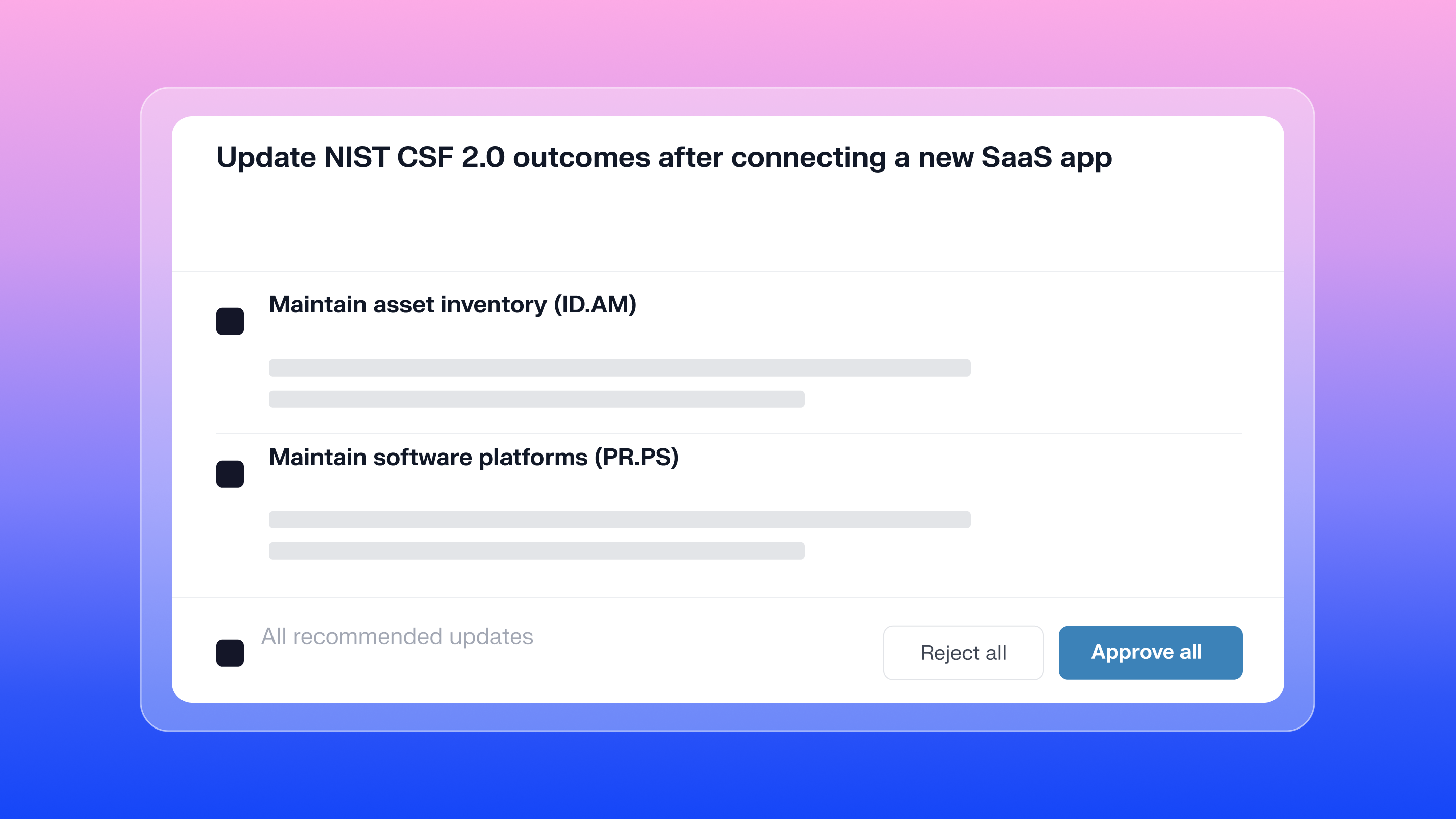
Iru's Adaptive Compliance capabilities watch for changes in your organization, and automatically suggest updates to your controls and actions.
- Iru AI regularly checks for changes to your sources, artifacts or company profile
- If a change is detected, a control update recommendation is surfaced for you to review, often within 24 hours
- No changes are made without your approval, and every change is logged for your auditors to review

Turn NIST CSF 2.0 preparation into an always-on workflow
Iru's AI-powered compliance solution helps IT, security and GRC teams spend less time on manual compliance work and stay audit-ready all year.
Let your team focus on what matters
Iru replaces fragmented tools with one AI-powered platform, so IT & security spend less time chasing tickets and more time improving the business.
Frequently asked
questions
Get answers to commonly asked questions
Who publishes NIST CSF 2.0, and who has to follow it?
NIST (The National Institute of Standards and Technology) publishes it. Nobody has to follow it — it’s voluntary, with no mandate behind it for the private sector and no certification attached.
That’s unusual, and it’s the point. CSF is designed to be adoptable by any organization, in any sector, at any size, without a regulator forcing the issue.
What are the six Functions?
Govern (GV) — your cybersecurity risk management strategy, expectations and policy.
Identify (ID) — understanding your assets, suppliers and the risks to them.
Protect (PR) — the safeguards that reduce likelihood and impact.
Detect (DE) — finding anomalies and indicators of compromise in good time.
Respond (RS) — containing and managing an incident once detected.
Recover (RC) — restoring assets and operations afterwards.
Govern is the addition in version 2.0, and it sits across the other five rather than beside them.
Is CSF 2.0 a control framework?
No, and this trips people up.
CSF describes outcomes — what should be true — organized into Functions, Categories and Subcategories. It doesn’t specify controls. For those it points at catalogs such as NIST 800-53.
The practical implication: you can’t "implement CSF" the way you implement a control set. You use it to structure your program, identify gaps, and communicate — then reach for a catalog to decide what to actually deploy.
Should we start here?
For most organizations, yes.
CSF carries no mandate, so nothing forces the decision — but it’s the framework most commonly recommended as a starting point precisely because it works at any size and doesn’t assume a sector. It gives you a way to see your whole program before you commit to a certification track.
The exception is if a buyer or a contract has already named something specific. If a customer wants SOC 2, or you’re in a federal supply chain and CMMC has appeared in a contract, start there — the deadline picks the framework for you.
In general, NIST CSF 2.0 can serve as a transition layer for the next steps on a certification journey, even if no one has demanded a specific framework yet.
Can we get "CSF certified"?
No. There is no CSF certification, no accredited assessor scheme, and nobody who can issue you one.
What CSF produces is an Organizational Profile — a documented view of your current outcomes and your target outcomes. Some organizations share a version of that with buyers. It’s a self-produced artifact, not a credential, and should be presented as such.
How does CSF relate to the other NIST frameworks?
They do different jobs.
800-53 is the control catalog — what to implement. CSF is the organizing layer — how to structure and communicate the program. CSF points at 800-53 rather than replacing it.
800-171 is a subset of 800-53, tailored for nonfederal systems handling CUI. CMMC is the Department’s program for verifying 800-171.
The important distinction: 800-171 and CMMC only apply if you work with federal or defense customers. CSF applies to anyone who wants it.
Can Iru get us compliant with CSF 2.0?
There’s nothing to be compliant with — CSF is voluntary and uncertified. The useful question is whether you’re achieving the outcomes it describes.
Iru contributes directly to four of the six Functions, and it takes the platform rather than the compliance product alone. Identify comes from Iru Endpoint Management, which inventories your devices, Iru Workforce Identity, which inventories your identities, and Iru Vulnerability Management, which surfaces your software risk — knowing what you actually have is where most programs find their first gap. Protect comes from Iru Endpoint Management and Iru Workforce Identity: device hardening, encryption, and access tied to device posture. Detect and Respond come from Iru Endpoint Detection & Response, finding anomalies and containing them. Iru Compliance Automation keeps the evidence for all of it current.
Govern is your strategy and oversight. Recover depends on backup and restoration capability Iru doesn’t provide. Both sit outside the platform.
If you’d like to see how the other four work, book a demo. Existing customers can reach out to their rep.