
 Workforce Identity
 Endpoint Management
 Endpoint Detection & Response
 Vulnerability Management
 Compliance Automation
 Trust Center


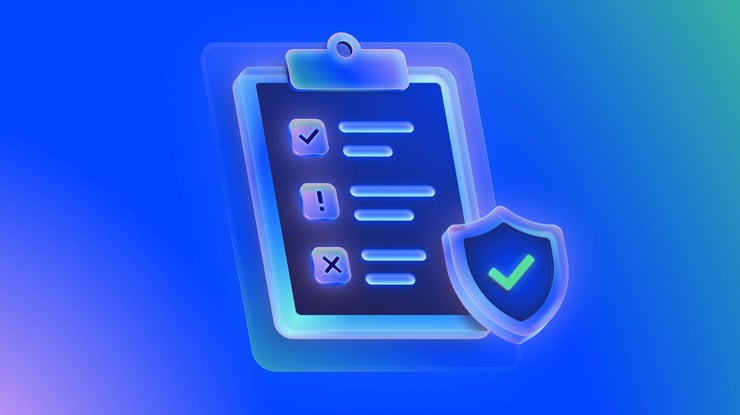

What is compliance management software? Compliance management software helps organizations manage regulatory requirements, automate evidence collection, monitor controls, and prepare for audits from a central platform. It reduces manual work by connecting with your existing IT and security systems, making it easier to stay compliant with frameworks like SOC 2, ISO 27001, HIPAA, PCI DSS, and GDPR year-round.
Keeping up with compliance is hard. Keeping up with multiple frameworks, changing regulations, evidence requests, and audit deadlines across different tools is even harder.
The right compliance management software brings everything into one place. It automates repetitive work and helps you stay audit-ready without the last-minute scramble.
Explore 11 of the best compliance management solutions and what each one does well. We’ll also share some tips on how to choose the right fit for your team.
Best compliance management software tools: at a glance
Every organization has different compliance priorities. Some need to get audit-ready quickly, while others are managing multiple frameworks across large teams. Here are the 11 best compliance management software tools at a glance before we dive into the details:
| Tool | Best for | Key features | G2 rating |
|---|---|---|---|
| Iru | Unified endpoint compliance | AI-generated, framework-specific controls; Adaptive Evidence Map with continuous evidence collection; personal compliance inbox and task delegation; Trust Center with NDA-gated document sharing | 4.7 |
| Vanta | Fast SOC 2 | Continuous compliance monitoring; AI-powered compliance workflows; multi-framework support with extensive integrations | 4.6 |
| Drata | Standardizing controls | Continuous control monitoring; automated evidence collection; multi-framework compliance management | 4.7 |
| Optro | Enterprise GRC | Unified GRC platform; AI-powered control mapping; continuous monitoring and enterprise reporting | 4.6 |
| Hyperproof | Compliance operations | Compliance task management; automated evidence collection; multi-framework control mapping | 4.5 |
| Secureframe | Guided onboarding | Guided compliance onboarding; automated evidence collection; continuous monitoring | 4.7 |
| Sprinto | SMB automation | Automated evidence collection; continuous control monitoring; built-in workflow management | 4.8 |
| Scrut Automation | Multi-framework value | Multi-framework compliance management; continuous evidence collection; risk and vendor management | 4.9 |
| LogicGate | Risk workflows | Configurable risk workflows; centralized risk register; workflow automation and reporting | 4.6 |
| ServiceNow IRM | Large-enterprise IRM | Integrated risk management workflows; risk dashboards and reporting; ServiceNow and third-party integrations | 4.2 |
| NinjaOne | IT-ops compliance | Endpoint and device management; automated patch management; remote monitoring and reporting | 4.7 |
1. Iru
Best for: Unified endpoint compliance
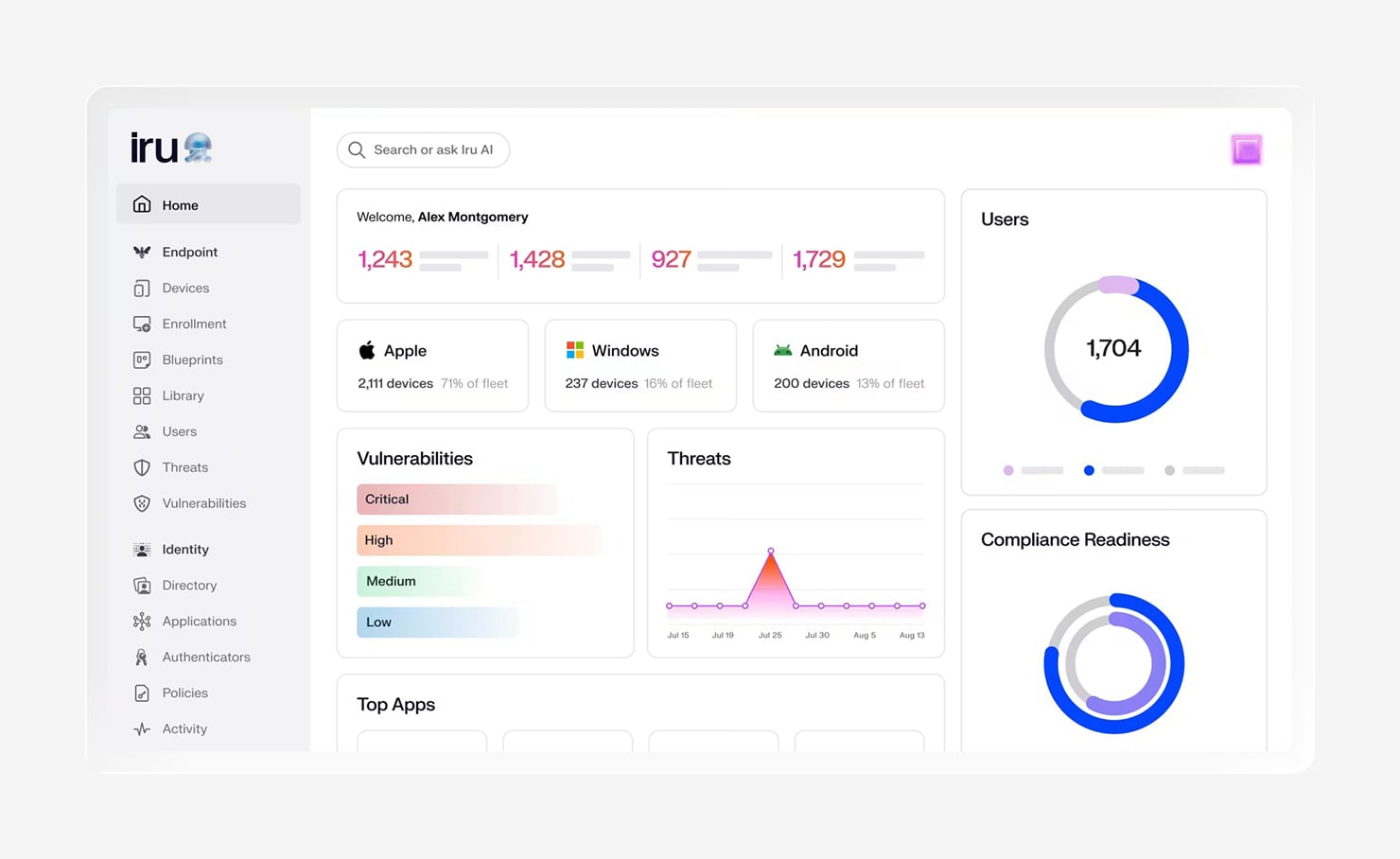
Iru connects compliance directly to the systems managing your users, devices, and identity. Instead of collecting evidence from disconnected tools, Iru turns live endpoint and identity data into audit-ready proof from the same platform. Fewer moving parts mean fewer opportunities for something to fall through the cracks.
Iru’s AI-powered Compliance Automation solution generates framework-specific controls based on your environment, then breaks them into actionable tasks for your team. As your environment changes, Iru AI continuously collects, validates, and maps evidence through its Adaptive Evidence Map, helping you stay audit-ready. No last-minute evidence hunt required.
And because compliance is built into Iru's endpoint management, endpoint detection and response (EDR), and identity platform, device posture and access signals automatically become part of your compliance evidence. This gives auditors a real-time view of your security posture instead of a point-in-time snapshot. It's the difference between looking at a photo and watching a live feed.
When it's time to prove your security posture to customers, its Trust Center helps move deals forward. You can publish certifications, securely share sensitive documents behind NDA workflows, and let Iru AI draft responses to security questionnaires using evidence already stored in your compliance program. That means less back-and-forth and faster answers when customers come knocking.
Key features
- AI-generated, framework-specific controls: Iru AI creates controls tailored to things like your industry and technology stack, reducing manual setup and unnecessary work.
- Adaptive Evidence Map: Iru keeps evidence up to date by collecting, validating, and mapping it to the right controls. It also flags outdated or irrelevant evidence.
- Personal compliance inbox: Every team member gets a dedicated task list with assigned owners, due dates, comments, and progress tracking to keep audits moving.
- Public Trust Center: You can share certifications and security documentation through a branded portal, with NDA-gated access for sensitive files and AI-assisted questionnaire responses.
- Native endpoint,EDR, and identity integration: For compliance, Iru uses live signals from the same platform managing your devices and users, eliminating manual evidence collection across separate tools.
2. Vanta
Best for: Fast SOC 2
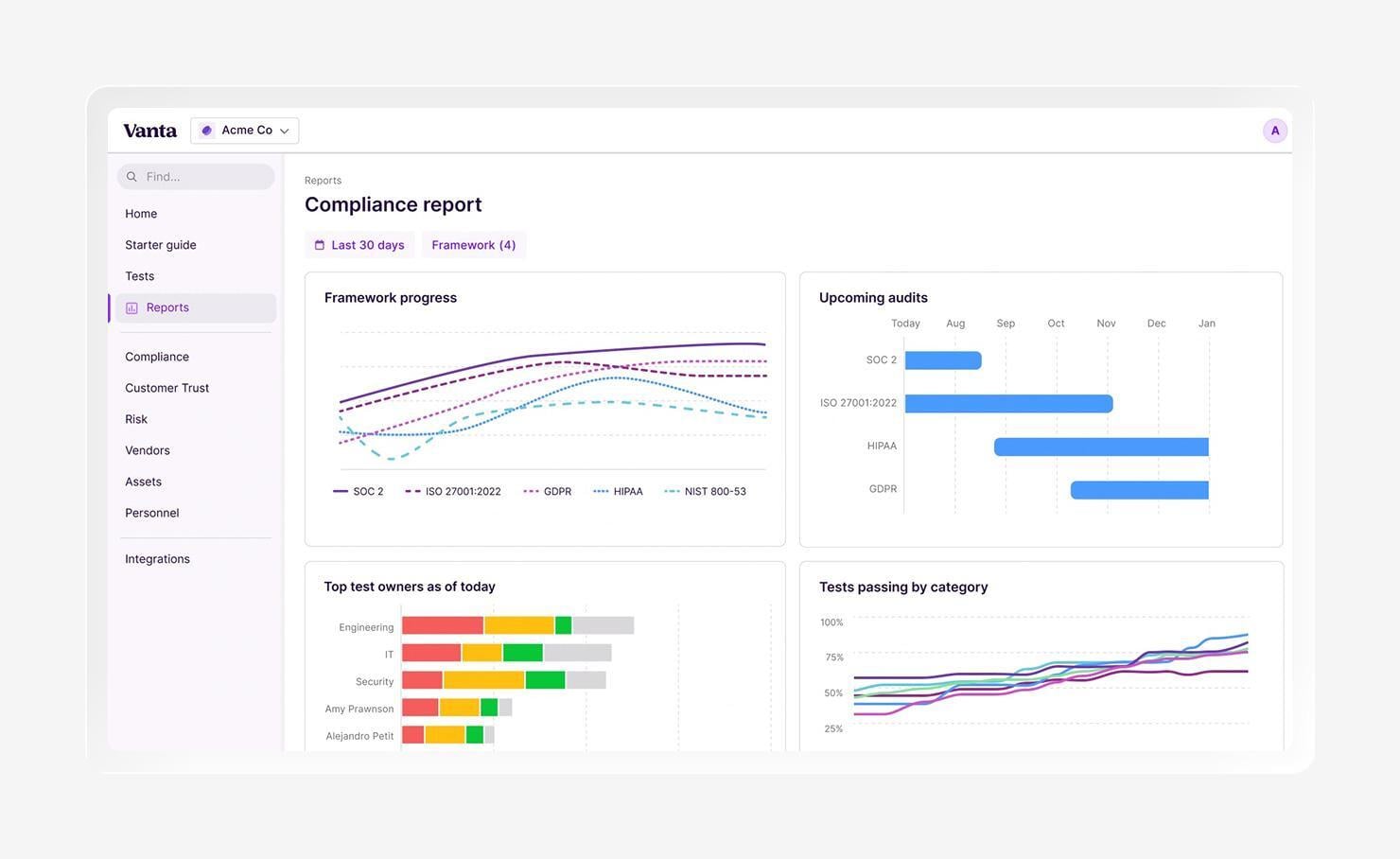
Vanta is built for cloud-native native teams whose goal is to earn SOC 2 without building every process from scratch. It automates much of the evidence collection, continuously monitors controls, and guides you through the audit process. Think of it as the compliance equivalent of cruise control. You still need to keep your hands on the wheel, but the ride gets a lot smoother.
The platform supports dozens of security and privacy frameworks, but it's especially well known for helping companies get SOC 2 ready quickly. Its compliance approach lets you reuse evidence across frameworks, while AI assists with policy creation, control mapping, and remediation suggestions to reduce manual work.
Vanta can scale with your team through hundreds of integrations, and its Trust Center makes it easier to share security information with prospects and customers. But if you're looking for stronger endpoint integration, AI-native compliance automation, or broader enterprise GRC capabilities, you may also want to explore Vanta alternatives like Iru, Optro, or ServiceNow IRM.
Key features
- Continuous compliance monitoring: You can run automated tests throughout the day to monitor controls, collect evidence, and alert you when something needs attention instead of waiting until audit season.
- AI-powered compliance workflows: Vanta AI helps generate policies, map controls, review evidence, and recommend remediation steps, cutting down on repetitive compliance work.
- Framework mapping and integrations: The platform connects with hundreds of cloud, identity, code, and device tools while letting you reuse evidence across frameworks like SOC 2, ISO 27001, HIPAA, and GDPR.
3. Drata
Best for: Standardizing controls
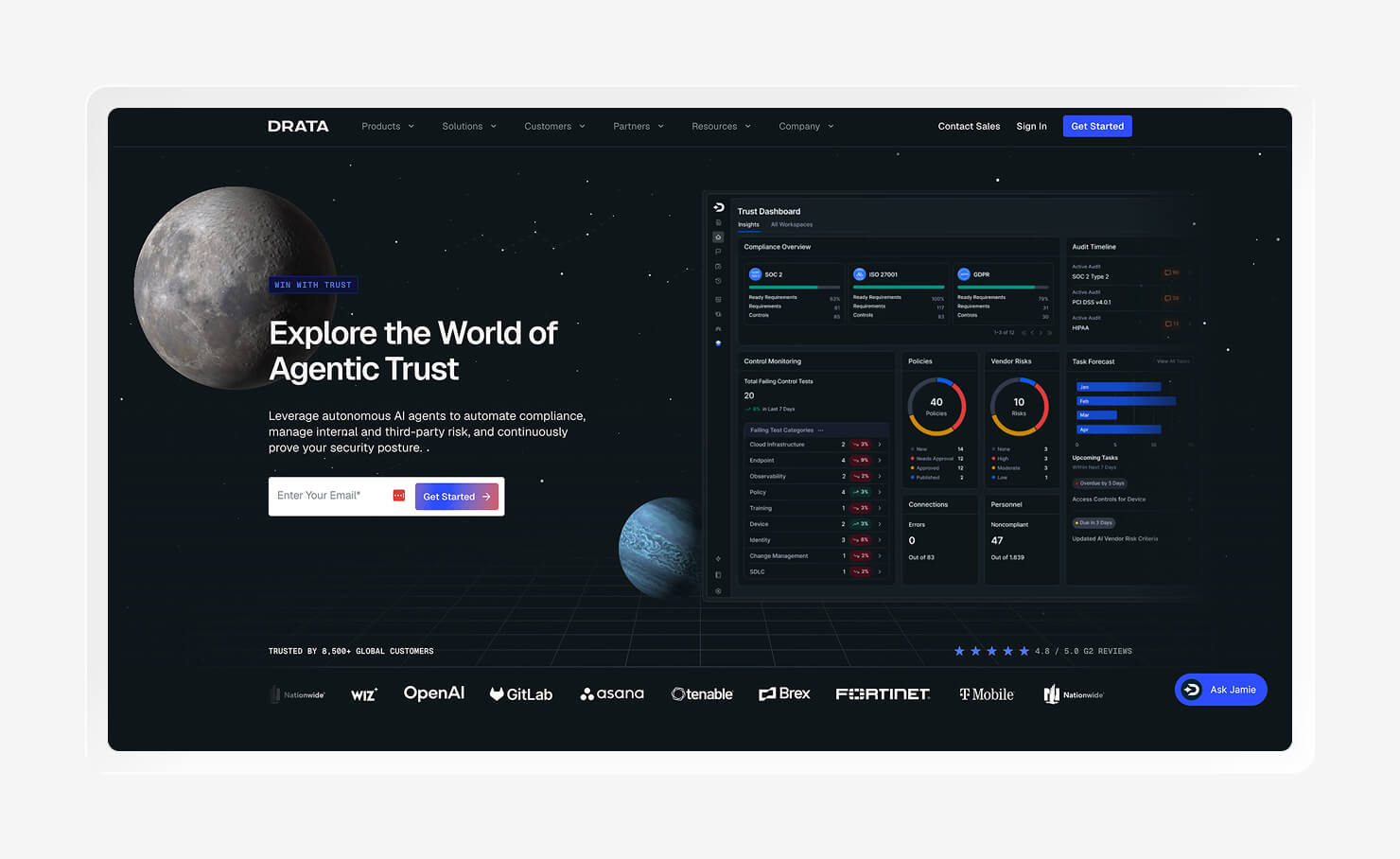
Drata is built for larger organizations that need to run many compliance frameworks at once without letting each one drift into its own silo. It standardizes controls and evidence across frameworks, so a single control can satisfy overlapping requirements instead of being rebuilt for every audit.
As a regulatory compliance management software, Drata supports multiple frameworks and lets you reuse controls and evidence across them. It also connects with hundreds of cloud, identity, HR, and development tools, helping you scale a heavy compliance program without piling on manual work.
That breadth suits teams managing compliance across multiple business units of entities. By mapping shared controls to each framework, Drata helps you keep large, complex programs consistent as requirements and headcount grow.
But if your priorities lean more towards compliance that adapts to your business with deeper endpoint integration, consider Drata alternatives like Iru, Optro, or Hyperproof.
Key features
- Continuous control monitoring: Drata automatically tests controls and alerts teams when issues or configuration drift appear, helping you stay audit-ready year-round.
- Automated evidence collection: It pulls evidence from more than 300 integrations, reducing manual screenshots, spreadsheets, and repetitive audit tasks.
- Multi-framework compliance management: The platform lets you reuse shared controls and evidence across frameworks from a single platform, so you can expand your compliance program as your business grows.
4. Optro (formerly Auditboard)
Best for: Enterprise governance, risk, and compliance (GRC)
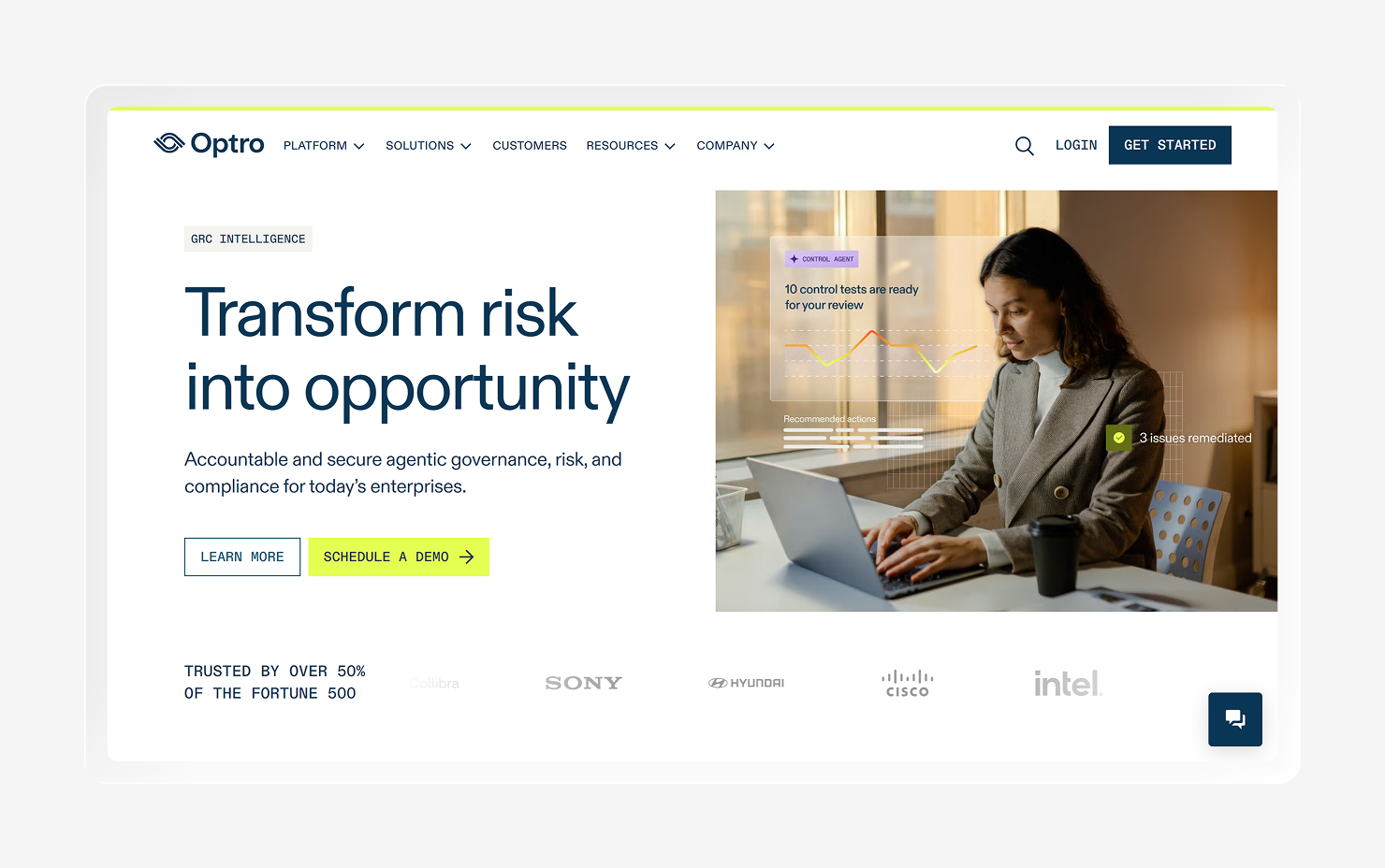
Optro is designed for large organizations managing risk, audit, and compliance across multiple teams and business units. It brings GRC activities into a single platform, giving your security and internal audit teams a shared view of controls, risks, and ongoing work.
The platform supports everything from internal audits and compliance programs to enterprise risk management and AI governance. It also uses AI to help you map controls across frameworks, identify gaps, automate repetitive tasks, and surface insights faster.
For enterprises with complex compliance requirements, Optro offers continuous monitoring and centralized reporting. It also offers workflows that keep your audit and compliance teams aligned.
Key features
- Unified GRC platform: You can manage audit, risk, compliance, and controls from a single workspace, giving your teams shared visibility into enterprise-wide risk.
- AI-powered control mapping: The platform automatically maps controls across multiple frameworks, identifies gaps, and helps you keep pace as regulatory requirements evolve.
- Continuous monitoring and reporting: Optro tracks risks and controls in real time, so you can identify issues early and generate reports for stakeholders without manual consolidation.
5. Hyperproof
Best for: Compliance operations
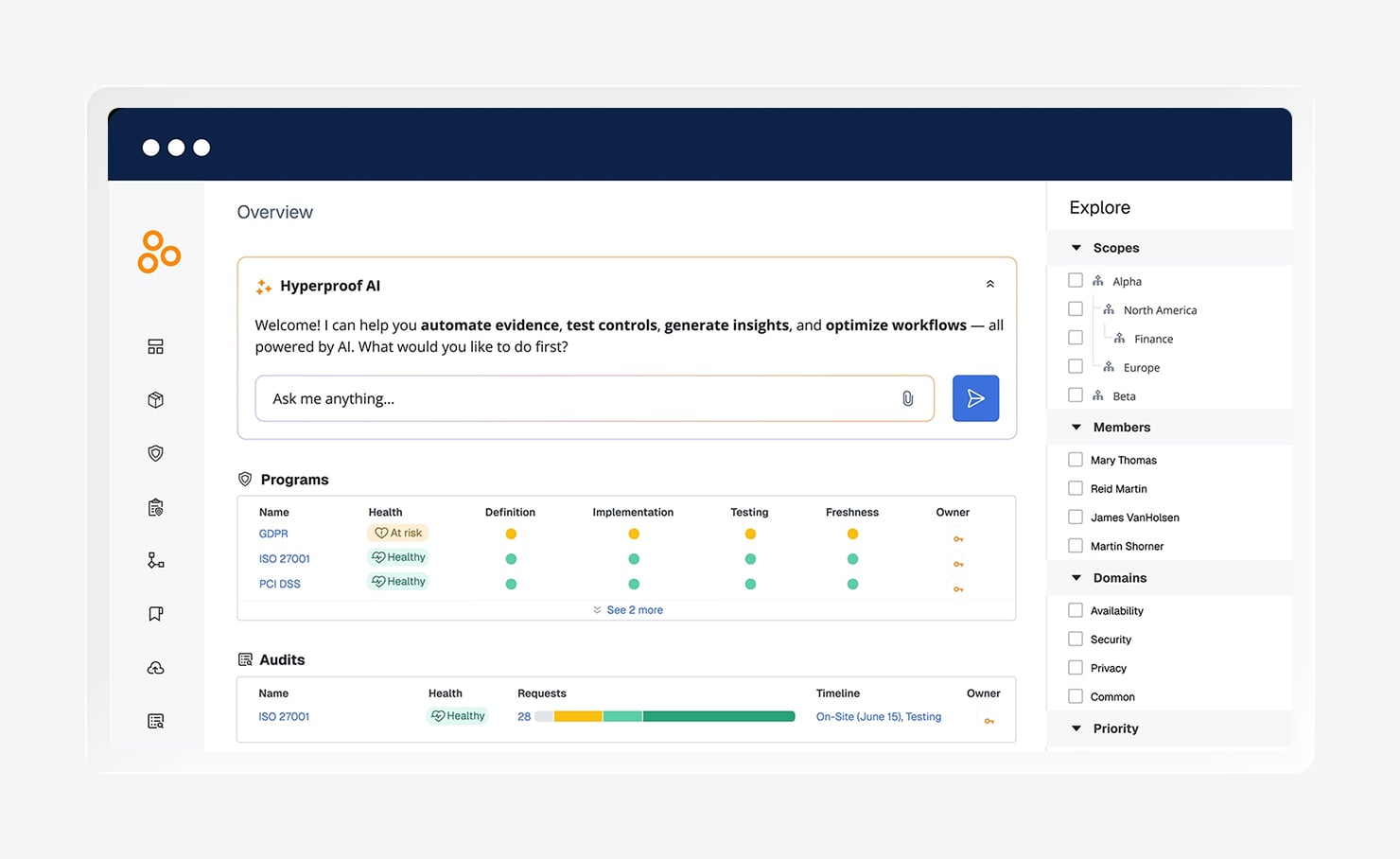
Hyperproof gives compliance teams a central place to manage day-to-day operations instead of juggling email threads and scattered spreadsheets. It combines task management, evidence collection, and framework mapping into a single workflow.
You can easily organize controls, assign responsibilities, automate recurring work, and reuse evidence across multiple compliance programs. Hyperproof also connects with a wide range of business and security tools, allowing evidence to flow in automatically as systems change.
And while Hyperproof isn't a device isolation platform, it can incorporate evidence from endpoint and security tools that support capabilities like device isolation. That flexibility makes it a good fit for organizations managing several compliance frameworks at once.
Key features
- Compliance task management: You can assign owners, track deadlines, and manage recurring compliance work from one workspace, so nothing slips through the cracks.
- Automated evidence collection: Hyperproof pulls evidence from connected business and security tools, reducing manual uploads and keeping documentation up to date.
- Multi-framework control mapping: You can reuse controls and evidence across frameworks like SOC 2, ISO 27001, HIPAA, and PCI DSS instead of rebuilding your compliance program for each new audit.
6. Secureframe
Best for: Guided onboarding
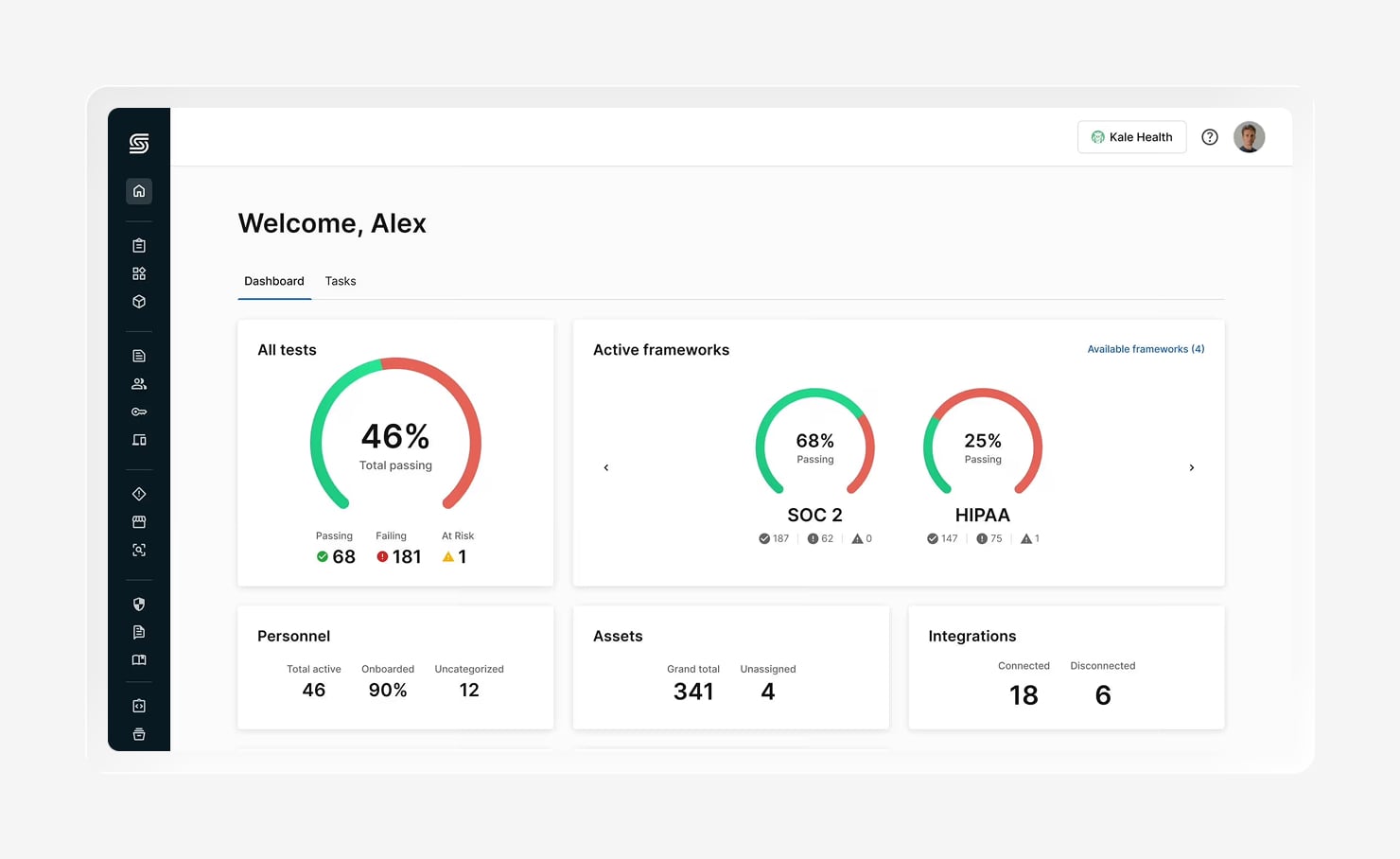
Getting a compliance program off the ground can feel overwhelming, especially for teams doing it for the first time. Secureframe addresses that with guided setup, helping you work through the steps needed for frameworks like SOC 2, ISO 27001, HIPAA, and PCI DSS at a manageable pace.
Rather than leaving you to figure out every requirement on your own, Secureframe organizes controls, policies, evidence, and tasks into structured workflows. It also connects with cloud services, identity providers, HR systems, and security tools to automate evidence collection where possible, reducing manual documentation.
Secureframe supports continuous monitoring as well, so you can identify changes that could affect your compliance posture. For organizations keeping an eye on endpoint drift, it can collect signals from integrated endpoint and device management tools as part of a broader compliance program, alongside cloud infrastructure and identity systems.
Key features
- Guided compliance setup: Secureframe walks you through the requirements for major compliance frameworks with structured tasks, policies, and implementation guidance.
- Automated evidence collection: You can connect the platform to your existing security tools to gather evidence continuously, reducing manual uploads during audits.
- Continuous monitoring: The platform tracks changes across integrated systems and alerts teams when controls need attention or supporting evidence is no longer current.
7. Sprinto
Best for: SMB automation
Small and mid-sized businesses often don't have dedicated compliance teams. One person might be handling security, IT, and compliance before lunch, then answering support tickets in the afternoon. Sprinto is designed with that reality in mind, automating routine compliance work so smaller teams can spend less time chasing evidence.
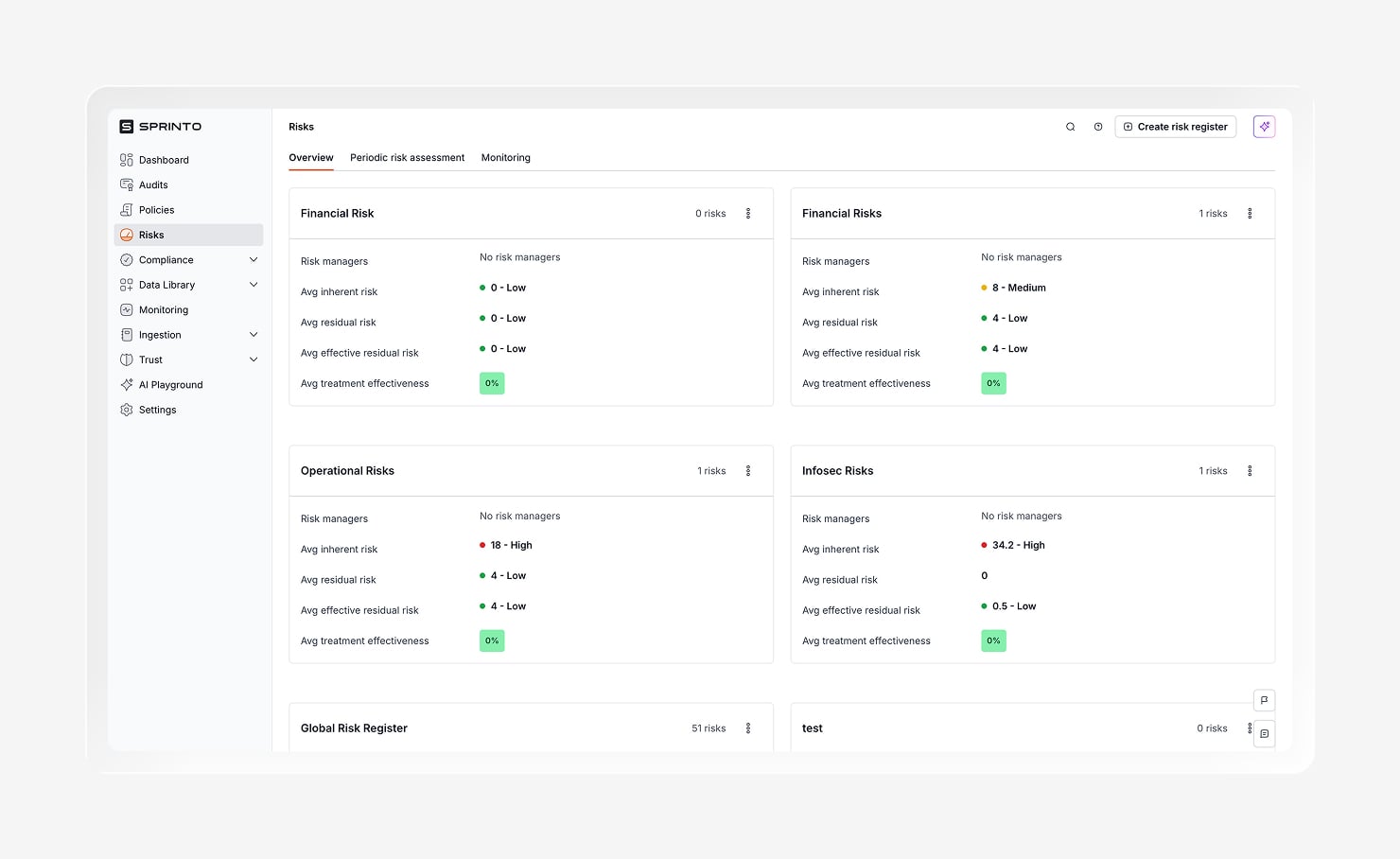
The platform supports frameworks such as SOC 2, ISO 27001, HIPAA, and GDPR. It connects with cloud infrastructure, identity providers, HR systems, and development tools to perform things like monitoring controls and surfacing issues that need attention. Much of the day-to-day work happens in the background, while your teams stay informed through dashboards and alerts.
That makes Sprinto a practical option for organizations building a security program while keeping pace with the top cyberthreats facing SMBs. As new risks emerge, continuous monitoring and automated workflows can help you maintain visibility without adding more manual processes.
Key features
- Automated evidence collection: Sprinto gathers audit evidence from connected business and security tools, reducing repetitive manual work throughout the year.
- Continuous control monitoring: It tracks compliance controls on an ongoing basis and highlights issues that may require follow-up before they become audit findings.
- Built-in workflow management: You can assign tasks, track progress, and keep compliance activities organized across multiple frameworks and team members.
8. Scrut Automation
Best for: Multi-framework value
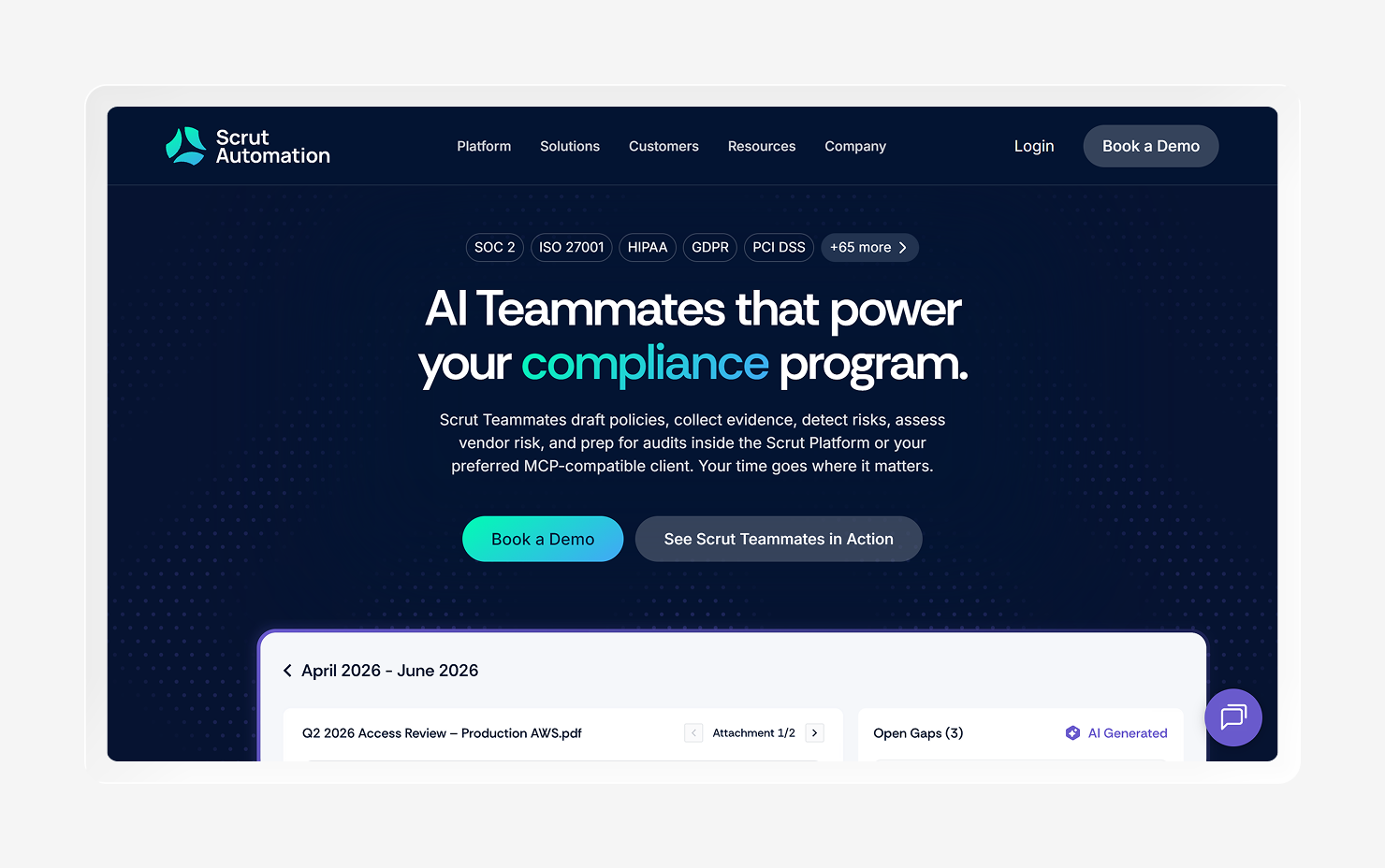
Every new compliance framework brings another set of controls, evidence requests, and deadlines. Scrut Automation helps reduce that duplication by letting teams map shared controls across multiple frameworks instead of managing each one separately. For growing companies, that can make expansion into new compliance programs more manageable.
The platform combines continuous monitoring, automated evidence collection, risk management, and vendor assessments in one workspace. It integrates with cloud providers, identity platforms, code repositories, and business applications to keep compliance data current without relying on manual updates.
Scrut also gives you better visibility into risks that extend beyond managed systems. For example, you can use its asset discovery and monitoring capabilities alongside your security processes to identify issues related to shadow IT, where unapproved applications or services create compliance and security gaps.
Key features
- Multi-framework compliance management: With Scrut Automation, you can map controls across standards such as SOC 2, ISO 27001, HIPAA, PCI DSS, and GDPR, and reuse evidence where requirements overlap.
- Continuous evidence collection: Scrut Automation connects with cloud, identity, and business systems to gather and organize compliance evidence automatically throughout the year.
- Risk and vendor management: You can track organizational risks and third-party vendors alongside compliance activities, getting a broader view of your security and compliance program.
9. LogicGate
Best for: Risk workflows
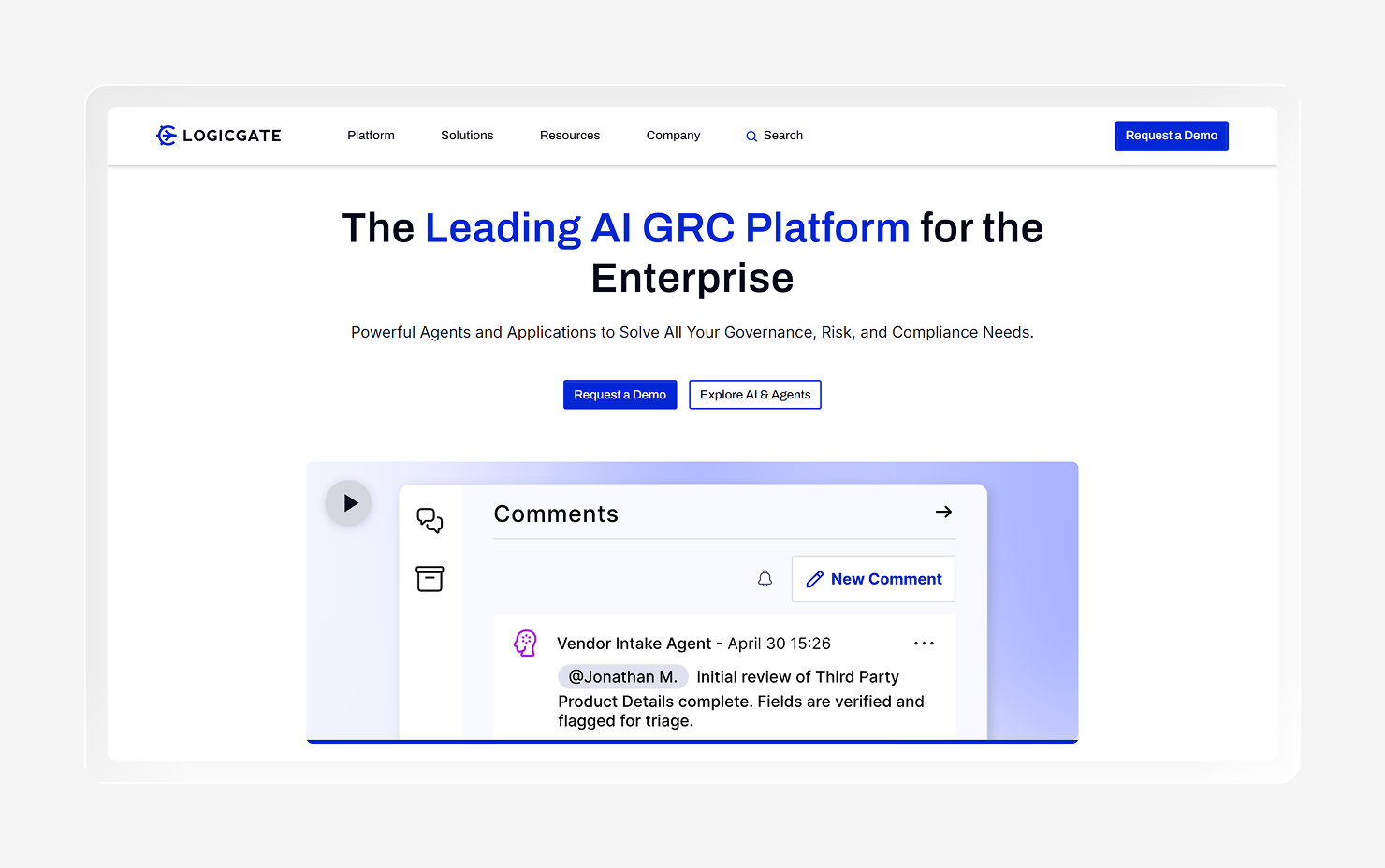
LogicGate takes a workflow-driven approach that lets you build and customize processes around risk, compliance, audits, and third-party assessments instead of forcing them into a fixed template.
Its platform centers on configurable workflows, helping teams automate reviews, approvals, notifications, and remediation tasks as risks move through the organization. Integrations with business and security tools keep information flowing, while dashboards provide visibility into what's open and what's overdue. And what needs attention next.
LogicGate is also well-suited for organizations looking to strengthen ransomware readiness as part of a broader GRC program. While it isn't a ransomware prevention tool, it can help coordinate risk assessments, document controls, track remediation efforts, and demonstrate that response processes are being followed.
Key features
- Configurable risk workflows: Build workflows for risk assessments, compliance reviews, policy approvals, and remediation without extensive custom development.
- Centralized risk register: Track risks and controls along with mitigation activities in one place, so you can understand how issues are connected across your organization.
- Automation and reporting: Automate routine tasks, notifications, and approvals while using dashboards and reports to monitor progress and support decision-making.
10. ServiceNow IRM
Best for: Large-enterprise IRM
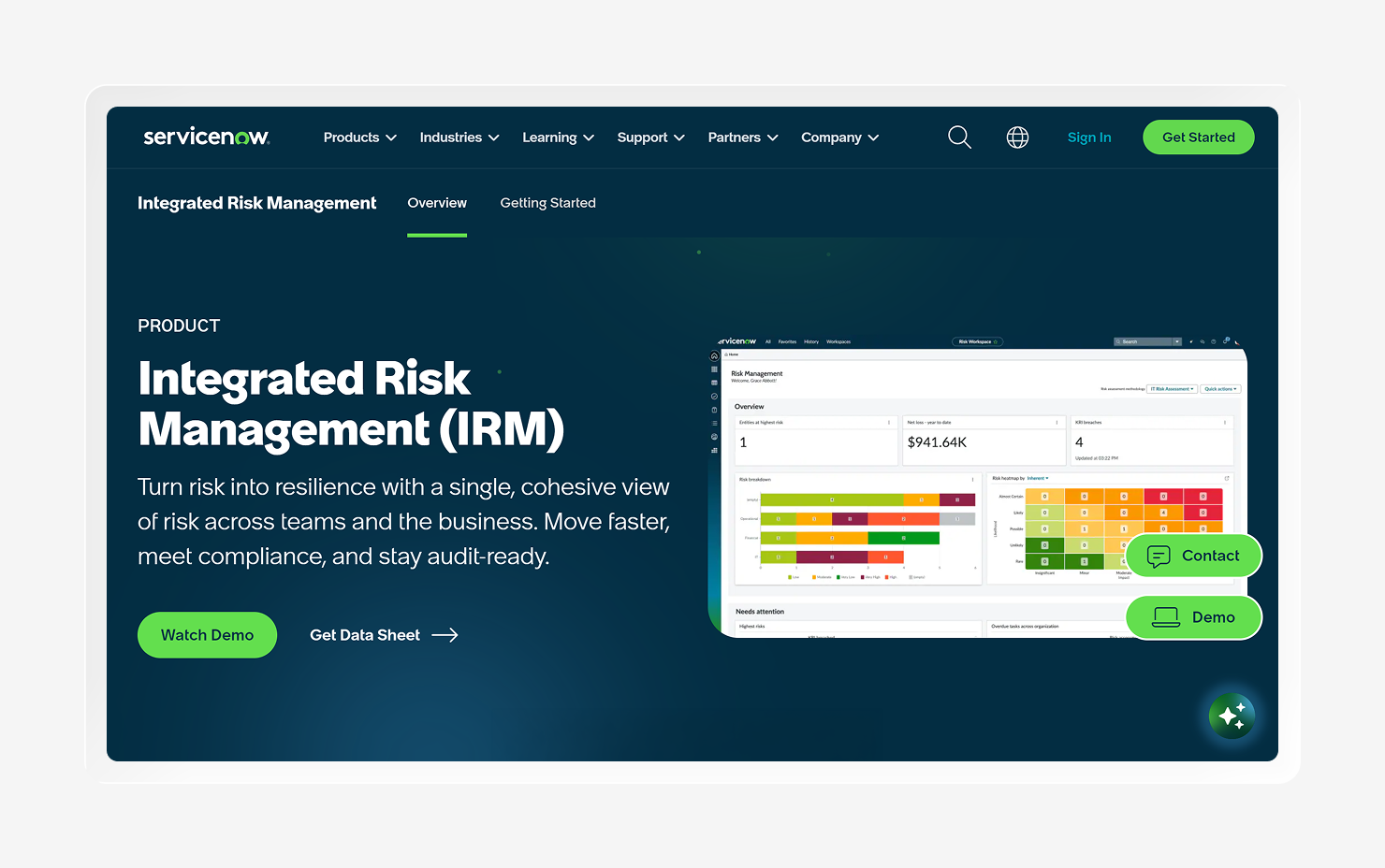
ServiceNow Integrated Risk Management (IRM) is built for large-scale enterprises, bringing risk, compliance, policy management, and audit activities together. It connects governance and compliance work with broader business operations, helping teams automate assessments and manage remediation from a central location.
Organizations already using ServiceNow for IT or security operations can extend those existing workflows into their risk and compliance programs instead of managing them separately.
ServiceNow IRM also supports vulnerability management by connecting with security tools and workflows across the platform. Risk teams can prioritize findings, assign remediation tasks, and track progress alongside compliance activities, helping them understand how technical issues affect overall business risk.
Key features
- Integrated risk management workflows: ServiceNow lets you manage risk assessments, policy exceptions, compliance activities, and remediation from a shared platform with configurable workflows.
- Risk-based reporting: Dashboards and reporting tools give stakeholders visibility into enterprise risks and remediation progress across teams.
- Platform integrations: You can connect the platform with other ServiceNow products and third-party security tools to bring risk, audit, compliance, and IT operations into a unified workflow.
11. NinjaOne
Best for: IT-ops compliance
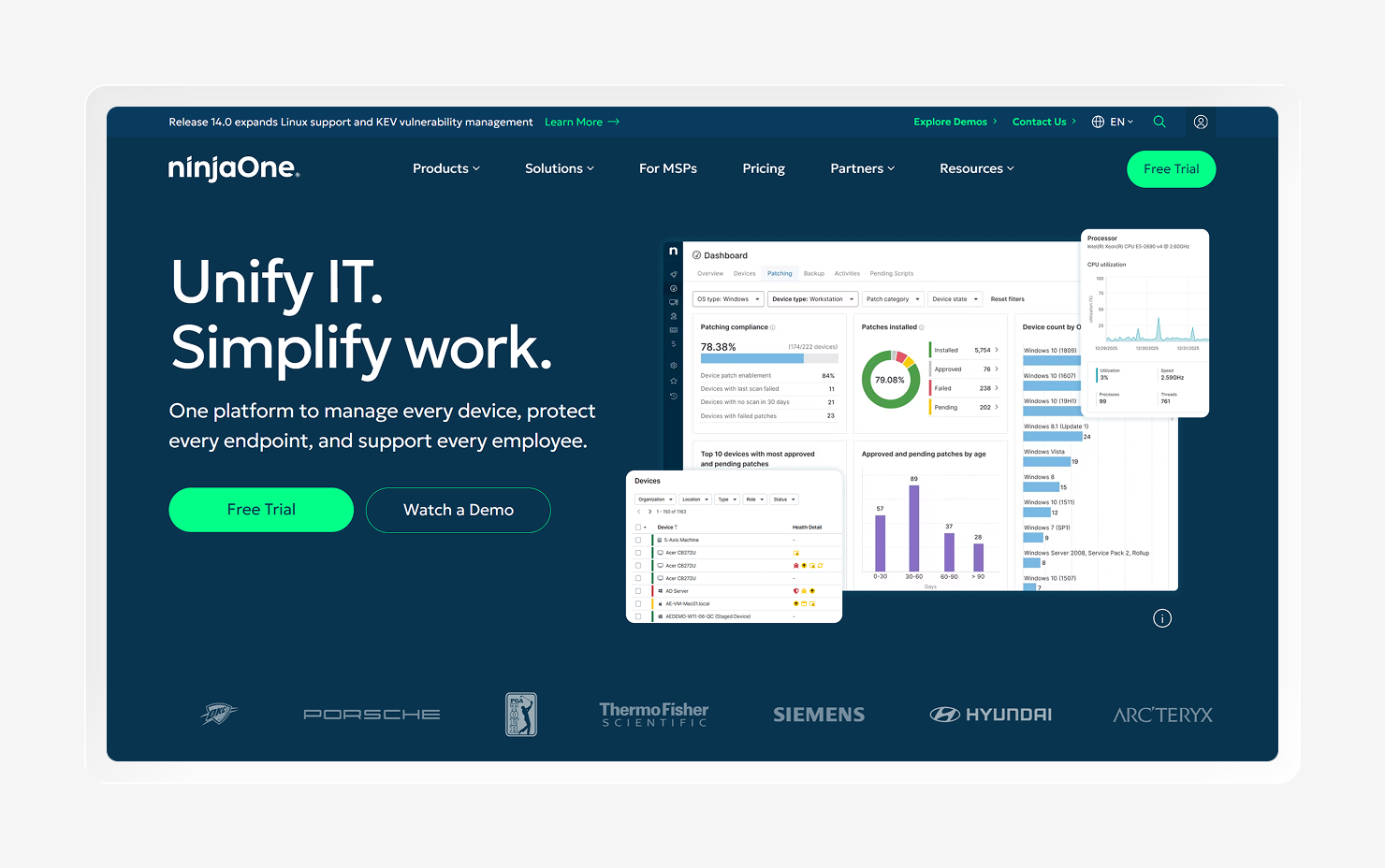
NinjaOne focuses on the operational side of compliance, combining device management, endpoint monitoring, patch management, and remote administration in a single platform.
The platform helps IT teams automate routine maintenance, deploy software, monitor device health, and keep systems up to date. It also provides reporting and asset visibility that support internal policies and external compliance requirements, particularly for organizations that need to demonstrate consistent endpoint management practices.
NinjaOne isn't a dedicated compliance platform, but it plays an important supporting role in many compliance programs. By helping you maintain secure, well-managed devices and document operational activities, it provides the endpoint data and operational records that many security and regulatory frameworks rely on.
Key features
- Endpoint and device management: Keep track of and manage Windows, macOS, Linux, and mobile devices from one dashboard.
- Automated patch management: Deploy operating system and third-party application updates with automated policies to reduce security and compliance gaps.
- Remote monitoring and reporting: Track device health, generate operational reports, and respond to issues quickly through built-in monitoring and remote management tools.
What to look for in compliance management software
The best compliance management tools make audits less stressful. Before you commit, look beyond the feature list and think about how the software fits your workflows, your team, and the frameworks you need to support.
Here are the areas worth evaluating:
- Framework coverage: Start with the compliance standards you need today, such as SOC 2, ISO 27001, HIPAA, PCI DSS, or GDPR. More frameworks aren’t automatically better. Instead, look towards systems that enforce real controls instead of working through generic checklists by hand.
- Integration depth: Your compliance platform should work with the tools you already rely on. For instance, if your organization uses Iru Endpoint Management to connect systems and automate workflows, check that the software can leverage those integrations.
- Evidence automation: Platforms that automatically gather and validate evidence throughout the year can save hours of repetitive work and reduce last-minute audit scrambles.
- Continuous monitoring: Ongoing monitoring helps your teams spot configuration drift, failed controls, or missing evidence before they become bigger issues. Look for a tool that helps you stay audit-ready by fixing those gaps rather than just addressing them.
- Support for your IT environment: If endpoint management is part of your compliance strategy, look for integrations with tools that handle Mac patch management. Keeping devices updated is a common requirement across many security frameworks.
- Total cost: Consider implementation, training, ongoing administration, and the time your team spends managing compliance over the long term.
- Scalability: The right platform should grow with your team. Organizations using ADE enrollment for large-scale Apple device deployments, for example, should look for software that can support expanding device fleets and evolving compliance needs.
Automate compliance management with Iru
Compliance is easier when it runs on the same platform that manages your users, devices, and identity. Instead of piecing together evidence from disconnected tools, Iru’s Compliance software automates evidence collection and maps it to the right controls, keeping your compliance program aligned with your environment as it changes.
And because it's built into the same platform that manages your endpoints and identity, your team spends less time preparing for audits and more on improving security. Everything stays connected, current, and ready when you need it.
Book a free demo to see how Iru can help keep your organization continuously audit-ready.