
•
7 min readCalculating the True Cost of Apple Device Management
How much does it cost your organization to manage its Apple devices? Put another way, how much value does your device management system deliver?
•
7 min readHow much does it cost your organization to manage its Apple devices? Put another way, how much value does your device management system deliver?
•
3 min readWe’ve added a new section to our Single Sign-On Extension Library Item: Platform SSO. But this is one Kandji feature that’s built as much for the future as it is for the present. Let us explain.
•
6 min readFor some Apple admins, device names are crucial to their workflows. It’s the fundamental way they identify specific devices for remote management and in-person service. Admins also build workflows—often involving APIs—using the name as a pattern to automatically act on either one device or many.
•
2 min readKandji is pleased to announce its support for macOS Sonoma. One major result of that support: You can now require that FileVault be enabled during Automated Device Enrollment.
•
2 min readKandji is pleased to announce its support for iOS, iPadOS, and tvOS 17. The highlight: a new Return to Service workflow.
•
9 min readSwitching from one MDM solution to another on a Mac fleet is no trivial undertaking. There are many moving parts to coordinate, and failure to think it all through could render your fleet unprotected at best and inoperable at worst. As usual with any serious IT project, prior planning and preparation will prevent any number of outcomes that you just don’t want.
•
3 min readApple’s remarkable rise in the enterprise continues: In a survey of IT leaders in organizations with 1,000 or more employees, 76 percent said that the use of Apple devices in their companies increased over the past year. The top reason they cited: Apple devices improve productivity, particularly for hybrid and remote workforces.
•
8 min readThe goal is straightforward. You want a system that will let your users present their credentials once and then have access to everything they need: their user accounts on computers, phones, or tablets; native applications on those devices; local network resources; and cloud apps and services.
•
6 min readWhen Apple first introduced declarative device management (DDM) in 2021, the company dubbed the new framework “the future of device management.” DDM improves on traditional MDM by pushing much of the responsibility for device management down to the device itself.
•
5 min readDevice enrollment—how you actually get a new (or not-so-new) device under management—is one of the standout features of Apple’s device management ecosystem. For new devices purchased through Apple itself or an authorized retailer, the process is practically seamless.
•
6 min readIn case you hadn’t heard, Apple is holding its annual Worldwide Developers Conference this week. While the Vision Pro headset and other consumer-oriented hardware got most of the attention, Apple also made some announcements of particular interest to Apple IT admins. It was, in fact, one of the most momentous WWDCs for admins since the spring of 2016.
•
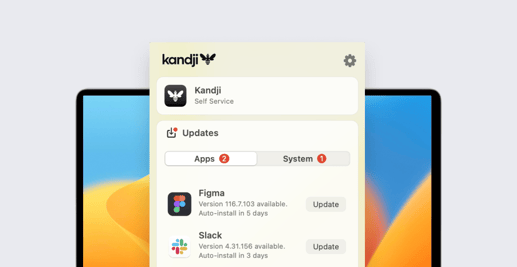
2 min readWe’ve updated the Kandji menu bar app to make it more useful for users and admins alike. The new interface gives end-users easier access to the Kandji Self Service app and provides a clearer view and better control of software updates. It also gives admins greater confidence that those updates will happen in a timely fashion.
•
3 min readKandji today announced the general availability of Kandji Endpoint Detection & Response. With this launch, Kandji is continuing to empower enterprise IT and security teams to keep every Apple user secure and productive using connected intelligence and automation.
•
7 min readNot too long ago, binding Mac computers to Active Directory (or other directory services) was standard practice in Apple device management. At the time, keeping domain and certificate services onsite was the only option, and binding was just a part of that system.
•
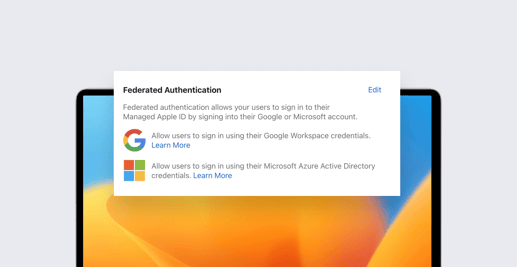
10 min readIf your business is using Microsoft Azure Active Directory (Azure AD) or Google Workspace as your identity provider (IdP), then you can use federated authentication to connect your instance with Apple Business Manager. This is a great way to create a consistent, seamless login experience for your employees.
Iru's bi-weekly collection of articles, videos, and research to keep IT & Security teams ahead of the curve.