
 Workforce Identity
 Endpoint Management
 Endpoint Detection & Response
 Vulnerability Management
 Compliance Automation
 Trust Center



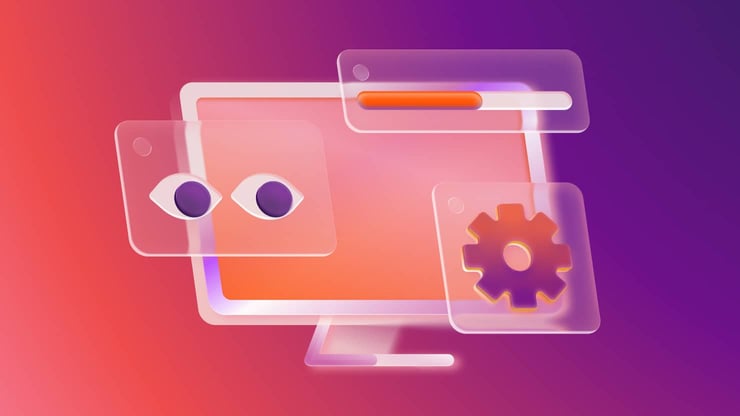

- Endpoint visibility gives you a real-time view of your endpoints, including device inventory, patch status, configurations, running processes, and security posture.
- Your new list iEndpoint control lets you act on that data by deploying patches, enforcing policies, restricting software, and remediating threats.tem
- Endpoint visibility and control combines monitoring and remediation, helping you identify risks and fix them from a single platform.
- Visibility without control creates security gaps since detecting issues is only half the job. The ability to remediate them quickly is what reduces risk.
- Features like automated patching, policy enforcement, and continuous compliance help reduce manual work and keep your endpoints secure.
Every endpoint tells a story. One laptop is missing critical patches. Another is running unauthorized software. A contractor's device hasn't checked in for weeks. You know exactly what's happening across your environment, but knowing isn't the same as fixing.
That's where endpoint visibility and control (EVC) starts to matter. Visibility helps you find risks, and control lets you respond without chasing users or relying on manual fixes. Together, they help you stay ahead of endpoint drift and reduce the risk before it turns into an incident.
But how does it make that happen? Let’s find that out by learning more about EVC, including how it works and why it matters. We’ll also talk about how you can achieve optimal endpoint visibility and control.
What is endpoint visibility?
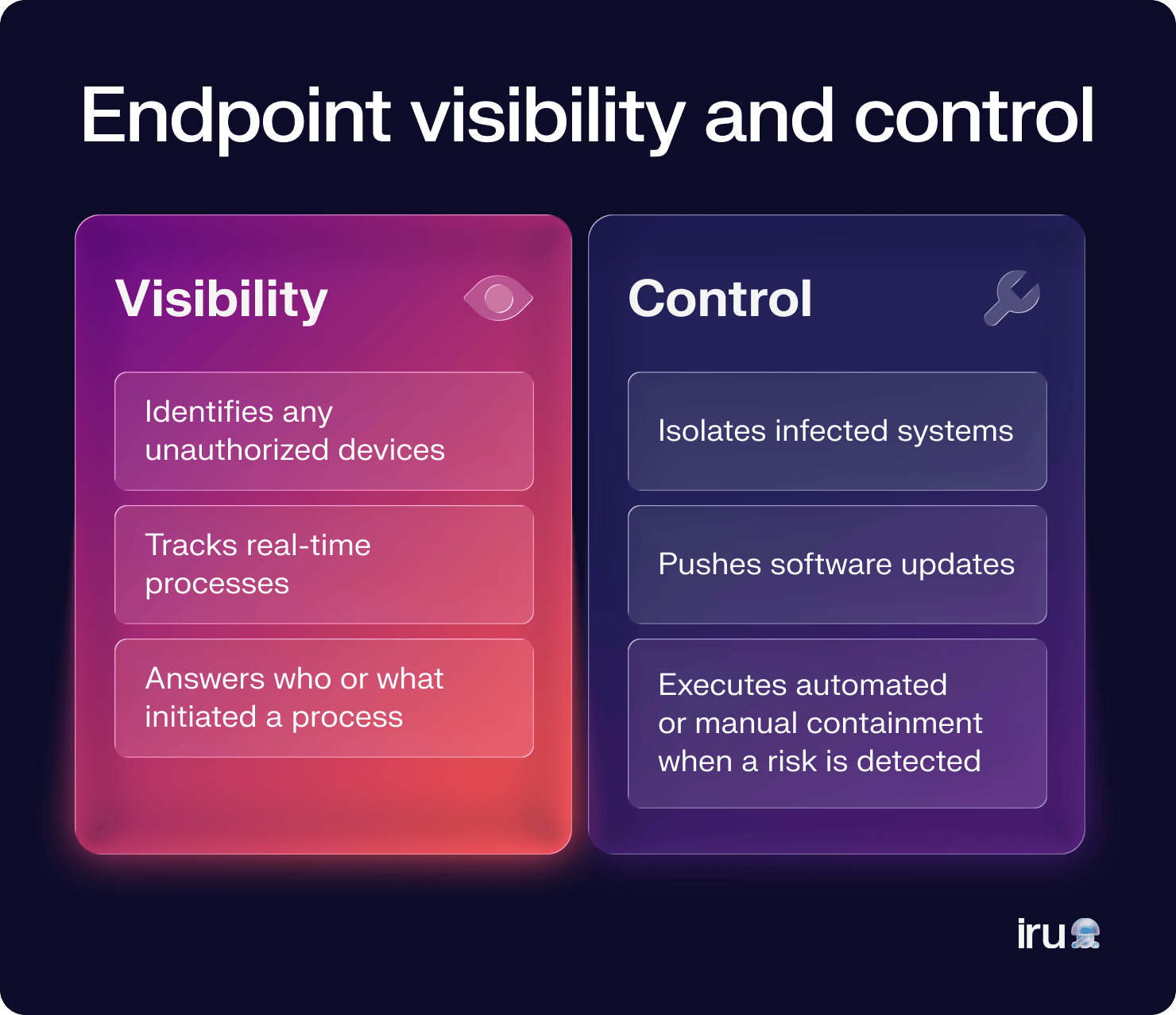
Endpoint visibility is the ability to see the health, status, and security posture of every device in your environment from one place. It gives you a real-time view of hardware and software inventory, operating system versions, patch status, security configurations, running processes, and device activity across Windows, Apple, and Android endpoints.
Good visibility is more than just creating an inventory. It continuously tracks changes, helping you spot outdated software, unauthorized applications, missing patches, and signs of adaptive compliance issues before they become security risks.
The challenge is that not every endpoint stays visible. Remote devices that rarely connect to the corporate network, bring-your-own-device (BYOD) endpoints, and endpoints with outdated or missing agents can all create blind spots. And without complete visibility, it's easy for security gaps to go unnoticed.
What is endpoint control?
Endpoint control is the ability to take action on the information you collect from your endpoints. If visibility tells you what's happening, control lets you respond. You can use a single console to enforce security policies, update configurations, deploy patches, restrict unauthorized software, and manage devices remotely.
Control also plays a key role in incident response. If a device shows signs of compromise, you can isolate it from the network, remove malicious software, or trigger automated remediation workflows. Many organizations use endpoint detection and response (EDR) tools alongside endpoint control capabilities to detect threats and respond faster.
What is endpoint visibility and control?
Endpoint visibility and control combines real-time monitoring with the ability to take immediate action. Instead of simply identifying security gaps, it helps you find, prioritize, and remediate them from a single platform. This not only reduces manual work but also speeds up response times and helps keep every endpoint secure and compliant.
A complete endpoint visibility and control solution typically includes three core capabilities:
- Asset discovery to automatically find managed and unmanaged devices, which eventually helps eliminate shadow IT
- EDR to monitor endpoint activity for suspicious behavior so you can contain threats before they spread
- Unified endpoint management (UEM) to bring device management, policy enforcement, software deployment, and patch management into one place
Platforms like Iru strengthen UEM by combining endpoint management with automated compliance. Iru continuously monitors device posture, flags configuration drift, and automatically enforces security policies.
That means you can maintain visibility and remediate issues faster while keeping your endpoints compliant with less day-to-day effort.
Why visibility without control isn’t enough
Visibility helps you find problems. Control helps you fix them. And you need both to reduce risk.
A dashboard full of alerts doesn't make your environment more secure if every response requires switching between tools, opening tickets, or asking users to take action themselves. The longer it takes to move from detection to remediation, the more time attackers have to exploit the issue.
This gap often widens when visibility and control reside on separate platforms. One tool detects a missing patch. Another manages updates. A third handles device policies. Every handoff adds delays, increases operational overhead, and contributes to security tool sprawl and alert fatigue.
Bringing visibility and control together helps you respond faster by allowing you to use the same workflow to detect risky changes, deploy patches, enforce policies, isolate compromised devices, and verify compliance.
That's especially important for Zero Trust endpoint security, where continuous verification and rapid enforcement are just as critical as threat identification.
The same applies to Mac endpoint security. As macOS devices become more common in enterprise environments, security teams need the same level of visibility and control they expect for Windows and other platforms. Without the ability to manage and remediate every endpoint consistently, visibility and security gaps become much harder to close.
Benefits of endpoint visibility and control
Endpoint visibility and control gives you the tools to identify risks and respond faster. It also helps you keep your endpoints secure without relying on manual processes.
Key benefits of EVC include:
- Complete endpoint coverage: Monitor devices to reduce visibility gaps and maintain an accurate inventory across your environment.
- Stop attacks earlier: Detect suspicious activity quickly and isolate compromised devices before threats spread to other systems.
- Automated patching: Identify missing updates and deploy patches remotely to reduce the window of exposure for known vulnerabilities.
- Consistent policy enforcement: Automatically apply security settings across devices and quickly identify endpoints that fall out of compliance.
- Faster troubleshooting: Remote access, real-time device data, and centralized management help your IT teams resolve issues without lengthy back-and-forth with users.
- Better software control: Detect unauthorized applications, including cracking tools, block unapproved software, and remove applications that increase security risk.
- Compliance readiness: Continuously monitor device posture and generate audit-ready reports. Also, demonstrate compliance with internal policies and industry regulations.
- Fewer security gaps: Identify risky configurations, such as unnecessary security exclusions, and enforce approved settings across all endpoints to reduce your attack surface.
- Lower operational overhead: Bringing visibility and control to a single platform reduces tool switching and manual work. Not to mention the time it takes to move from detection to remediation.
How to achieve endpoint visibility and control (best practices)
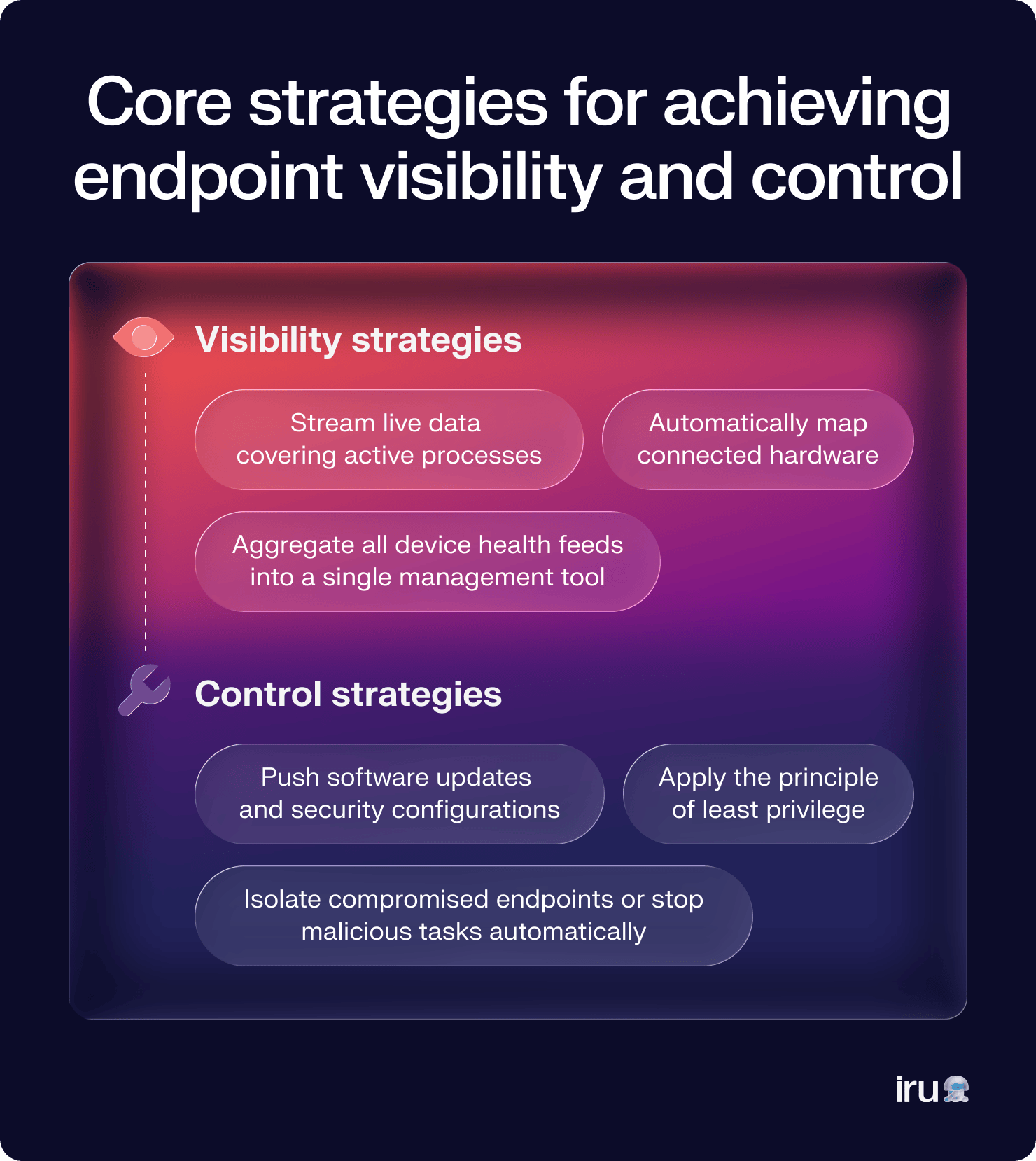
Building strong endpoint visibility and control is all about creating a process that helps you discover devices, continuously monitor them, and remediate issues quickly from a single place.
Here’s how to go about it:
- Maintain a complete device inventory: Continuously discover and track every managed endpoint to reduce shadow IT and ensure no device falls outside your security program.
- Consolidate visibility and control: Use a platform that combines monitoring, policy enforcement, and remediation through a single agent. This reduces tool sprawl and eliminates delays between detection and action.
- Monitor endpoints in real time: Collect live endpoint data and prioritize alerts that require action. Clear, actionable notifications help your teams focus on the issues that matter most.
- Automate patching and policy enforcement: Define security baselines and automatically correct configuration drift. Integrating patch management into your workflow helps close known vulnerabilities faster.
- Connect detection to remediation: Create a workflow that lets you investigate, isolate affected devices, remediate issues, and verify the fix without switching between multiple tools. This strengthens your overall vulnerability management process.
- Protect every endpoint consistently: Apply the same security policies across Apple, Windows, and Android devices, including remote endpoints that rarely connect to the corporate network.
- Review your security posture regularly: Audit endpoint configurations, software inventory, and policy compliance to identify gaps before they become serious security risks.
Achieve endpoint visibility and control with Iru
Iru’s Endpoint Management brings endpoint visibility and control together in a single platform, so you can enforce policies, deploy patches, and remediate threats without jumping between multiple tools. It helps you manage Apple, Windows, and Android endpoints while reducing tool sprawl and speeding up response times.
Beyond endpoint management, Iru continuously enforces security configurations, keeps applications up to date, supports automated remediation, and integrates compliance automation to help you stay audit-ready. This means you can continuously maintain a secure, compliant endpoint fleet with less manual effort.
Book a free demo to see how Iru can help you secure, manage, and automate your endpoint environment.