
 Workforce Identity
 Endpoint Management
 Endpoint Detection & Response
 Vulnerability Management
 Compliance Automation
 Trust Center



Mosyle earned its following for good reason. It's a clean, affordable Apple device management platform that fits Apple-first fleets, K–12 schools, and small to mid-sized teams that want mobile device management (MDM) and endpoint security in one place.
But with Mosyle, friction with the platform surfaces more as an organization grows. Add Windows or Android devices, tighter compliance obligations, or a need to manage identity alongside endpoints, and an Apple-only tool starts to hit its ceiling.
Mosyle might not be the best for your growing fleet, so we’ve covered six Mosyle alternatives, from Apple specialists to cross-platform and identity-first platforms, so you can choose what your fleet actually needs.
What is Mosyle?
Mosyle is an Apple-only device management and security platform for Mac, iPhone, iPad, and Apple TV. It's especially popular in K–12 education and among small to mid-sized businesses. If you pay extra, the Mosyle Fuse tier combines MDM, identity management, patching, and endpoint security into a single Apple-focused platform at a competitive price.
If you have Windows or Android devices, need deeper identity and single sign-on (SSO), want broader compliance automation, or hit the limits of Mosyle’s support at enterprise scale, your needs have likely outgrown this tool.
6 of the best Mosyle alternatives
Every Mosyle alternative here spans Apple specialists, cross-platform unified endpoint management (UEM) platforms, and identity-first systems. We weighed each on OS coverage, security and compliance depth, identity, and how much it consolidates into a single platform.
| MDM | Best for | Features | G2 rating |
|---|---|---|---|
| Iru | Unified endpoint + identity | Combines MDM, identity, and compliance automation in one platform | 4.7/5 |
| Jamf | Apple enterprise depth | Deep Apple ecosystem control and policy granularity | 4.7/5 |
| NinjaOne | Cross-platform IT work | Windows + Mac + Linux with built-in RMM (remote monitoring and management) | 4.7/5 |
| Scalefusion | Mixed-fleet SMBs | Manages Apple, Windows, Android, and ChromeOS from one console | 4.7/5 |
| JumpCloud | Identity + device management | Open directory platform combining SSO, MDM, and user management | 4.5/5 |
| Hexnode | Budget-conscious multi-OS | Broad device support at a lower per-device price point | 4.5/5 |
For the full picture, see our MDM comparison.
1. Iru
- Best for: Unified endpoint + identity
- G2 rating: 4.7/5
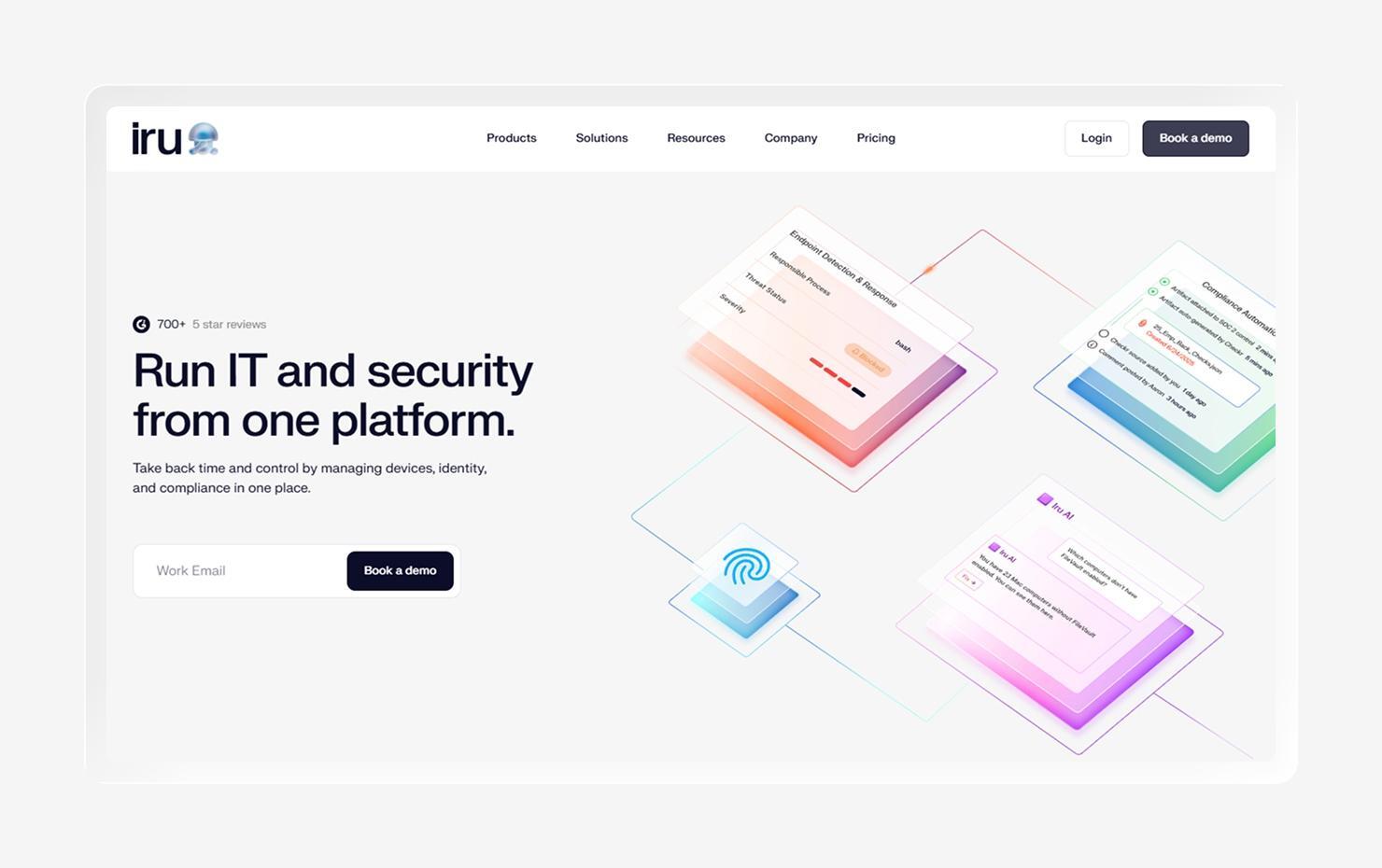
Iru is an AI-powered IT and security platform that unifies endpoint management, identity, and compliance automation in one place. Where Mosyle manages Apple devices, the Iru Agent covers both Mac and Windows, so one platform secures your mixed fleet.
That breadth extends past device management. Workforce Identity provides passwordless authentication and SSO, Compliance Automation continuously collects audit evidence across frameworks such as SOC 2, ISO 27001, HIPAA, and NIST, and Iru AI handles routine policy enforcement and remediation.
If you've outgrown separate tools for device management and compliance, Iru brings them under one roof. Our Iru vs. Mosyle breakdown goes deeper into the differences.
Features:
- Unified Iru Agent for Mac and Windows: One agent manages and secures both operating systems, so a mixed fleet runs on a single tool instead of two.
- Built-in Compliance Automation: Prebuilt frameworks (SOC 2, ISO 27001, HIPAA, and NIST) and continuous evidence collection keep you audit-ready without manual tracking.
- Passwordless authentication and SSO: Device-bound passkeys and single sign-on remove passwords and close a common attack path.
- Iru AI for policy enforcement and remediation: Routine fixes run automatically, freeing admins from repetitive manual work.
- App lifecycle management: Automated patching keeps third-party apps up to date, closing update gaps without manual packaging.
2. Jamf
- Best for: Apple enterprise depth
- G2 rating: 4.7/5
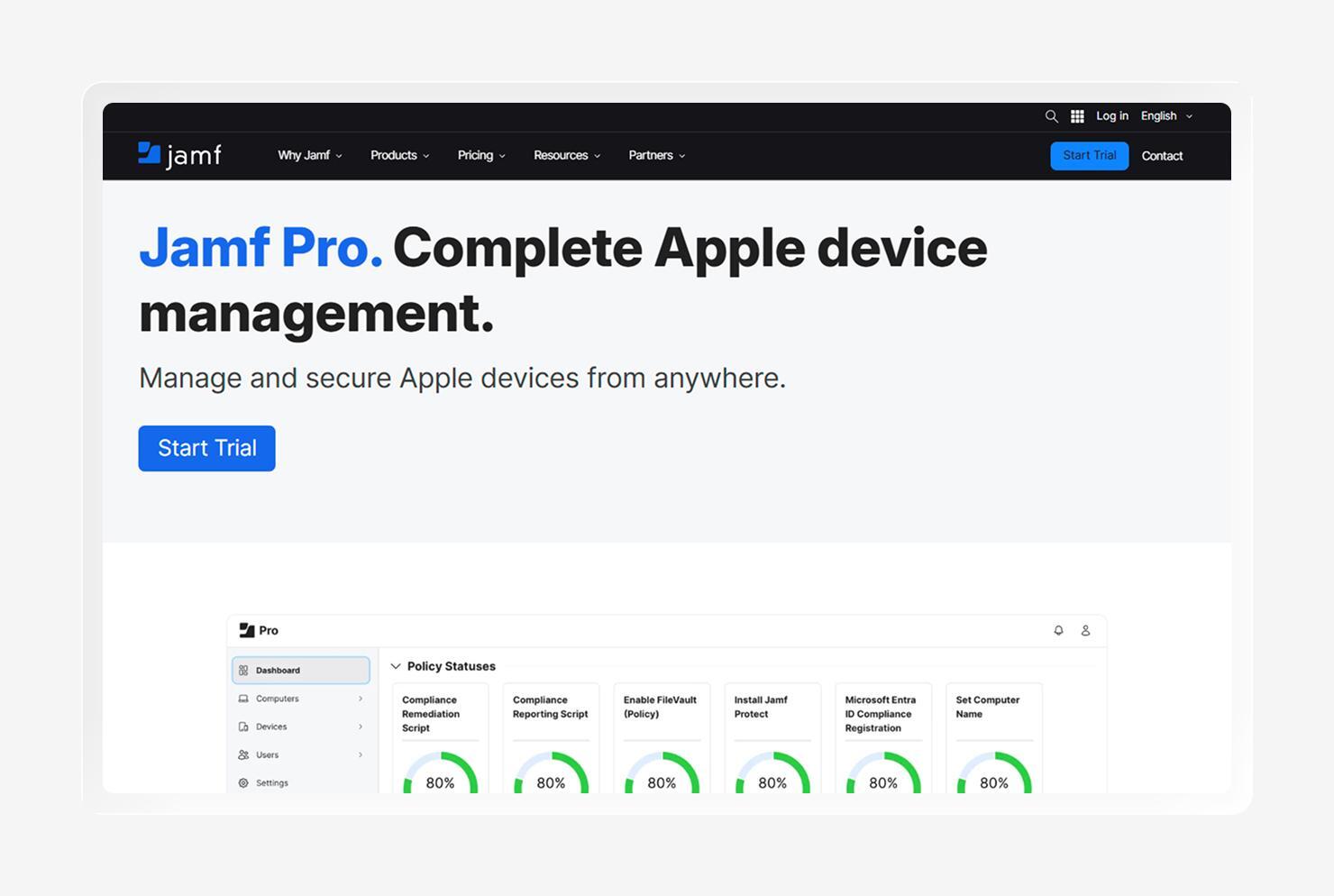
Jamf is the longest-running Apple device management platform, with Jamf Pro serving enterprise fleets and Jamf Now aimed at smaller teams.
The platform is built for organizations with large, complex Apple environments that need deep policy granularity, custom scripting, and tight integration with Apple Business Manager.
Jamf’s strengths are Apple-specific breadth, a large administrator community, and an extensive third-party integration marketplace.
The trade-off is scope: Jamf manages only Apple devices, so if your fleet includes Windows or Android devices, you have to run a second tool alongside it. Also, using the platform can take dedicated Jamf expertise to administer at scale.
Features:
- Comprehensive Apple MDM: The platform manages Mac, iPhone, iPad, and Apple TV with the depth Apple-heavy fleets expect.
- Apple Business Manager and Apple School Manager integration: It provides tight integration with Apple's deployment programs, speeding up zero-touch enrollment.
- Smart Groups: Jamf offers automatic device segmentation and targets policies precisely as inventory changes.
- Jamf Connect for identity and SSO: It provides identity and single sign-on, though it's a separate add-on product.
- Extensive third-party integration marketplace: A broad ecosystem connects Jamf to the security, identity, and helpdesk tools you already run.
3. NinjaOne
- Best for:Cross-platform IT work
- G2 rating: 4.7/5
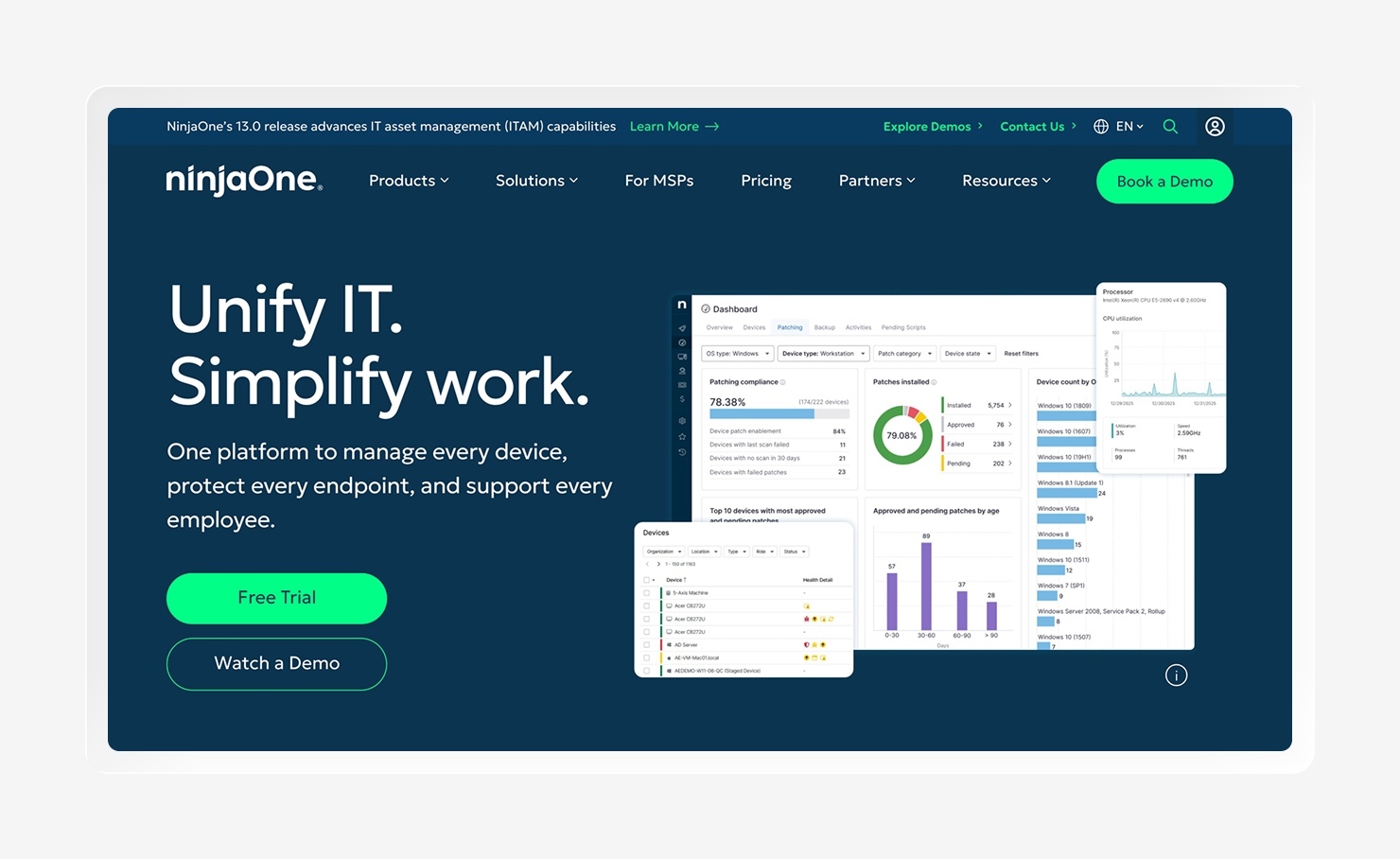
NinjaOne is a unified endpoint management and remote monitoring and management (RMM) platform built for IT teams managing mixed fleets of Windows, Mac, and Linux devices. It goes beyond MDM with remote monitoring, remote access, and patch management across operating systems.
Compared with Mosyle, NinjaOne is less Apple-native but broader across operating systems, and it consolidates IT operations tasks, such as monitoring and ticketing integrations, into a single tool. If you primarily manage a mix of endpoints, you'll get the most from NinjaOne.
Features:
- Cross-platform endpoint management: The platform manages Windows, Mac, and Linux from one console, covering mixed fleets in a single tool.
- Automated patch management: It provides granular scheduling and approval controls keep operating systems and apps current with less manual effort.
- Built-in RMM: NinjaOne offers real-time monitoring surfaces device issues across the fleet before they escalate.
- IT documentation and ticketing integrations: It connects endpoint work to your existing IT service workflows.
- Software deployment and endpoint visibility: NinjaOne has a single location to check device status and software across the entire estate.
4. Scalefusion
- Best for: Mixed-fleet SMBs
- G2 rating: 4.7/5
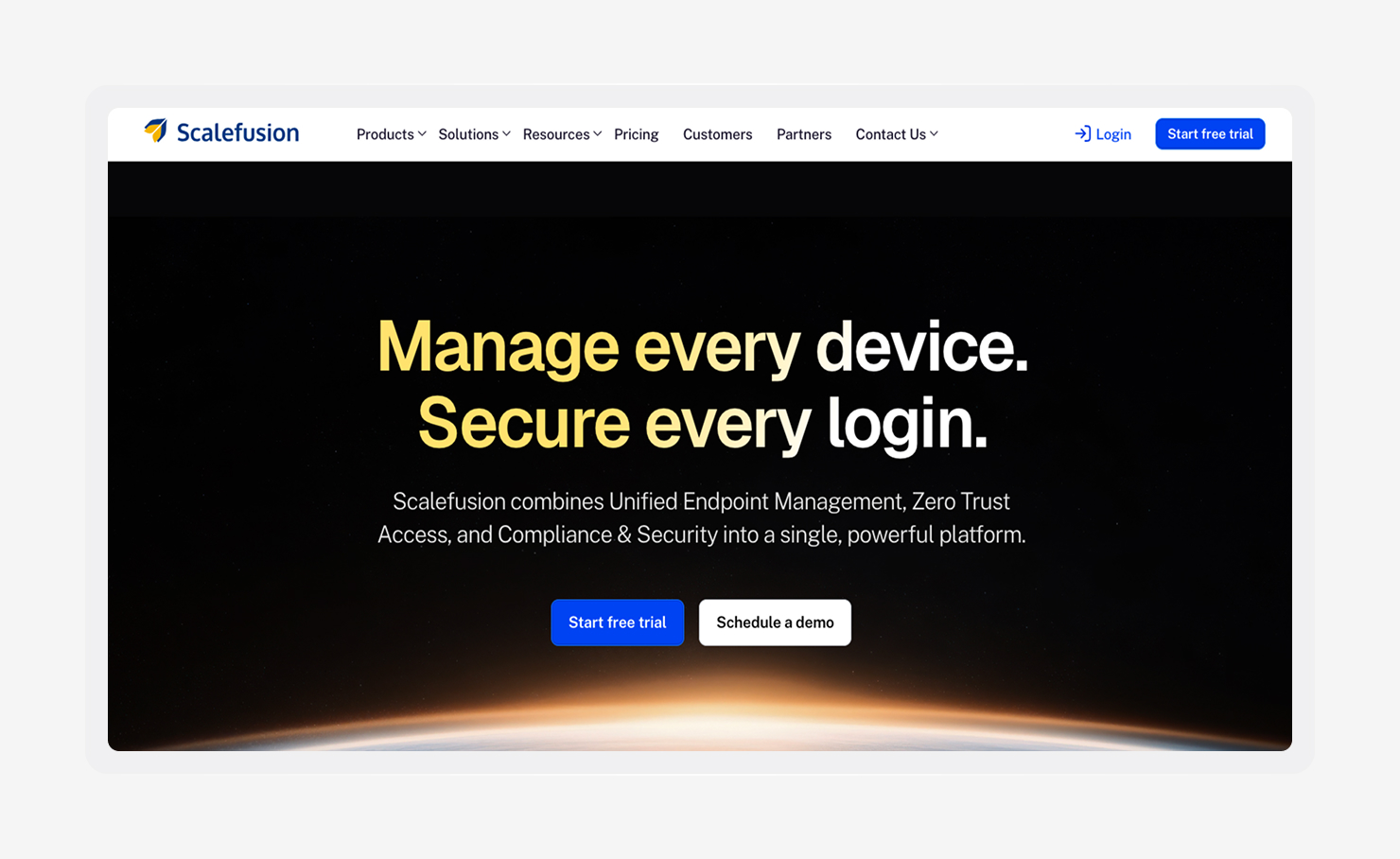
Scalefusion is a UEM platform that manages Apple, Windows, Android, Linux, and ChromeOS devices from one console. That range makes it a fit for small and mid-sized teams running a mix of hardware, including mobile, rugged, and kiosk devices.
Against Mosyle, Scalefusion’s draw is breadth rather than Apple depth. The platform covers more operating systems and suits kiosk and dedicated-device use well, though per-OS feature depth can be lighter than Apple specialists like Jamf or Windows-focused tools like NinjaOne.
If you're an SMB standardizing a varied fleet on one tool, Scalefusion lands on a practical middle ground.
Features:
- Unified management across major operating systems: Apple, Windows, Android, Linux, and ChromeOS run from one console, which keeps a mixed fleet in a single tool.
- Kiosk and dedicated device mode: It locks devices to approved apps for point-of-sale, digital signage, and rugged deployments.
- App management and over-the-air (OTA) updates: The platform distributes and updates apps across device types without hands-on IT.
- Remote troubleshooting and monitoring: Scalefusion diagnoses and resolves device issues from anywhere, cutting field visits.
- Policy and compliance management: It enforces baseline policies and reports on device compliance from one dashboard.
5. JumpCloud
- Best for: Identity + device management
- G2 rating: 4.5/5
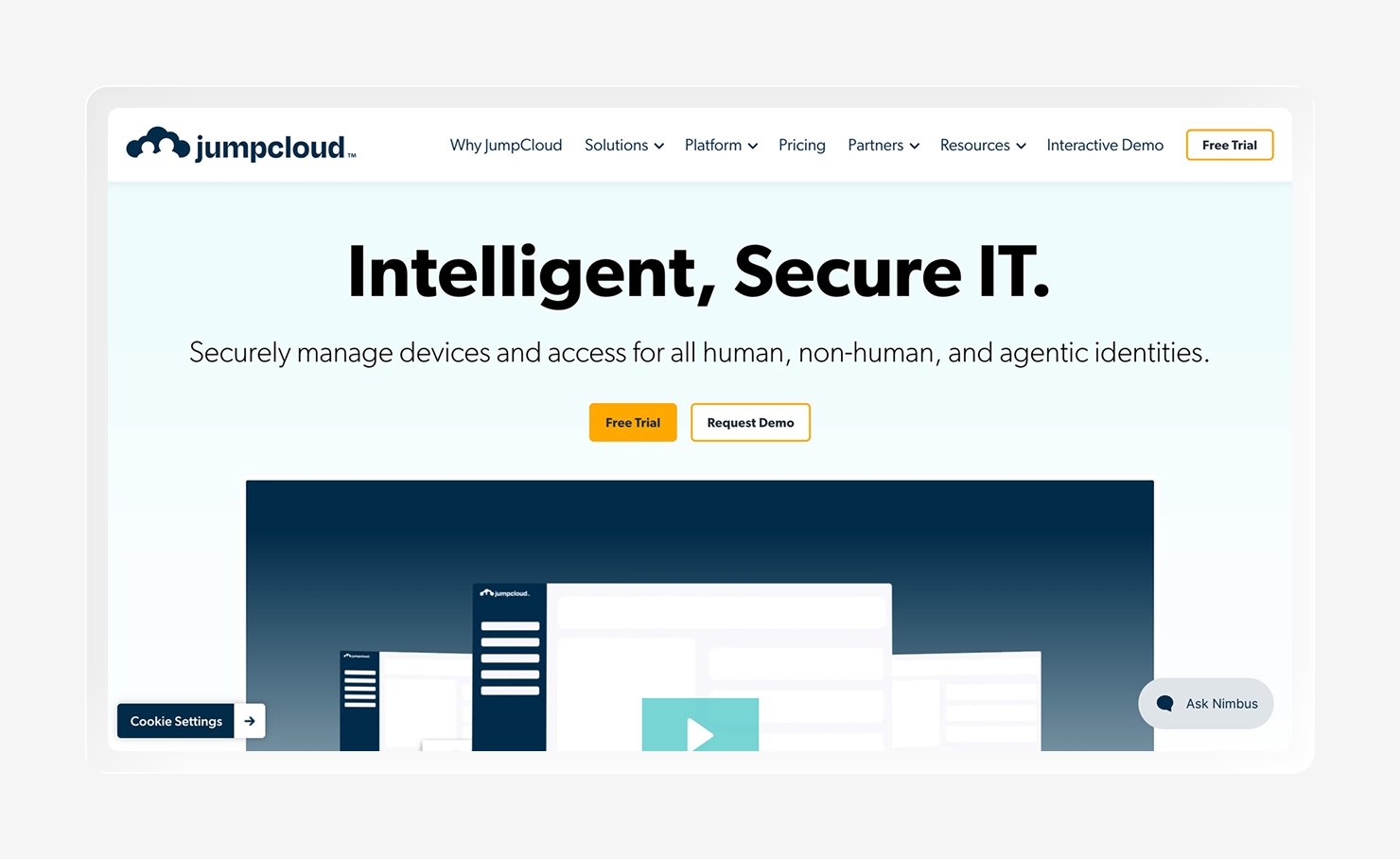
JumpCloud is an open directory platform that pairs device management with identity, single sign-on, and user lifecycle management across Mac, Windows, and Linux. Its center of gravity is identity, with device management built on top of the directory.
That makes it a fit if you want to replace or supplement Active Directory without on-premises infrastructure, managing users and devices from a single console.
Compared with Mosyle, JumpCloud is cross-platform and identity-first, though if you need deep Apple-specific management or heavier endpoint security, you'll likely pair it with another tool.
Features:
- Cross-platform MDM: The platform manages Mac, Windows, and Linux devices from the same directory.
- Open directory with cloud LDAP and RADIUS (directory and network-authentication standards): It replaces Active Directory without on-premises servers, so identity lives in the cloud.
- Single sign-on and MFA: It provides a single set of credentials protected by multi-factor authentication (MFA) that grants access to apps and networks.
- User and device lifecycle management: Jumpcloud onboards and offboards people and hardware from a single console.
- Zero-trust conditional access: The platform grants access based on user and device trust rather than network location.
6. Hexnode
- Best for: Budget-conscious multi-OS
- G2 rating: 4.5/5
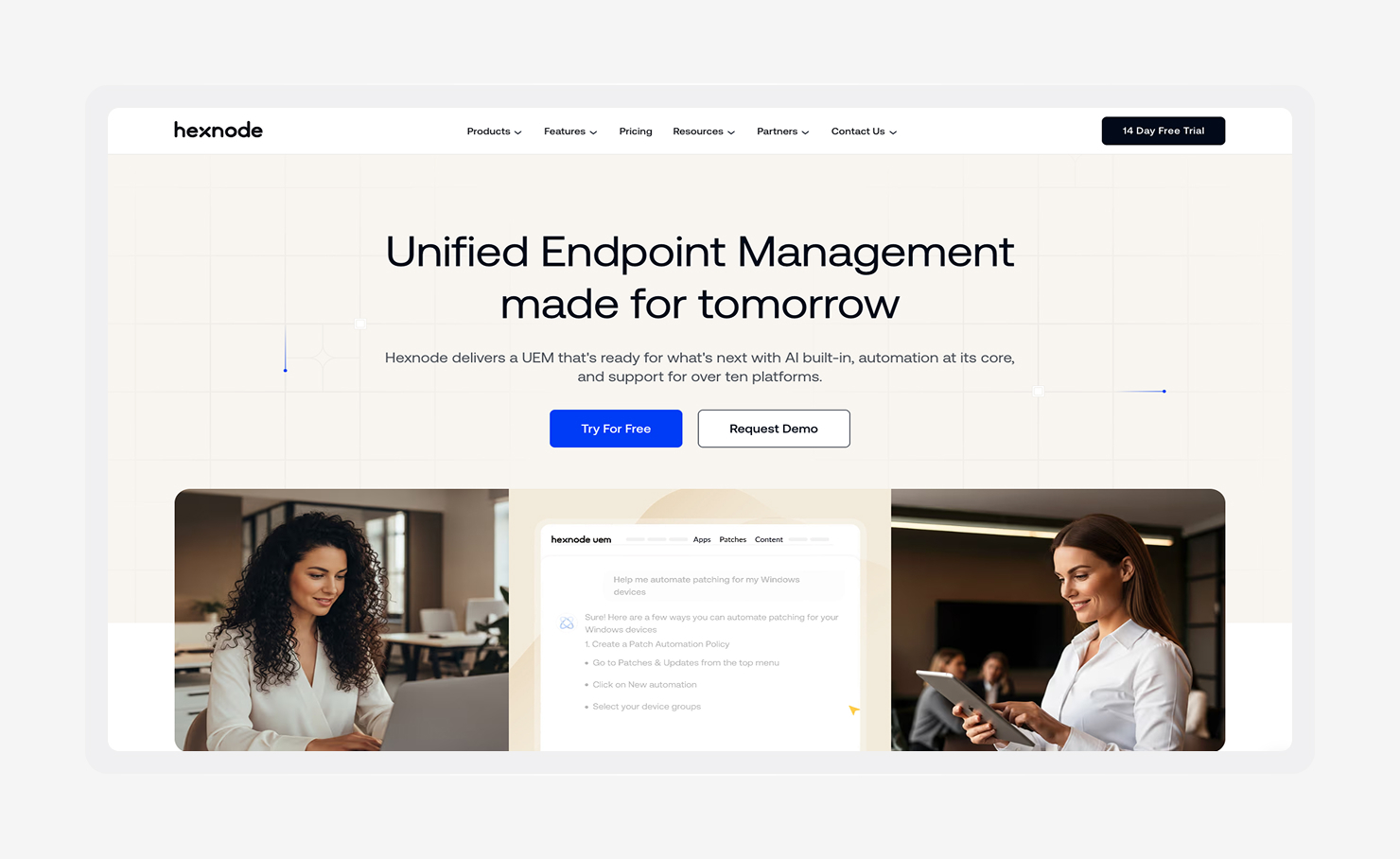
Hexnode is a UEM platform covering Apple, Windows, Android, Fire OS, and tvOS, with broad multi-OS support at a lower per-device price than most tools on this list. That makes it a good fit if you need cross-platform MDM without a steep ramp-up.
Hexnode’s accessibility and kiosk controls are common draws, especially for shared or single-purpose devices.
Compared with Iru or JumpCloud, Hexnode’s compliance automation and identity features are lighter, so if you have heavier security or compliance needs, you may reach for more specialized tooling as you grow.
Features:
- MDM across Apple, Windows, Android, tvOS, and Fire OS: It manages a wide device range from one console.
- App catalog, distribution, and remote wipe: The platform deploys apps and clears data from lost or offboarded devices.
- Location tracking and geofencing: Hexnode mobile device location and triggers actions based on geographic boundaries.
- Kiosk lockdown mode: It restricts devices to approved apps for frontline and shared use.
- Compliance and policy enforcement: It applies baseline policies and reports adherence through dashboards.
What to look for in a good Mosyle alternative
The right Mosyle alternative depends on where your current setup falls short. These are the factors that matter most when you evaluate competitors to Mosyle, drawn from the reasons teams leave the platform in the first place.
Cross-platform coverage
Mosyle supports only Apple devices, so once you add Windows, Android, or Linux, you need another tool. A strong alternative manages every operating system in your fleet from a single console, reducing tool sprawl and giving you a single view of every device.
Identity and access
Device management and user access increasingly belong together. An alternative with native single sign-on, directory services, and conditional access keeps user identity and device trust in one platform, so you can manage access and devices from the same place.
Compliance automation
If your team has audit obligations, compliance is where manual work piles up. Built-in frameworks and continuous evidence collection keep devices aligned with standards like SOC 2 and ISO 27001, turning audit prep into an ongoing process rather than a last-minute scramble.
Automation and AI
As a fleet grows, manual administration stops scaling. Automated patching, policy enforcement, and AI-driven remediation handle routine work, so your team can manage more devices without adding headcount.
Consider Iru for unified security and automation
The most suitable alternative to Mosyle depends on your fleet: Jamf for Apple depth, NinjaOne for Windows-heavy teams, Scalefusion or Hexnode for broad multi-OS coverage, and JumpCloud for identity-led teams.
Iru fits best when you want a single platform for a mixed fleet. It unifies endpoint management, passwordless identity, and compliance automation across Mac and Windows, so everything lives in one place rather than across separate tools.
Book a demo to see Iru run on your own Mac and Windows devices.